Algeria
 Egypt
 Libya
 Morocco
 Sudan
 Tunisia
 Benin
 Burkina Faso
 Cabo Verde
 Côte d'Ivoire
 Ghana
 Guinea
 Guinea-Bissau
 Liberia
 Mauritania
 Niger
 Nigeria
 Senegal
 Sierra Leone
 The Gambia
 Togo
 Cameroon
 Central African Republic
 Chad
 DR Congo
 Equatorial Guinea
 Gabon
 Republic of the Congo
 São Tomé and Príncipe
 Burundi
 Comoros
 Djibouti
 Eritrea
 Ethiopia
 Kenya
 Madagascar
 Malawi
 Mauritius
 Mozambique
 Rwanda
 Seychelles
 Somalia
 South Sudan
 Tanzania
 Uganda
 Angola
 Botswana
 Eswatini
 Lesotho
 Namibia
 South Africa
 Zambia
 Zimbabwe
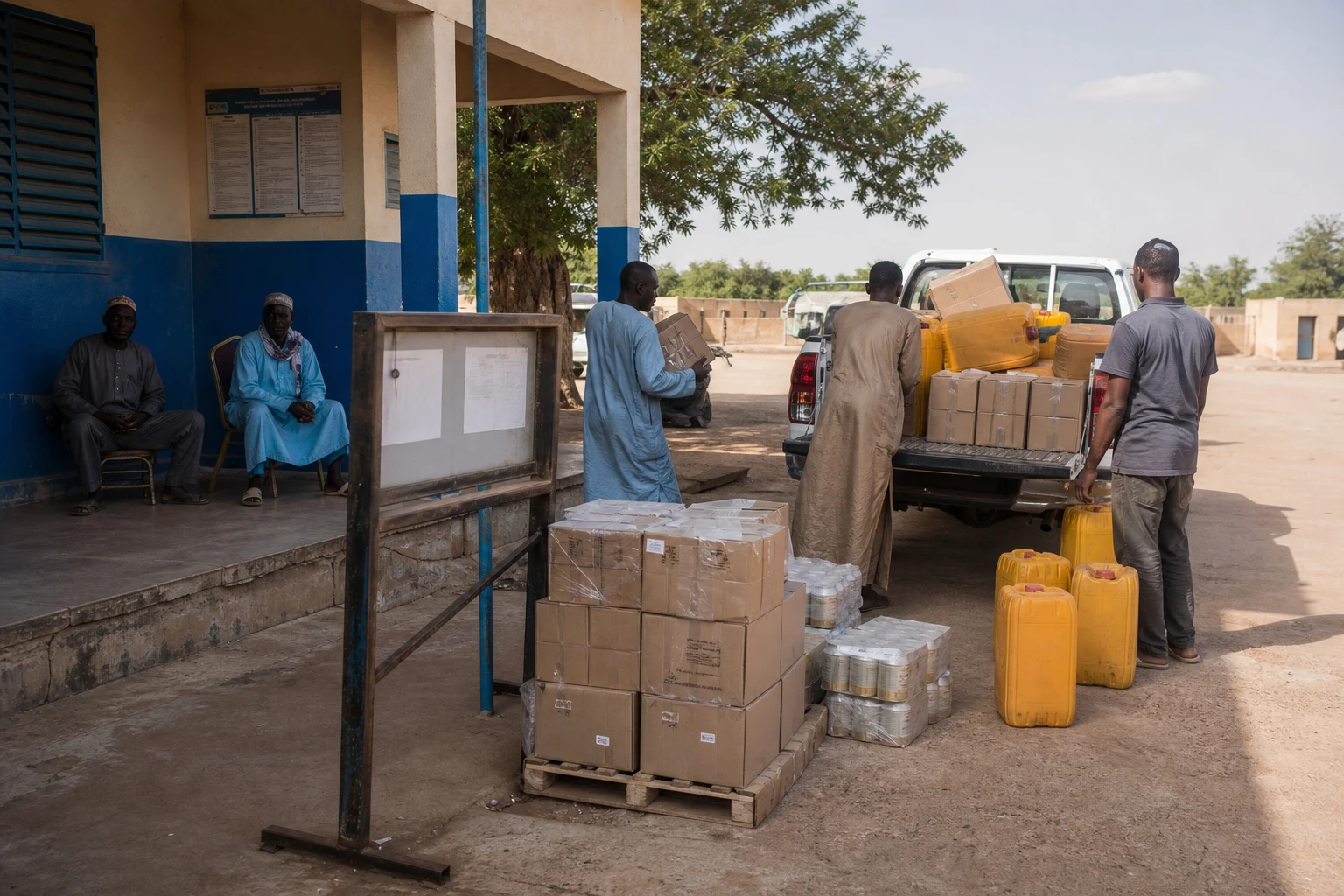
At Dioura, war keeps returning to the same gates
In central Mali, military camps are no longer merely points of state presence. They have become symbols of resistance, but also recurrent targets. In Dioura, in the Mopti region, the attack on 10 September brought home a brutal reality: in this part of the Sahel, the battle is not fought only on military ground, but also over the state’s ability to hold positions, supply its men and protect them.
Mali has been going through a prolonged security crisis since 2012, fuelled by jihadist groups affiliated with al-Qaeda and Islamic State, as well as local armed realignments and territorial rivalries. Since the coups of 2020 and 2021, the transitional authorities have made military sovereignty a central priority. This strategy now sits within the framework of the Confederation of Sahel States, alongside Burkina Faso and Niger, a grouping seeking to better co-ordinate the regional security response.
Death toll revised upwards as information is cross-checked
On 10 September 2026, the Dioura military camp was attacked by the Group for the Support of Islam and Muslims, or JNIM, an organisation linked to al-Qaeda. At first, several sources spoke of a violent assault and a takeover claimed by the attackers. Then, over the following days, the death toll rose. On 18 September, AFP reported that at least 100 Malian soldiers and five Russian paramilitaries from Africa Corps had been killed, according to corroborating military, security and local sources. Other sources reported dozens of prisoners and a high number of wounded.
Initial accounts had suggested a lower death toll. But in attacks of this kind, figures often rise afterwards, as bodies are counted, missing people are found and survivors are verified. That is precisely what happened here. Africanews, citing AFP, initially reported at least 50 dead, then cited sources putting the figure at 60 to 80, before revising it to more than 100. This rise above all shows how difficult it is to establish a reliable toll quickly in an area where access to the ground remains limited.
JNIM claimed the attack and said it had taken full control of the barracks. The claim does not dispel the unanswered questions, but it confirms the group’s operational approach: strike a military post, disrupt the chain of command, seize equipment and stage a show of force. This pattern is familiar in central Mali. It targets the army as much as the image of control the authorities want to project.
What Dioura says about the balance of forces
Dioura is not just an isolated name on the map. The town is in a strategic area of Mopti, where people, weapons, motorbikes, fuel and information circulate. When a camp falls, or appears to fall, the impact extends beyond the military perimeter. Traders worry about roads being cut off. Families search for news. Local administrations come under pressure. And in surrounding villages, uncertainty weighs on travel, weekly markets and schools.
For Bamako, the stakes are as much political as they are security-related. The Malian state has stepped up its sovereignty rhetoric since 2021, and defence was even placed under the direct responsibility of the head of the transition in spring 2026, following the death of minister Sadio Camara in co-ordinated attacks attributed to jihadist groups. But an army is measured by more than its statements. It is measured by its ability to hold positions, rescue its units and absorb shocks. An attack with a death toll exceeding 100, if that figure is confirmed over time, calls this ability into question.
The reported presence of Russian paramilitaries from Africa Corps in the toll cited by AFP adds another dimension. It shows that external support, where it exists, is not enough to halt jihadist pressure. It also underlines that the Malian front has become a theatre where domestic security, foreign military partnerships and a battle for influence intersect. In the Sahel, this overlap complicates the reading of operations and makes every setback more politically sensitive.
A signal for the whole Sahel
This attack concerns more than Mali. It resonates in Burkina Faso and Niger, the two other members of the Confederation of Sahel States, which are also counting on military co-operation and security sovereignty. Above all, it shows that no regional framework can, on its own, replace national armies’ ability to hold the ground. Co-operation helps. It cannot make up for logistical weakness, inadequate intelligence or the vulnerability of forward positions.
For West Africa, the Dioura episode confirms a broader trend: armed groups are less intent on permanently occupying towns than on wearing states down through a succession of targeted, sometimes highly lethal attacks on isolated camps. It is a war of attrition. It exacts a heavy cost from regular forces, fuels fear in rural areas and forces capitals to manage knock-on effects on the local economy, roads and public trust.
The next moment to watch is not only military. It is also institutional. Bamako will have to say how it assesses its losses, what measures it is taking for its units in the centre, and how it is adapting its doctrine in the most exposed areas. As long as these answers remain partial, every major attack such as the one at Dioura will weigh far beyond the camp targeted. It will weigh on the state’s credibility, Sahelian co-ordination and the daily security of Mali’s population.