
 Algeria
 Egypt
 Libya
 Morocco
 Sudan
 Tunisia
 Benin
 Burkina Faso
 Cabo Verde
 Côte d'Ivoire
 Ghana
 Guinea
 Guinea-Bissau
 Liberia
 Mali
 Mauritania
 Niger
 Nigeria
 Senegal
 Sierra Leone
 The Gambia
 Togo
 Cameroon
 Central African Republic
 Chad
 Equatorial Guinea
 Gabon
 Republic of the Congo
 São Tomé and Príncipe
 Burundi
 Comoros
 Djibouti
 Eritrea
 Ethiopia
 Kenya
 Madagascar
 Malawi
 Mauritius
 Mozambique
 Rwanda
 Seychelles
 Somalia
 South Sudan
 Tanzania
 Uganda
 Angola
 Botswana
 Eswatini
 Lesotho
 Namibia
 South Africa
 Zambia
 Zimbabwe
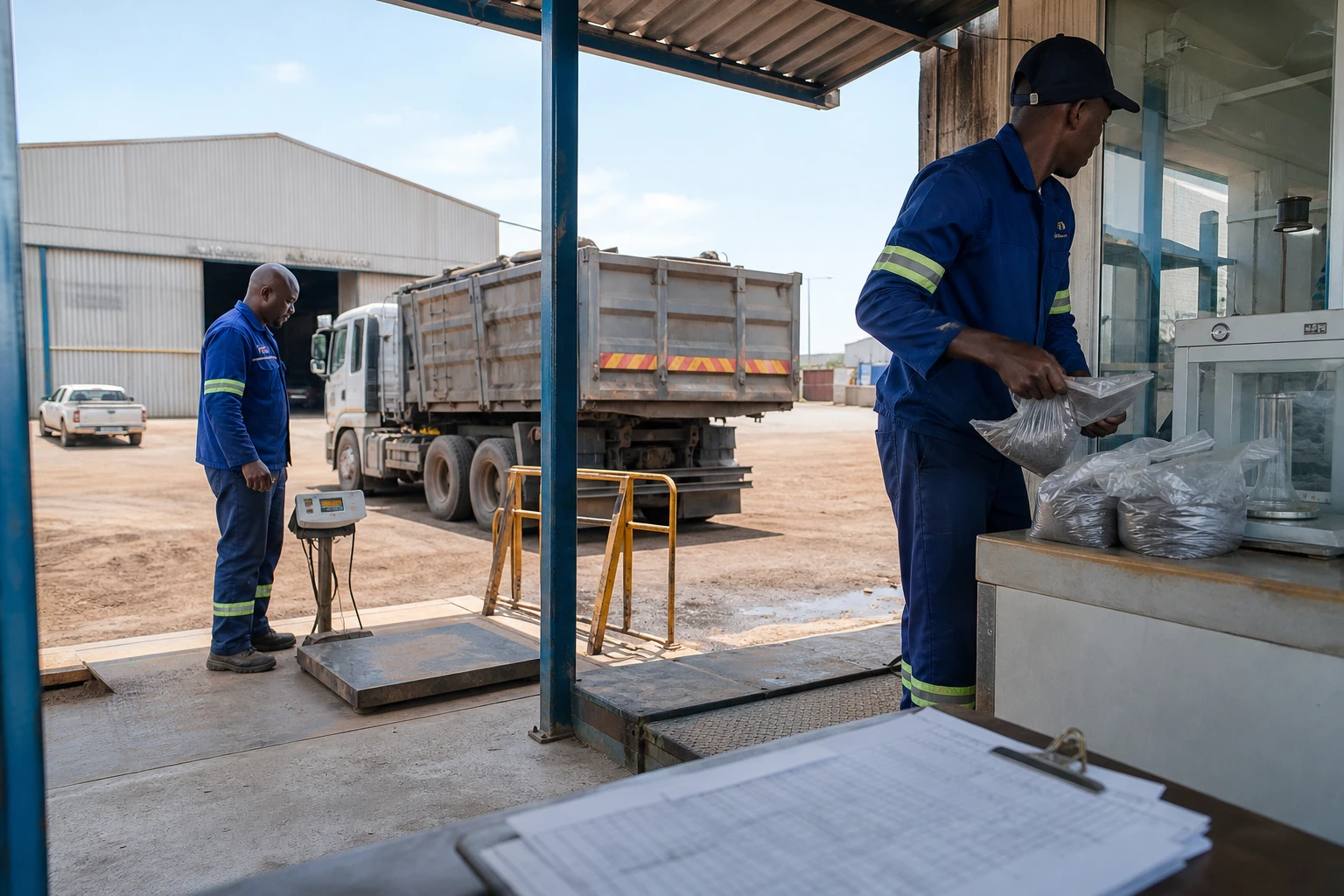
In Kinshasa, the budget is not decided only in columns of figures
In the Democratic Republic of the Congo, the budget question always comes back to the same boundary: the one separating the wealth beneath the ground from the revenues that actually reach public coffers. When a country relies on its minerals to fund security, schools, roads and part of its running costs, every tonne that is wrongly measured ultimately becomes a political loss of revenue.
The Congolese government has placed this equation at the heart of the 2027 finance bill, submitted in Kinshasa on 15 September 2026. The bill is valued at $24.8bn, or 57,500bn Congolese francs, and is based on an increase in domestic revenues. Within this framework, the mining sector is expected to contribute $6.5bn next year, a figure that assumes more reliable collection than at present.
Why mineral traceability has become a budget issue
The DRC is not only a major mining country. It is also an economy in which copper and cobalt exports weigh heavily on external accounts and tax revenues. The IMF notes that domestic revenue mobilisation has improved, but remains low compared with similar countries, at 13.7% of GDP in 2023. The institution also says tax reform needs to target tax avoidance in the mining sector more effectively.
The sensitive point is technical, but decisive. To tax a shipment of copper or cobalt, the authorities need to know its weight, its ore grade and its moisture content. If any one of these parameters is undervalued, the taxable value falls mechanically. This is precisely what the government wants to correct with a control chain running from the extraction site to export, including declarations, weighing and payments to the Treasury.
This approach has not come out of nowhere. In a document submitted to the IMF, the Congolese authorities say they want to speed up work on the mineral analysis laboratory linked to the General Directorate of Taxes, strengthen customs controls on mineral flows and minimise human contact in order to reduce the scope for under-reporting. The same document states that these control weaknesses cost the country nearly half of its potential mining revenues.
Kinshasa’s figures also reveal the fragility of the state
The government is not pointing only to mining operators. It also acknowledges its own administrative divisions. Tax, customs and mining data remain scattered across several departments, making it difficult to track a shipment from the site to the Treasury. The IMF has already noted that tax audits in the DRC yield less than 15% of their potential, illustrating a wider problem with the quality of public administrations and the flow of information.
In the 2027 budget proposal, the aim is therefore not simply to “raise more taxes”. It is first to recover what already exists in the mining chain. The government wants laboratory analyses, weighbridges, non-intrusive scanners and more automated control mechanisms. The objective is straightforward: if the state has a better understanding of the true quality of exported minerals, it can more accurately calculate duties, royalties and tax owed.
This comes amid a strained budgetary context. The same IMF document notes that security-related expenditure has risen sharply since 2023, in the wake of the intensification of the armed conflict in the east of the country. In other words, pressure on the Treasury is growing just as Kinshasa seeks to broaden its own revenues.
What this means for the Congolese economy and the region
For the authorities, better traceability has a dual effect. In the short term, it can improve revenues without abruptly raising tax rates. In the medium term, it can also reassure financial partners and investors, who are closely watching the governance of supply chains for copper, cobalt and other strategic minerals. The IMF also stresses that governance, transparency and anti-corruption reforms remain essential to supporting more inclusive growth.
For formal mining operators, traceability requirements can create greater predictability, provided the rules are clear and applied uniformly. For less structured exporters, however, digitalisation, controlled weighing and grade checks reduce the grey areas that have so far allowed declarations to be understated. For people, especially in mining areas in the east and south-east, the stakes are tangible: if revenue collection improves, the state will have more scope to fund visible services, rather than letting the proceeds evaporate across several channels.
The DRC is part of a broader continental trend. Sub-Saharan Africa is increasingly central to critical mineral value chains, particularly for copper and cobalt, which are in demand for the global energy transition. The IMF estimates that the region could capture a significant share of revenues linked to these minerals in the coming decades, provided it improves governance, regulatory harmonisation and the transparency of flows.
For Kinshasa, the issue therefore goes beyond 2027 alone. It concerns the credibility of the state, its ability to fund its priorities without excessive reliance on external resources, and its position in a regional space where minerals are no longer merely a geological asset, but a test of economic sovereignty. What happens next will depend on parliamentary scrutiny of the budget, and then on the administration’s actual ability to capture, without leakage or under-reporting, the exact value of what leaves the country.



