
 Algeria
 Egypt
 Libya
 Sudan
 Tunisia
 Benin
 Burkina Faso
 Cabo Verde
 Côte d'Ivoire
 Ghana
 Guinea
 Guinea-Bissau
 Liberia
 Mali
 Mauritania
 Niger
 Nigeria
 Senegal
 Sierra Leone
 The Gambia
 Togo
 Cameroon
 Central African Republic
 Chad
 DR Congo
 Equatorial Guinea
 Gabon
 Republic of the Congo
 São Tomé and Príncipe
 Burundi
 Comoros
 Djibouti
 Eritrea
 Ethiopia
 Kenya
 Madagascar
 Malawi
 Mauritius
 Mozambique
 Rwanda
 Seychelles
 Somalia
 South Sudan
 Tanzania
 Uganda
 Angola
 Botswana
 Eswatini
 Lesotho
 Namibia
 South Africa
 Zambia
 Zimbabwe
A railway strategy that goes beyond speed
In Morocco, the debate on railways is no longer simply about whether trains will go faster. The real question has become broader: how to make rail a tool for territorial cohesion, everyday mobility and the development of industrial skills in a country where growth is taking place as much in major cities as in their surrounding areas.
This shift matters. A network designed solely to connect a few major hubs delivers visible gains, but leaves part of the country behind. By contrast, a more extensive network can ease road traffic, bring employment hubs closer together and support logistics, port and industrial zones. This is the approach Rabat is now promoting through a rail programme that goes well beyond the high-speed line alone.
Rabat steps up efforts on two fronts: infrastructure and skills
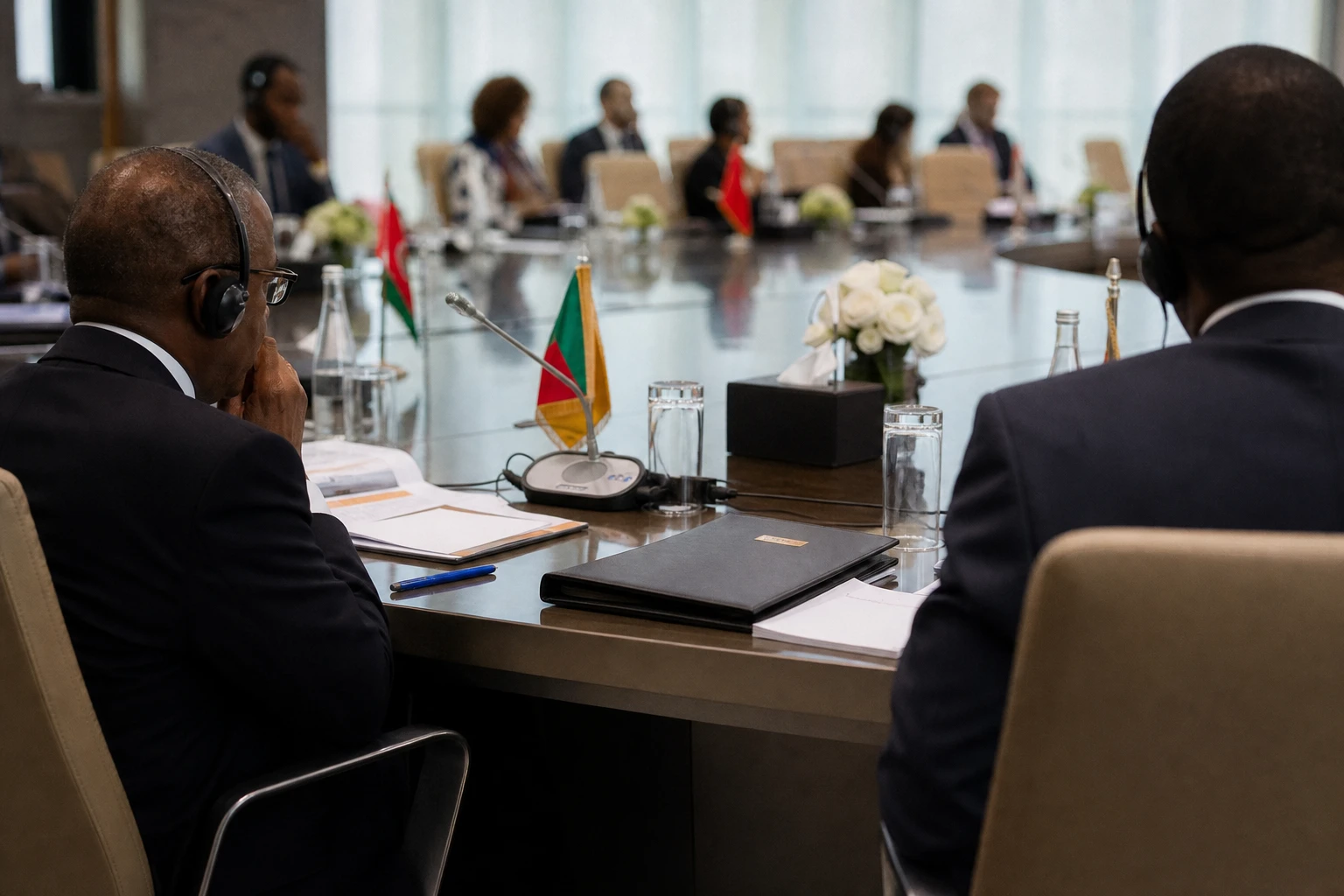
On Thursday 17 September 2026, in Rabat, Morocco and the African Development Bank signed two financing agreements totalling €405 million. The first, worth €205 million, is for the Railway Infrastructure Development Support Project, known as PADIF. The second, worth €200 million, supports the Cap Compétences 2030 programme, which focuses on vocational training and aligning skills with labour market needs.
The railway component targets the Kenitra–Marrakech corridor. According to official documents, it is intended to increase capacity along this route, modernise existing infrastructure and support the extension of the high-speed line. The project covers around 430 kilometres. It forms part of broader cooperation between Morocco and the African Development Bank, which has supported the modernisation of Moroccan railways for years and, more broadly, investment in mobility and the country’s logistics competitiveness.
The financing announced in Rabat does not start from scratch. It builds on a momentum already set in motion by the Kingdom’s new rail investment cycle, valued at 96 billion dirhams. Of this amount, 53 billion dirhams is allocated to infrastructure and equipment, 29 billion to the acquisition of 168 trains, and 14 billion to maintaining the performance of the existing network. This three-part approach reflects Morocco’s method: build, renew and maintain, rather than concentrating efforts on a single flagship project.
From a fast corridor to a more extensive network
Morocco’s rail plan to 2040 goes beyond extending the Al Boraq line, which entered service in 2018 between Tangier and Casablanca. The master plan of the National Railway Office envisages a much denser network. In time, it is expected to serve 43 major cities, compared with 23 today, cover 87% of the population, up from 51% currently, and connect more ports and international airports.
This is where the fundamental issue lies. In a country whose economy depends on clearly defined industrial, port and tourism corridors, rail performance is measured not only in minutes saved. It is also measured by the ability to connect labour markets, absorb urban growth and offer credible alternatives to road transport. The project is also intended to support local RER-style services in the Casablanca, Rabat and Marrakech regions, catering to the daily journeys of workers and students.
Rail is thus becoming an instrument for redistributing opportunity across the country. Major cities benefit from smoother connections. Intermediate areas, meanwhile, can become more attractive if stations, interchanges and logistics platforms are properly integrated. For businesses, the benefits are twofold: shorter transport times and more reliable flows to ports, industrial zones and airports connected to the network.
An industrial as well as a transport bet
The Moroccan government does not present this programme as a simple public procurement project involving concrete and steel. It also has industrial ambitions. The purchase of new trains goes hand in hand with the construction and modernisation of maintenance facilities, as well as a goal of technology transfer and training for technicians and engineers. In other words, rail must also develop skills, not just move passengers.
This is precisely where the Cap Compétences 2030 agreement comes into its own. A high-speed line and a modernised network require specialised roles: drivers, maintenance staff, signalling engineers, safety specialists, operations managers and track technicians. Without a training pipeline to match, infrastructure risks relying on imported expertise or fragmented subcontracting for the long term. Morocco’s bet is therefore to bring infrastructure, employment and local industry together.
The financial challenge nevertheless remains real. Expanding the network requires substantial capital, while operating a larger system calls for regular maintenance, strong technical governance and close coordination between high-speed lines, conventional trains and metropolitan services. In a demanding budgetary context, the sustainability of the model will depend as much on the quality of delivery as on the sums announced.
Morocco’s momentum extends beyond its borders
Across Africa, the Moroccan case is attracting interest beyond Rabat. The Kingdom is showing that an African country can approach rail as a complete ecosystem: urban mobility, port logistics, industry, training and the energy transition. This approach aligns with priorities that the African Union and several regional communities have championed for years: better connections between markets, lower transport costs and denser African value chains.
In the North African context, the issue also carries symbolic weight. Morocco is positioning itself as a testing ground for advanced infrastructure on the continent, with political and administrative continuity that makes it possible to align vision, financing and delivery. For African partners, the point is not to copy a model, but to understand how rail investment can underpin a long-term national strategy rather than remain an isolated project.
What happens next will depend on the construction timetable, the capacity of local companies to take on the work, and how high-speed services are integrated with the conventional network. If Morocco succeeds in making these different levels work together, rail could become one of the clearest drivers of its territorial development by 2040.



