
 Algeria
 Egypt
 Libya
 Sudan
 Tunisia
 Benin
 Burkina Faso
 Cabo Verde
 Côte d'Ivoire
 Ghana
 Guinea
 Guinea-Bissau
 Liberia
 Mali
 Mauritania
 Niger
 Nigeria
 Senegal
 Sierra Leone
 The Gambia
 Togo
 Cameroon
 Central African Republic
 Chad
 DR Congo
 Equatorial Guinea
 Gabon
 Republic of the Congo
 São Tomé and Príncipe
 Burundi
 Comoros
 Djibouti
 Eritrea
 Ethiopia
 Kenya
 Madagascar
 Malawi
 Mauritius
 Mozambique
 Rwanda
 Seychelles
 Somalia
 South Sudan
 Tanzania
 Uganda
 Angola
 Botswana
 Eswatini
 Lesotho
 Namibia
 South Africa
 Zambia
 Zimbabwe
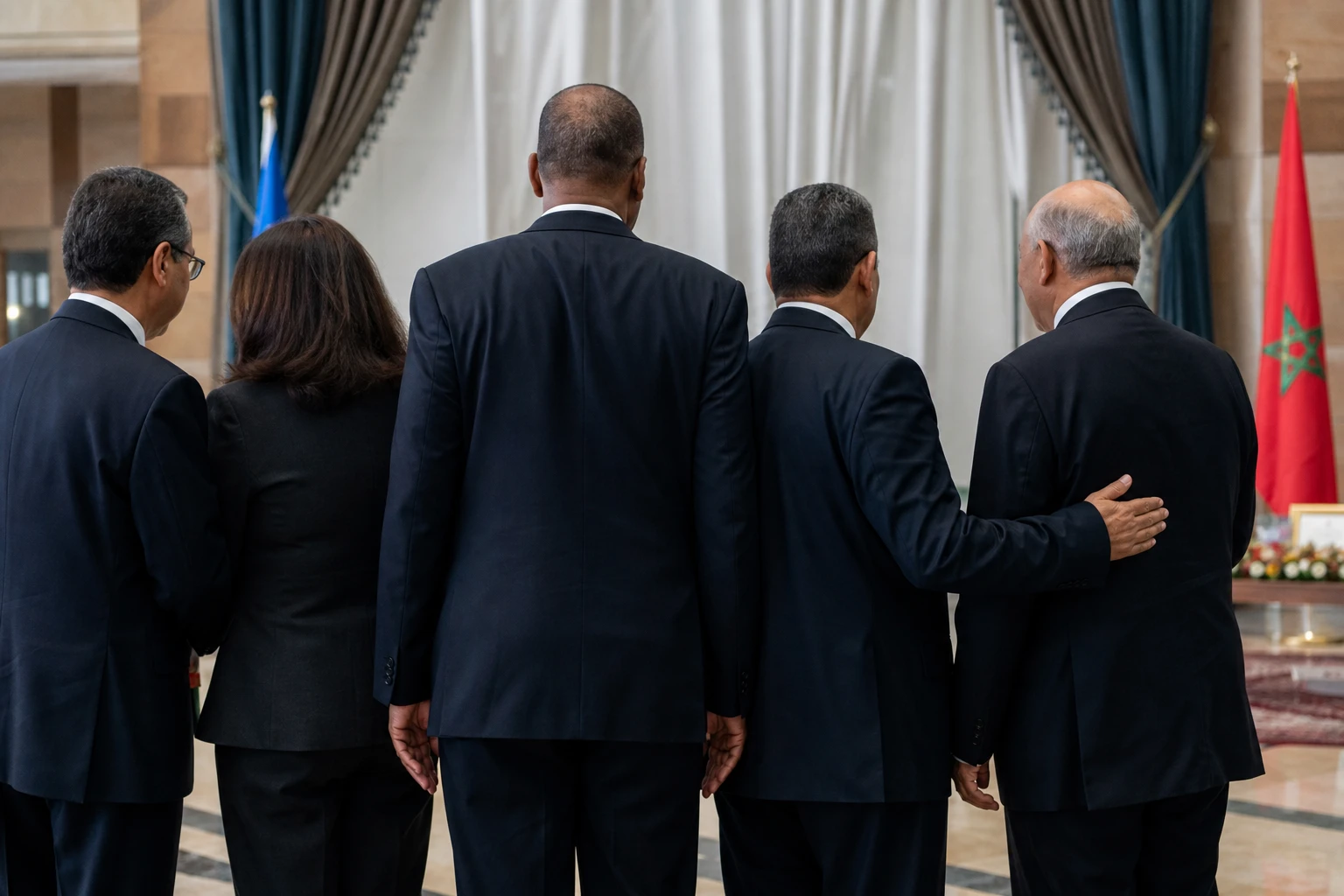
A diplomatic signal that goes beyond chancery buildings
Between Rabat and Tel Aviv, the development is more than a matter of protocol. It touches on how Morocco wants to exert influence in the Middle East and North Africa without abandoning its diplomatic balance. The agreement announced in New York to upgrade the Moroccan and Israeli missions to embassy status adds another step to a normalisation process already under way since 2020.
For the Kingdom, the issue is not limited to exchanges of visits or the opening of new offices. It also concerns Morocco’s place in the security, economic and technological networks that now link several Arab capitals, Washington and Israel. This comes as Rabat maintains an official position in African forums in support of a two-state solution and the Palestinian cause, notably in international bodies.
From frozen ties to a gradual deepening
The two countries restored diplomatic relations in December 2020 under the Abraham Accords and a trilateral declaration signed with the United States. The text provided, in particular, for the resumption of diplomatic relations, direct flights and several areas of cooperation.
Since then, the missions have continued to operate, but as liaison offices. The Israeli foreign ministry’s official website still lists its post in Morocco as a “liaison office” in Rabat. Sources close to the matter therefore say this is a move to embassy level, rather than a merely symbolic announcement already reflected in buildings or actual appointments.
According to reports by Reuters and several Moroccan media outlets, the decision was taken on 16 September 2026 in New York by the foreign ministers of the two countries, in the presence of the US representative to the UN. The same sources also refer, beyond the diplomatic issue, to the expected finalisation of agreements on investment protection and the avoidance of double taxation.
What Rabat is seeking to secure, and what the move changes
For the average Moroccan, the effect is not immediate. But economically, upgrading the missions to embassy status could facilitate administrative contacts, trade negotiations and the progress of projects in sectors already active, such as water, agriculture, cybersecurity and defence technology. Moroccan sources also refer to talks on new investment and tax agreements, signs of a relationship now conceived for the long term.
Strategically, Rabat is consolidating a Washington-Tel Aviv axis that has been visible since 2020. The move is part of a Moroccan foreign policy that seeks both diplomatic support on Western Sahara, contacts in Western capitals and technical partnerships useful to its economy. In 2021, the US administration presented progress between Israel and Morocco as an example of the momentum created by the Abraham Accords.
But closer ties also carry an image cost in the Arab and African world, where the Israeli-Palestinian conflict remains highly sensitive. Morocco continues to maintain a consistent public position in favour of a Palestinian state living alongside Israel, on the 1967 borders, with Jerusalem as its capital. This stance allows it to pursue a balanced diplomacy without breaking with its new partners.
North African perspective and continental significance
In the Maghreb, the decision is a reminder that major diplomatic issues are no longer played out only in Gulf capitals or Washington. They also unfold in Rabat, Algiers, Tunis, Cairo and African forums where Morocco seeks to project an image of stability and connectivity. Although the Arab Maghreb Union remains paralysed, Moroccan diplomacy continues to think regionally, with particular attention to security balances and investment chains.
Across Africa, the issue also matters because Morocco is one of the players that most clearly combines bilateral diplomacy, economic presence and an assertive return to continental institutions. Any move of this kind is therefore watched well beyond its relationship with Israel: it says something about the alliances Rabat wants to consolidate, the sectors it wants to open up and the role it intends to play in ongoing regional realignments.
The point to watch now is straightforward: how the agreement is implemented administratively. The appointment of ambassadors, the actual establishment of the missions and the signing of the announced economic agreements will show whether the New York announcement marks a lasting leap or simply another acceleration in a long-running normalisation process.



