Algeria
 Egypt
 Libya
 Morocco
 Sudan
 Tunisia
 Benin
 Burkina Faso
 Cabo Verde
 Côte d'Ivoire
 Ghana
 Guinea
 Guinea-Bissau
 Liberia
 Mali
 Mauritania
 Niger
 Nigeria
 Senegal
 Sierra Leone
 The Gambia
 Togo
 Cameroon
 Central African Republic
 Chad
 DR Congo
 Equatorial Guinea
 Gabon
 Republic of the Congo
 São Tomé and Príncipe
 Burundi
 Comoros
 Djibouti
 Eritrea
 Ethiopia
 Kenya
 Madagascar
 Malawi
 Mauritius
 Mozambique
 Rwanda
 Seychelles
 Somalia
 South Sudan
 Tanzania
 Uganda
 Angola
 Botswana
 Eswatini
 Lesotho
 Namibia
 Zambia
 Zimbabwe
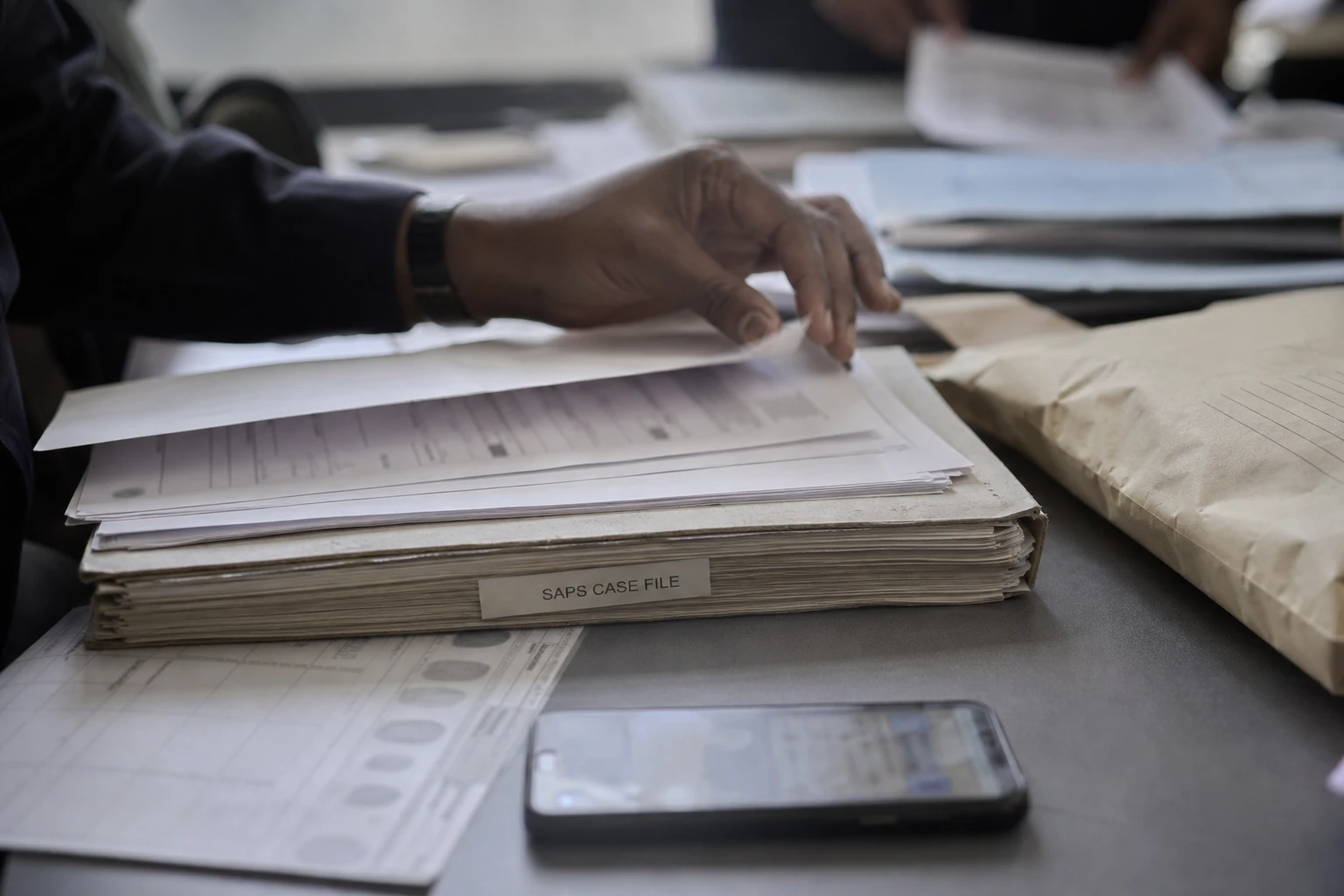
East of Johannesburg, a series of deaths that goes beyond an ordinary crime story
In South Africa, the successive discovery of women’s bodies in Ekurhuleni, east of Johannesburg, has stirred fears far wider than those surrounding an ordinary criminal investigation. When victims are found in increasing numbers within the same area, the question is no longer only who may be responsible, but how women are protected in public spaces.
The case is unfolding in Gauteng, the country’s most populous and urbanised province, at the heart of South Africa’s main economic hub. It also puts the credibility of the institutions responsible for security on the line, in a country where gender-based violence remains a major national issue. South Africa is a member of SADC, the Southern African Development Community, which has 16 member states and places peace and security at the heart of its mandate. The country is also a founding member of the African Union, whose continental political headquarters are in Addis Ababa, although it was launched in Durban, South Africa.
What is known about the victims, and what police are still unwilling to say
South African authorities have opened an investigation into several deaths of women reported since July in the areas of Kempton Park, Kwa-Thema, Clayville and Dawn Park. Police initially confirmed that five bodies had been found, then reported further discoveries in the same area, bringing the number of women who died in this sequence to nine, according to information reported by the authorities and media consulted. One woman was found on 14 September in Olifantsfontein, another on 15 September in Kwa-Thema, before a further discovery was announced on 17 September in Dawn Park.
For now, police have not confirmed that a serial killer is involved. Investigators are checking whether the cases are linked, but say they do not want to jump to conclusions. This is an important point. In cases of this kind, caution helps avoid fuelling rumours, while leaving open the possibility of a common modus operandi if the evidence establishes one.
In response to public concern, President Cyril Ramaphosa said he had asked for the investigation to be treated as a priority. The government then announced a coordinated response involving the police and other state bodies, while the Commission for Gender Equality called for urgent measures to make women’s journeys safer. The UN in South Africa also said it was alarmed by the recent killings in eastern Gauteng.
A local case that points to a national crisis of gender-based violence
The shock also stems from the wider context. In South Africa, violence against women is not a peripheral issue. According to the UN-supported national study on gender-based violence, 35.8% of South African women say they have experienced physical and/or sexual violence in their lifetime. Quarterly police statistics also show a high volume of serious offences, with 11,803 rape cases recorded in the third quarter of the 2025/2026 financial year, compared with 11,430 previously.
In this context, every new victim fuels a sense that the state is failing on an issue that affects everyday life first and foremost. For women living in the neighbourhoods concerned, the stakes are immediate: being able to walk, exercise, travel to work or use public transport without living in fear. For law enforcement, the challenge is twofold: to solve the cases quickly and to prevent them becoming another symbol of public impotence.
South Africa’s political response forms part of an established policy framework. The country has a National Strategic Plan to End Gender-Based Violence and Femicide for 2020-2030. But policies alone cannot eliminate implementation gaps: local staff shortages, difficulties collecting evidence, delays in identification, and fragile trust between victims, families and institutions. In a territory as densely populated as Gauteng, these weaknesses carry even greater weight, as bodies and information move quickly, and fear can spread within hours.
What this sequence says about South Africa, and what to watch next
This case resonates far beyond Ekurhuleni. In southern Africa, women’s safety has become a measure of governance. Within SADC, the issue is not only a matter for the police; it also concerns transport, urban planning, street lighting, access to social services and the ability of states to address domestic violence before it turns deadly. That is why South Africa’s response is being closely watched across the region.
The continental significance is clear. South Africa often presents itself as an institutional power in southern Africa and a leading country in African debates on women’s rights. But these events are a reminder that diplomatic stature does not automatically protect women in the streets. In the short term, the test rests on three points: the quality of forensic examinations, the speed of identifications and transparency about any possible links between the cases. In the medium term, the country will have to show whether public outrage translates into measurable results in the fight against femicide.
In a region where major institutional announcements are plentiful but everyday safety remains uneven, this case will be watched as an indicator—not only of police effectiveness, but also of South Africa’s ability to protect, in its most exposed cities, those who often pay the heaviest price for social violence.