Algeria
 Egypt
 Libya
 Morocco
 Sudan
 Benin
 Burkina Faso
 Cabo Verde
 Côte d'Ivoire
 Ghana
 Guinea
 Guinea-Bissau
 Liberia
 Mali
 Mauritania
 Niger
 Nigeria
 Senegal
 Sierra Leone
 The Gambia
 Togo
 Cameroon
 Central African Republic
 Chad
 DR Congo
 Equatorial Guinea
 Gabon
 Republic of the Congo
 São Tomé and Príncipe
 Burundi
 Comoros
 Djibouti
 Eritrea
 Ethiopia
 Kenya
 Madagascar
 Malawi
 Mauritius
 Mozambique
 Rwanda
 Seychelles
 Somalia
 South Sudan
 Tanzania
 Uganda
 Angola
 Botswana
 Eswatini
 Lesotho
 Namibia
 South Africa
 Zambia
 Zimbabwe
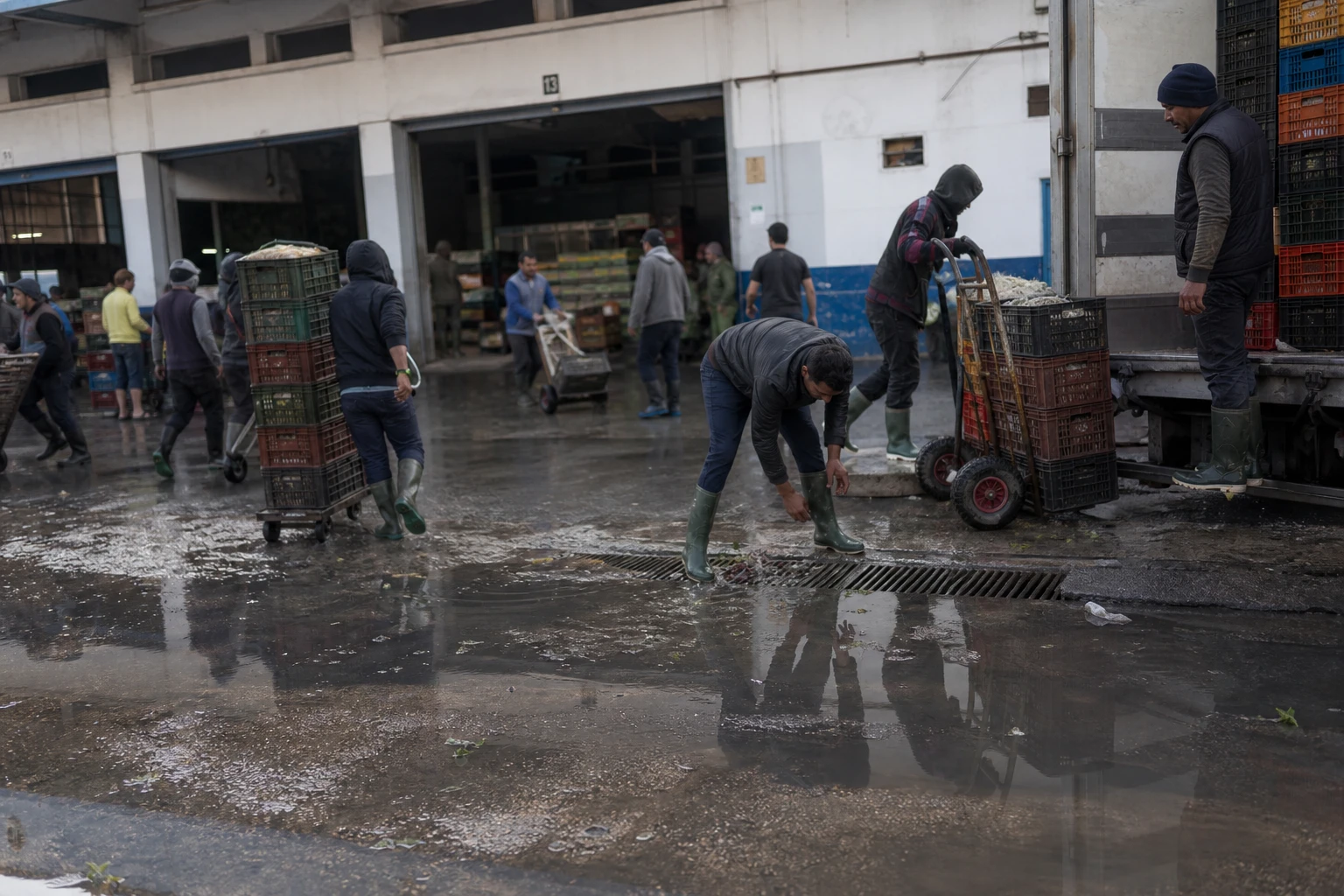
In Tunis, rain quickly tests the city and its daily flows
In the Tunisian capital, a few hours of downpours are enough to slow journeys, overwhelm main roads and complicate life in the most densely populated neighbourhoods. When clouds gather over Tunis, the issue is not just the weather. It also affects schools, shops, travel and the capacity of urban networks to absorb water without failing.
On Thursday 17 September 2026, the governorate of Tunis suspended classes at public and private schools, training centres and higher education institutions from 3pm. The decision was taken after consultation with the regional commission for disaster prevention and response, because of heavy rainfall expected in the evening and the alert map published by the National Institute of Meteorology.
A local alert in a country where extreme weather events recur
Tunisia is in North Africa, at the intersection of a Mediterranean climate increasingly disrupted by intense weather events and urban infrastructure often under strain. The governorate of Tunis operates within national civil protection and disaster prevention arrangements, mechanisms that are becoming more important as rainfall grows more concentrated, shorter-lived and harder to drain.
This type of decision is not unprecedented. In January 2026, Tunisian authorities had already suspended classes in several governorates in response to severe weather, a sign that managing weather risks has become an issue of public continuity, on a par with school health or urban traffic. The Presidency of the Government had then extended the measure to 15 governorates, including Tunis, Ariana, Ben Arous and Manouba.
What happened in Tunis on Thursday
Torrential rain hit the capital and its outskirts, leaving water on roads and pavements and disrupting traffic. In the medina of Tunis, water flowed into narrow alleyways, forcing passers-by and souk customers to take shelter in shops and under awnings. Above all, the episode highlighted the vulnerability of historic areas and neighbourhoods where water run-off is impeded by narrow streets, saturated ground and inadequate drainage.
The suspension of classes was also intended to reduce risks on school and university journeys, as authorities feared the rain would continue. Across the city, the precaution had an immediate effect: fewer journeys and less exposure to risk, but also a slowdown in local economic activity, particularly in sectors that depend on morning and afternoon footfall.
The same pattern had already emerged in January 2026, when exceptional weather caused flooding in several parts of the country. Figures reported by the authorities indicated at least five deaths and more than 300 people rescued by civil protection services, while rainfall described as unprecedented in more than 70 years was recorded in some areas.
Why the rain matters beyond the day’s episode
The issue goes beyond the weather itself. In Tunis, intense rainfall puts drainage networks, roads, schools and coordination between local authorities and central services to the test at the same time. In a capital that is home to government departments, universities, a large share of services and informal jobs, even a minor paralysis quickly spreads across the whole urban area.
The country has also launched preventive work ahead of the rainy season. In August 2026, the head of government called for 29 flood protection projects to be accelerated, at a total announced cost of 396 million dinars, as public authorities seek to limit recurring damage in several governorates. This shows that Tunisia’s response is no longer confined to emergency measures; it also involves urban planning, drain clearance, water retention and infrastructure maintenance.
For residents, the difference is tangible. In central neighbourhoods, the impact is measured in delays, difficult access and temporarily disrupted businesses. In low-lying or poorly drained areas, homes may be flooded, roads cut off and civil protection services called out. In historic areas such as the medina, the urban topography can quickly turn heavy rain into a serious episode.
A Tunisian alert with lessons for the Maghreb
This episode is a reminder that the Maghreb is entering a phase in which climate extremes are combining: heatwaves, prolonged droughts and then highly concentrated rainfall. Tunisia is not an isolated case. It shares similar constraints with its neighbours regarding water, urban land and drainage networks. At regional level, the challenge is now to strengthen weather monitoring, improve local authorities’ preparedness and link warnings to action on the ground.
The next focus will be the quality of the operational response in the hours after the alert: traffic, schools, low-lying passages, historic alleyways, flood-prone areas and the continuity of public services. In Tunisia, as in other Mediterranean capitals on the continent, rain is no longer just a seasonal matter. It has become a test of urban resilience.