Algeria
 Egypt
 Morocco
 Sudan
 Tunisia
 Benin
 Burkina Faso
 Cabo Verde
 Côte d'Ivoire
 Ghana
 Guinea
 Guinea-Bissau
 Liberia
 Mali
 Mauritania
 Niger
 Nigeria
 Senegal
 Sierra Leone
 The Gambia
 Togo
 Cameroon
 Central African Republic
 Chad
 DR Congo
 Equatorial Guinea
 Gabon
 Republic of the Congo
 São Tomé and Príncipe
 Burundi
 Comoros
 Djibouti
 Eritrea
 Ethiopia
 Kenya
 Madagascar
 Malawi
 Mauritius
 Mozambique
 Rwanda
 Seychelles
 Somalia
 South Sudan
 Tanzania
 Uganda
 Angola
 Botswana
 Eswatini
 Lesotho
 Namibia
 South Africa
 Zambia
 Zimbabwe
An industrial return that goes beyond a single well
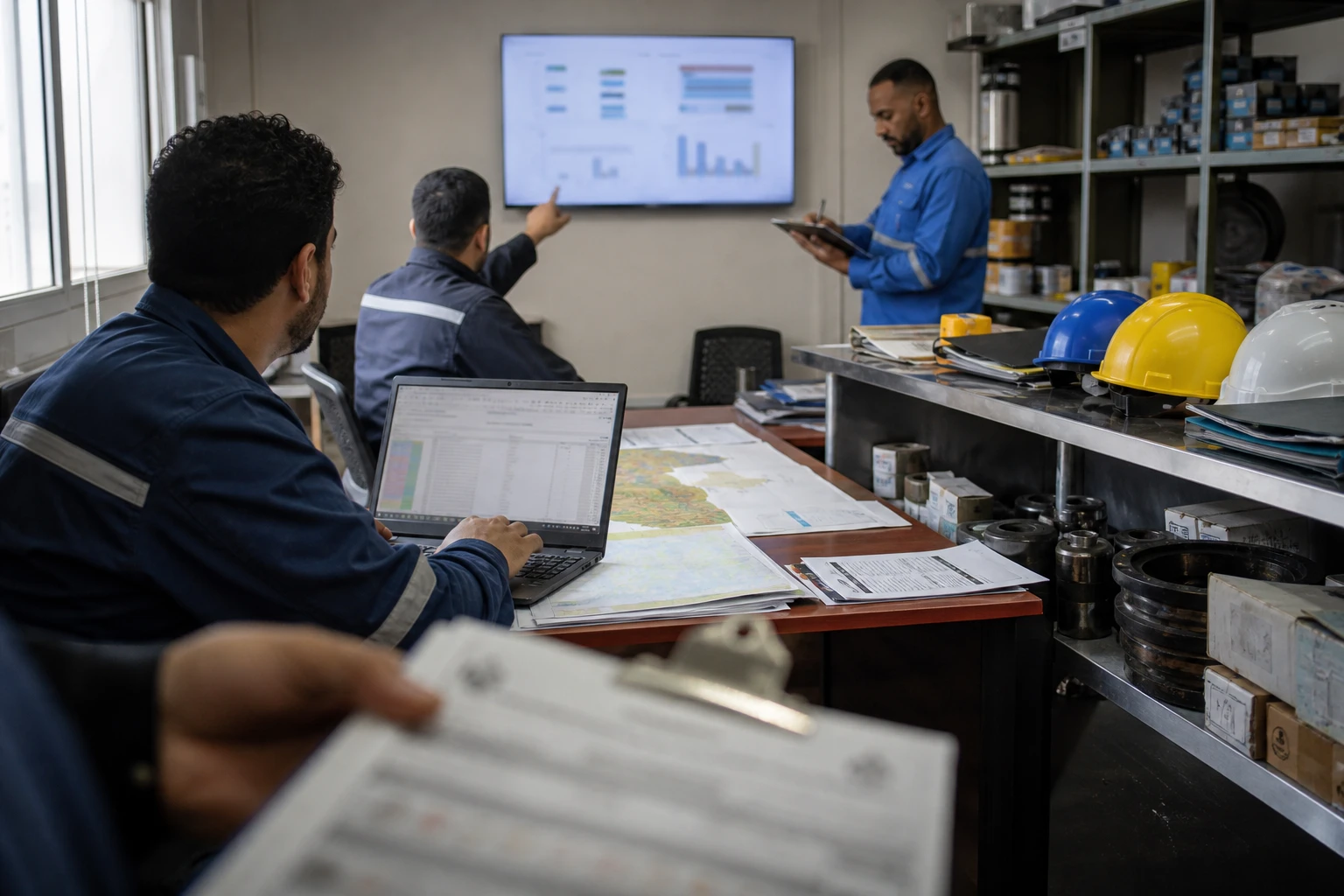
In Libya, every new decision concerning an oil field tells a story that goes far beyond a technical operation. It also shows whether Tripoli can still attract capital, whether export networks are holding up, and whether the country remains a reliable supplier to the Mediterranean and Europe. Confirmation of the commercial viability of the Essar field in the Sirte Basin should be read in this strategic context.
In a country where hydrocarbons remain the backbone of the economy, the challenge is not simply to make discoveries. A field must also be brought into production quickly, generating output and public revenue. The World Bank estimates that hydrocarbons accounted for 65% of GDP, 93% of exports and 72% of Libya’s revenue in 2024.
Tripoli, the NOC and the strategy of bringing operators back
The National Oil Corporation, Libya’s state oil company, and Austria’s OMV have confirmed the commercial viability of the Essar field following the technical and economic assessment of the well operated in block C103, in the heart of the Sirte Basin. OMV holds a 12% stake in the concession, while the NOC retains the majority share in the project.
According to statements from the two companies, the reservoir contains up to 45 million barrels of recoverable resources and could reach gross capacity of around 6,000 barrels per day once fully developed. The NOC, for its part, has published a different estimate for the same project, citing up to 195 million barrels in the upper and lower Sabil reservoirs, with expected production of around 5,000 barrels per day. This difference illustrates a familiar reality in the sector: volumes vary according to the scope considered, the resource category and the project’s level of maturity.
OMV resumed exploration activities in Libya in late 2024, after more than a decade of disruption linked to political instability. The company also notes that it has been present in the country since 1975. The NOC, meanwhile, has made the revival of exploration campaigns a central pillar of its strategy, following the reopening of a public tender in 2025 and the publication, in February 2026, of the results of a new licensing round, the first in 17 years.
Why the Sirte Basin remains decisive
The Sirte Basin remains the heart of Libya’s oil industry. Much of the country’s production and existing infrastructure is concentrated there, reducing start-up costs for new projects. The proximity of the Essar site to facilities already in operation, particularly those managed by Zueitina Oil Company, a subsidiary of the NOC, is one of the arguments put forward for speeding up the development phase.
This approach matters to both partners. For the NOC, it allows an asset to be monetised more quickly without waiting for major infrastructure works. For OMV, it reduces financial risk and confirms that a gradual return to Libya can still deliver results after years away. The Austrian group said in its 2025 annual report that its Libyan volumes had made a significant contribution to its production, and that its 2026 forecasts assume uninterrupted operations in Libya.
Modest figures for OMV, but symbolic for Libya
From Vienna’s perspective, OMV’s share of Essar’s future production would remain limited, at around 720 barrels per day if the estimate of 6,000 barrels a day is reached. For an international group, that is not a spectacular volume. But for Libya, the value lies elsewhere: every approved project, every development plan signed off and every returning partner strengthens the sector’s credibility.
Libya remains an economy highly exposed to oil-price cycles. World Bank and IMF data converge on one point: the country still depends heavily on hydrocarbons to fund the state, pay for imports and support domestic liquidity. The IMF also notes that crude oil remains the country’s main export, while the World Bank highlights how sensitive growth is to production shocks.
That is why the announcement’s significance goes beyond the Essar field alone. It confirms that international companies can return, invest, drill and turn a discovery into a producing asset. It also shows that the NOC is seeking to reopen the Libyan market without relinquishing its role as national leader. In a country where the formal economy depends heavily on the oil sector, this balance between sovereignty and openness remains central.
What this means for Libya and the region
For the authorities in Tripoli, developing Essar could bring future revenue and support the recovery of the upstream sector. For business communities around the Sirte Basin, the impact will be measured less in the number of barrels cited internationally than in direct and indirect jobs, subcontracting and the continuity of logistics services. The real effect will therefore depend on local stability, the condition of pipelines and the maintenance of a clear contractual framework.
Across North Africa and the Mediterranean, the signal is clear. Libya is seeking to consolidate its position as a nearby supplier for European refiners, at a time when supply chains remain vulnerable to geopolitical tensions. The Essar project will not resolve everything on its own. But it is a reminder that Tripoli’s Libya remains a major energy player in North Africa, capable of attracting regional and international majors when political and technical conditions allow.
The next steps will be highly practical: choosing the technical operator, setting an investment schedule, connecting to existing facilities and, above all, ensuring the country can maintain operational continuity in an environment that remains fragile. That is where the strength of Libya’s oil comeback will be measured, beyond the announcement itself.