Algeria
 Egypt
 Libya
 Morocco
 Sudan
 Tunisia
 Benin
 Burkina Faso
 Cabo Verde
 Côte d'Ivoire
 Ghana
 Guinea
 Guinea-Bissau
 Liberia
 Mali
 Mauritania
 Niger
 Nigeria
 Sierra Leone
 The Gambia
 Togo
 Cameroon
 Central African Republic
 Chad
 DR Congo
 Equatorial Guinea
 Gabon
 Republic of the Congo
 São Tomé and Príncipe
 Burundi
 Comoros
 Djibouti
 Eritrea
 Ethiopia
 Kenya
 Madagascar
 Malawi
 Mauritius
 Mozambique
 Rwanda
 Seychelles
 Somalia
 South Sudan
 Tanzania
 Uganda
 Angola
 Botswana
 Eswatini
 Lesotho
 Namibia
 South Africa
 Zambia
 Zimbabwe
A reshaping of power that says something about the post-2024 era
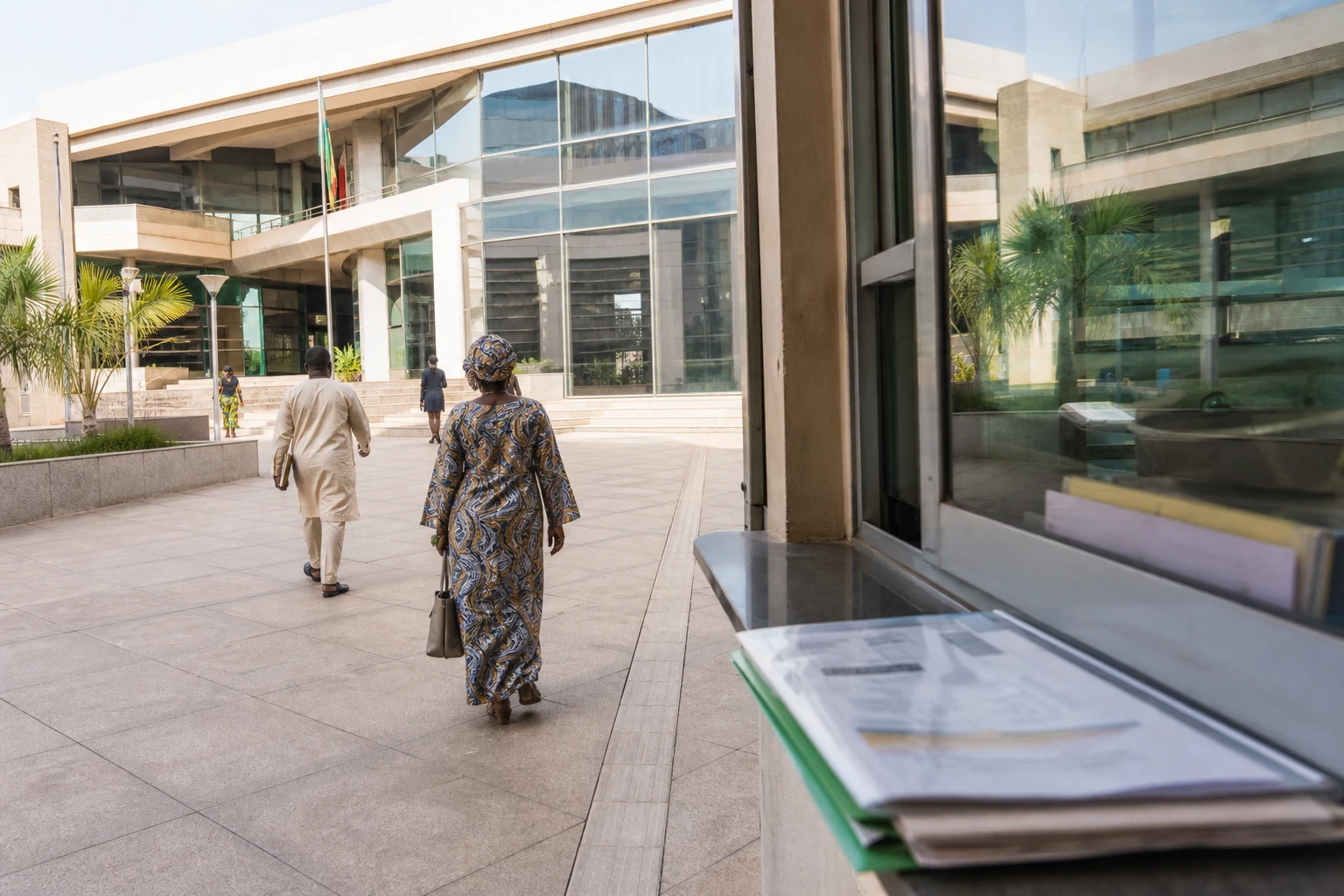
In Dakar, changes at the top of the state matter as much as speeches. When a new team takes office, it tests its room for manoeuvre in ministries, public agencies and state-owned companies. In Senegal, this phase has become a test of political stability as much as an instrument of governance.
The context is clear. Since the split between Bassirou Diomaye Faye and Ousmane Sonko, which became visible in the first half of 2026, the governing majority has stopped moving as a single bloc. The president then created his own movement, while Sonko retained strong parliamentary and political influence. This fault line now weighs on the entire public machinery.
On 10 September 2026, the Council of Ministers approved a wave of replacements at the helm of public bodies. The tally reported in the Senegalese press puts the number of officials affected at 87, including chief executives, chairmen of boards of directors and chairmen of supervisory boards. The presidential communiqué confirms several individual appointments, including those at SOGEPA SN, ANRAC, ARTP and CDC.
What the Palace is changing, and what it reveals
The most sensitive issue is not just the number. It is the logic behind it. In a state where chief executives oversee budgets, contracts, recruitment and programmes that are visible in everyday life, replacing so many officials amounts to redrawing the chain of command. The move affects both strategic urban sectors and bodies linked to regional development, planning and telecommunications.
In several cases, the government has chosen candidates from legal, administrative, accounting or technical backgrounds. This reflects an stated intention to reassert control over public management and tighten oversight of the implementation of government priorities. The 10 September communiqué also refers to translating the new Prime Minister’s general policy statement into action and preparing the National Transformation Agenda Senegal 2050.
But the political reading cannot be set aside. Several of the officials replaced had been appointed during the period when Ousmane Sonko headed the Prime Minister’s Office. Senegalese media also report, without presenting it as an official reason, that some of the ousted officials were seen as close to the former prime minister’s camp. The verified fact — the wave of appointments — must therefore be distinguished from the partisan interpretation — the “de-Pastefisation” of the administration.
The reshuffle comes as Senegal faces heavy budgetary constraints and strained relations with its financial partners. Agence France-Presse has noted that the disagreement between the president and his former ally also stemmed from choices over how to deal with the International Monetary Fund, amid high debt and revisions to public accounts. For the executive, controlling the administrative levers is therefore also a way to secure the implementation of reforms.
For the public, the impact is more tangible than it might appear. In transport, digital services, public land, economic recovery in Casamance and telecommunications regulation, the stability of leadership directly affects timelines, decisions and service quality. When people in senior posts change, procedures can slow down before being reorganised. This is often where the difference between a political announcement and a visible result is made.
A Senegalese signal, with West African significance
This phase extends beyond the national arena. Senegal remains an important player in ECOWAS, the Economic Community of West African States, and its internal balance matters to the region as a whole. A government that tightens administrative discipline while managing a fragmented majority is sending a message to markets, regional partners and lenders: the executive wants to retain control of the economic trajectory despite the political crisis.
The moment is attracting particular attention as Dakar also looks ahead to events that will bring it international visibility, with the Dakar 2026 Youth Olympic Games already on the national agenda. The state’s ability to stabilise its technical departments, agencies and public companies will affect preparations for infrastructure, transport and hospitality. Here, politics quickly meets administration.
This reshuffle should also be viewed against a broader trend seen in several African capitals: when the executive fragments or recentres itself, it often starts by reorganising the parastatal sector. This is not just about loyalty. It is also a way of retaking control of the state as it operates in practice — through budgets, technical files and economic flows. In Senegal, this contest is now being fought in Dakar, but its effects will be felt far beyond the capital.
The next stage will be seen in the decrees, handovers and composition of teams working on major economic issues. If the new administrative map improves the coherence of public action, the government may see it as a consolidation. If instead it fuels internal rivalries and delays implementation, it will become another symptom of the reshaping crisis running through Senegal’s presidential camp.