Algeria
 Egypt
 Libya
 Morocco
 Sudan
 Tunisia
 Benin
 Burkina Faso
 Cabo Verde
 Côte d'Ivoire
 Ghana
 Guinea
 Guinea-Bissau
 Liberia
 Mali
 Mauritania
 Niger
 Nigeria
 Senegal
 Sierra Leone
 The Gambia
 Togo
 Cameroon
 Central African Republic
 Chad
 DR Congo
 Equatorial Guinea
 Gabon
 Republic of the Congo
 São Tomé and Príncipe
 Burundi
 Comoros
 Djibouti
 Eritrea
 Ethiopia
 Kenya
 Madagascar
 Malawi
 Mauritius
 Mozambique
 Rwanda
 Seychelles
 Somalia
 South Sudan
 Tanzania
 Angola
 Botswana
 Eswatini
 Lesotho
 Namibia
 South Africa
 Zambia
 Zimbabwe
A shifting timetable, but a project moving up a scale
In Kampala, Ugandan oil is no longer merely a promise of future revenue. It has become a test of approach for the state and investors, and for an economy that has spent years waiting to turn its discoveries into real cash flow. The new target set by the authorities, with first commercial oil now expected in June 2027, extends that wait but also confirms that the project is entering its most tangible phase.
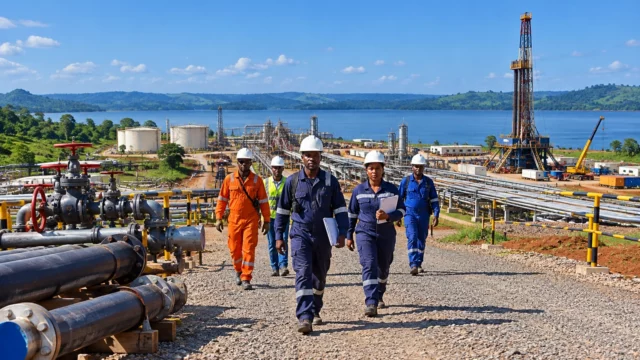
The delay comes as Uganda relies on a network of interconnected infrastructure: the Tilenga and Kingfisher fields, the EACOP pipeline, which will link Hoima to Tanga in Tanzania over 1,443 kilometres, and the international marketing of crude named Pearl Sweet. Across the region, this sequence is part of the momentum of the EAC, the East African Community, where energy, logistics corridors and taxation have become strategic as well as political issues.
What the figures say, and what they really tell us
The debate is not just about a date. It concerns the credibility of an industrial timetable that has already slipped several times. In March 2026, parliamentary officials were still saying that first oil was expected by the end of July 2026. A few months later, financial authorities cited June 2027 as the new target. The shift shows that the project remains dependent on synchronising production facilities, the pipeline and the commercial conditions for bringing oil to market.
On the ground, work is nevertheless progressing. The Uganda Investment Authority reported that, as at 30 June 2026, Tilenga was 74% complete and Kingfisher 79% complete, while EACOP had reached 90% overall completion. EACOP, for its part, announced in late August 2026 that pumping station 1 in Hoima was under advanced supervision, a sign that the logistics chain is gradually moving beyond announcements to testing and finishing work.
Uganda’s project is built around two major fields. Tilenga, operated by TotalEnergies, is targeting about 190,000 barrels a day at full capacity. Kingfisher, operated by the China National Offshore Oil Corporation, is targeting 40,000 barrels a day. Together, they are expected to supply crude considered sufficiently attractive in quality for export, now presented under the name Pearl Sweet after being publicly named by the authorities on 2 September 2026.
Vitol, crude sales and the battle over revenues
The choice of Swiss trader Vitol to market Pearl Sweet has a very practical purpose: securing access to markets and organising crude sales even before commercial production begins. This step is crucial for Kampala, because the value of the oil depends not only on Uganda’s subsoil. It also depends on transport, the project’s financing costs and the ability to sell the cargo on favourable terms.
This is where the figures become political. According to the Institute for Energy Economics and Financial Analysis, the cost of EACOP has risen to about $5.6bn, nearly 55% more than the estimate used before the final investment decision. The same institute judges that future Ugandan state revenues could be up to 53% below initial projections in some scenarios, because of delays, cost overruns and changes in the global oil market. In other words, the pipeline is essential, but it is already weighing on expected returns.
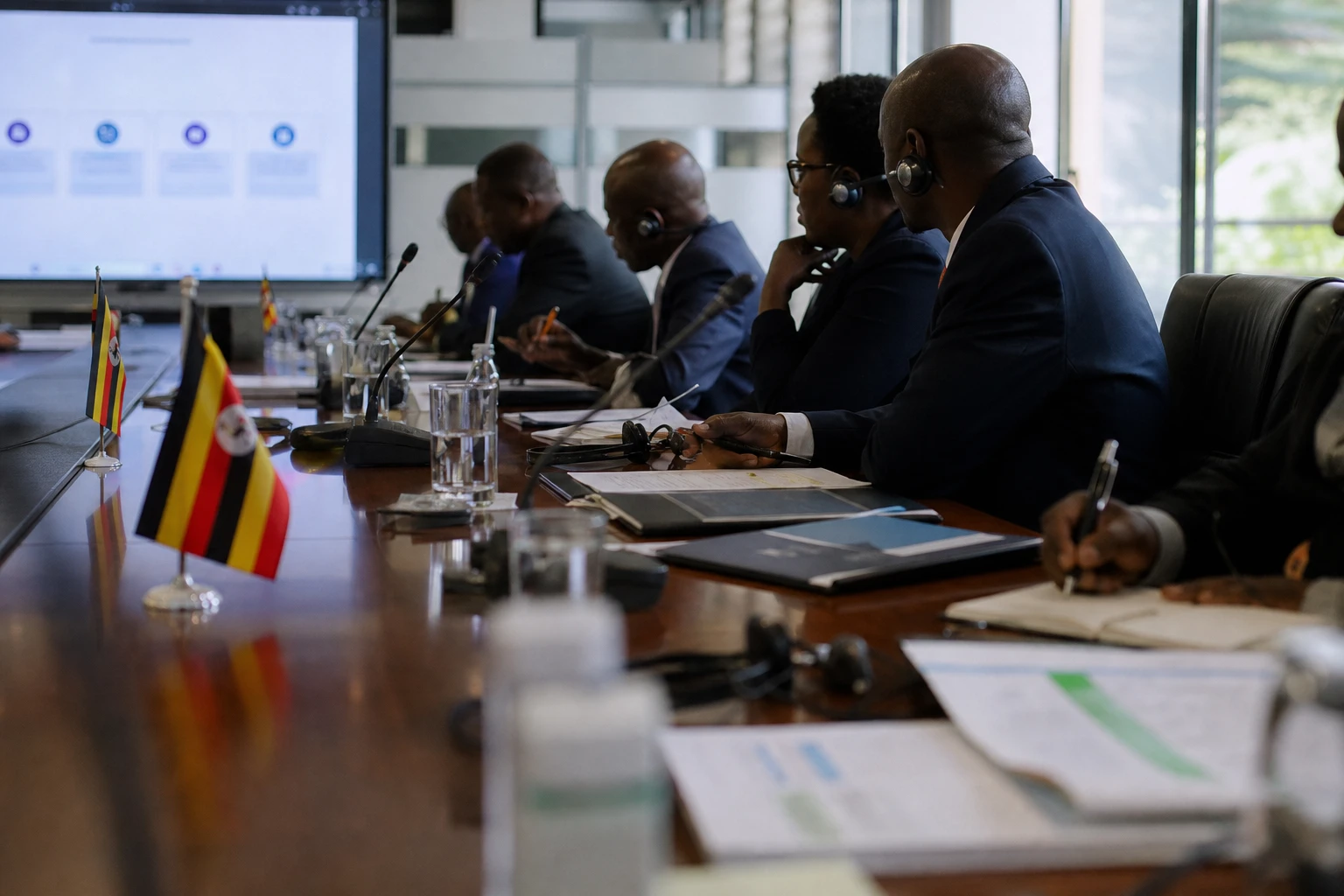
This explains the caution shown by Finance Minister Henry Musasizi. Before the parliamentary committee, he declined to commit to too precise a date, arguing that a premature announcement could cloud investment decisions if circumstances changed. That caution reflects a communications choice, but also a real constraint: a project of this scale requires production, logistics and sales to be perfectly aligned.
A Ugandan issue with regional reach
For Uganda, the stakes go beyond the state budget alone. Expected oil revenues are meant to support infrastructure, the balance of payments and industrial transformation policies. The 2026/2027 budget also incorporated oil revenue projections, showing that the executive continues to count on this windfall to support growth and fund its priorities. But until the first commercial barrel is produced, these projections remain vulnerable to even the smallest delay.
The regional significance is just as clear. EACOP links the continent’s interior to the Indian Ocean via Tanzania, and the project deepens interdependence between Kampala and Dodoma. The recent launch of a new phase of energy partnership between the two countries shows that the Uganda–Tanzania axis is no longer limited to crude: it also encompasses storage, logistics, gas and regional trade flows. In East Africa, Ugandan oil is therefore becoming a matter of economic integration as much as an energy issue.
At continental level, this case is a reminder of a familiar reality: African countries betting on hydrocarbons must balance expected revenues, infrastructure costs and the volatility of global markets. Uganda is pursuing this course with its own choices, Asian and European partners, and a budgetary trajectory that now depends on the state’s ability to meet deadlines without giving up its room for negotiation. The next stage to watch will be the actual delivery of transport facilities and confirmation that commercial operations will begin in the first half of 2027.