Algeria
 Egypt
 Libya
 Morocco
 Sudan
 Tunisia
 Benin
 Burkina Faso
 Cabo Verde
 Côte d'Ivoire
 Ghana
 Guinea
 Guinea-Bissau
 Liberia
 Mali
 Niger
 Nigeria
 Senegal
 Sierra Leone
 The Gambia
 Togo
 Cameroon
 Central African Republic
 Chad
 DR Congo
 Equatorial Guinea
 Gabon
 Republic of the Congo
 São Tomé and Príncipe
 Burundi
 Comoros
 Djibouti
 Eritrea
 Ethiopia
 Kenya
 Madagascar
 Malawi
 Mauritius
 Mozambique
 Rwanda
 Seychelles
 Somalia
 South Sudan
 Tanzania
 Uganda
 Angola
 Botswana
 Eswatini
 Lesotho
 Namibia
 South Africa
 Zambia
 Zimbabwe
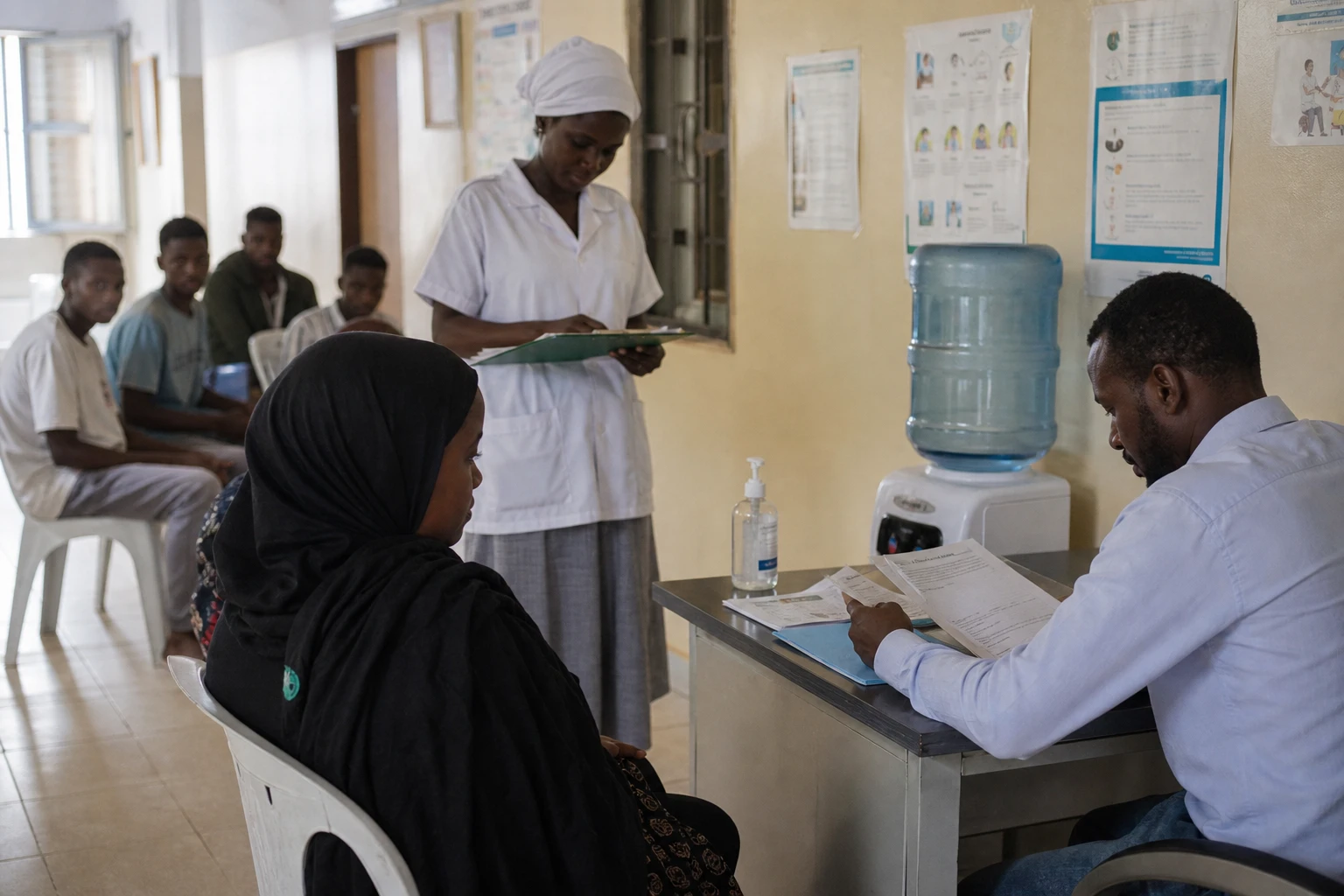
When drugs are no longer just passing through, society pays the price
In Nouakchott and Nouadhibou, the issue is no longer merely one for the police. It now affects families, neighbourhoods and everyday security. In Mauritania, several recent warning signs show that drugs are no longer circulating only along transit routes: they are also fuelling local consumption, with more visible social consequences.
This development is forcing Nouakchott to face the problem without deluding itself. The country lies at the crossroads of the Sahel, the Atlantic and the Maghreb, an area where trafficking routes and methods change rapidly. Mauritania is also involved in important cooperation frameworks, notably with the United Nations Office on Drugs and Crime, and in a regional security effort that extends beyond its borders.
Recent events have heightened concern
On 27 August 2026, Mauritania’s Council of Ministers adopted a draft law on combating narcotic drugs and psychotropic substances. The text broadens the list of offences to include production, possession, cultivation and trafficking, as well as criminal organisations involved in these activities. The stated aim is to modernise a national framework considered inadequate in the face of evolving networks.
A few weeks earlier, the authorities had already stepped up raids. In Nouakchott, the gendarmerie announced on 15 September 2026 the arrest of eight people, including one foreign national, and the seizure of more than one kilogram of “black stone”, traditional alcoholic drinks and psychotropic pills. According to the security forces, those detained were involved in selling, distributing and consuming the substances.
The same pattern is evident in other recent operations in Nouakchott and the country’s interior. In August, drug and psychotropic-substance trafficking networks were also dismantled in western Nouakchott and Akjoujt, with several arrests. These repeated announcements point to the same conclusion: security services are no longer talking only about isolated interceptions, but about small networks becoming established in towns.
The public response is not limited to law enforcement. In 2026, Mauritania launched its first integrated, multisectoral national strategy for mental health and addiction prevention for 2026-2030. The government has also spoken of rehabilitating and providing better care for people with dependencies. This points to a change in approach: addiction is no longer treated solely as an offence, but also as a public health issue.
Why the phenomenon is taking hold
The causes cited by researchers and security officials converge on one point: social vulnerability matters. Unemployment, urban poverty, the anonymity of large neighbourhoods and the breakdown of some family structures create favourable conditions. The Mauritanian authorities themselves have acknowledged that drugs contribute to an increase in other forms of crime.
There is also a structural factor: the country’s geographical position. Trafficking routes in West Africa have long served as transit corridors to Europe, particularly for cocaine from South America. UNODC research shows that West Africa remains a major transit zone, while seizures of pharmaceutical opioids are heavily concentrated in West and Central Africa. In other words, Mauritania is operating in a regional environment exposed to several markets at once.
What is new, according to the Mauritanian authorities, is that drugs are no longer merely passing through the country. They are beginning to feed local demand. That is where the issue becomes even more sensitive. When the domestic market grows, the impact extends beyond policing: families, schools, poorer neighbourhoods, small businesses and health services are all affected in turn.
In this context, Mauritania’s approach to the issue is more nuanced than a straightforward fight against trafficking. The government is seeking to combine prevention, law enforcement, judicial cooperation and addiction treatment. This approach seems all the more necessary because the 1993 law, often considered outdated, no longer adequately covered current forms of trafficking, precursor chemicals and organised crime.
A Mauritanian issue, but also a Sahelian and Atlantic one
The issue extends far beyond Nouakchott. From a security perspective, Mauritania lies in a corridor where smuggling, irregular migration, various forms of trafficking and the movement of weapons intersect. Politically, cooperation with UNODC and regional security frameworks aims to prevent the country from becoming a lasting link in distribution networks, rather than merely a place of transit.
The emphasis on prevention among young people is no coincidence. It reflects a concern shared across the continent: UNODC data indicate that most people treated for drug-use disorders in Africa are under 35. In short, the drug issue is intertwined with human capital, education, employment and mental health.
Mauritania therefore faces a triple challenge. First, it must shut down the most visible distribution channels in towns. Then it must prevent local consumption from becoming entrenched. Finally, it must ensure the issue is not addressed solely through a security lens, because networks adapt quickly when social demand remains intact. The coming months will test this delicate balance, as the draft law is implemented, the mental health and addiction strategy is scaled up, and coordination with regional partners continues.