Algeria
 Egypt
 Morocco
 Sudan
 Tunisia
 Benin
 Burkina Faso
 Cabo Verde
 Côte d'Ivoire
 Ghana
 Guinea
 Guinea-Bissau
 Liberia
 Mali
 Mauritania
 Niger
 Nigeria
 Senegal
 Sierra Leone
 The Gambia
 Togo
 Cameroon
 Central African Republic
 Chad
 DR Congo
 Equatorial Guinea
 Gabon
 Republic of the Congo
 São Tomé and Príncipe
 Burundi
 Comoros
 Djibouti
 Eritrea
 Ethiopia
 Kenya
 Madagascar
 Malawi
 Mauritius
 Mozambique
 Rwanda
 Seychelles
 Somalia
 South Sudan
 Tanzania
 Uganda
 Angola
 Botswana
 Eswatini
 Lesotho
 Namibia
 South Africa
 Zambia
 Zimbabwe
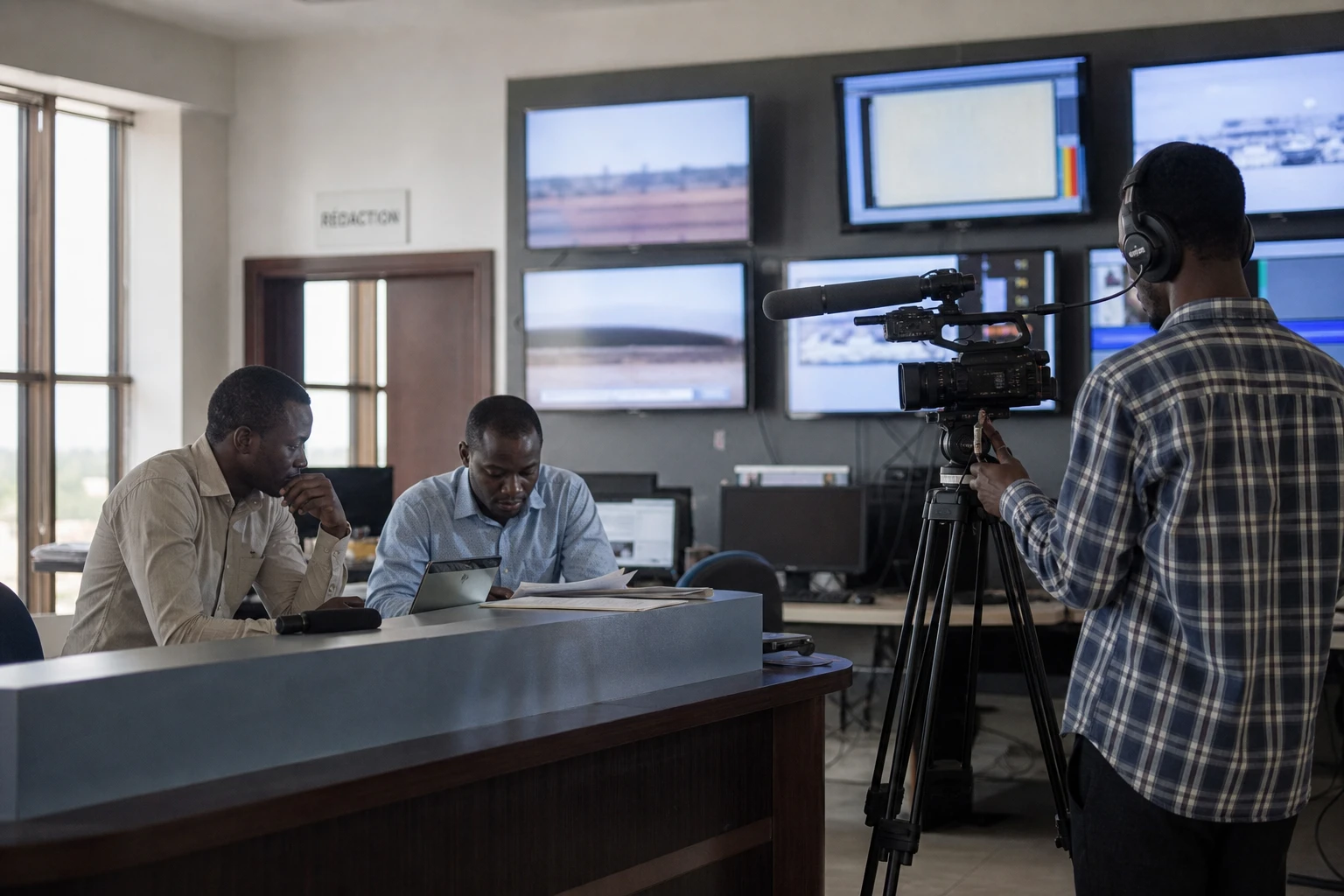
In northern Chad, gold can outweigh the border
In Tibesti, the line separating Chad from Libya is more than a border on a map. It is also a transit corridor, an informal market and, for some villages, a source of income that can no longer be ignored. In this arid, isolated area, the Chadian state is trying to regain control without upsetting an already fragile local balance.
The issue extends beyond Tibesti alone. Chad belongs to CEMAC, the Central African Economic and Monetary Community, which aims to ensure the free movement of people, goods and services, as well as a more stable business environment. Regionally, northern Chad is also touched by broader dynamics involving Sahelian security, smuggling and movement between Libya, Niger and Sudan.
Two-track diplomacy with Tripoli and eastern Libya
For several months, N’Djamena has sent repeated signals of openness to both Libyan power centres. In July 2026, Saddam Haftar, son of Marshal Khalifa Haftar and number two in the eastern forces, was received by President Mahamat Idriss Déby Itno in N’Djamena to discuss military and security cooperation. A month earlier, Chad had also opened its consulate general in Benghazi, a move described by its foreign ministry as a step towards consolidating relations with Libya.
This strategy is not merely a diplomatic gesture. It reflects a reality on the ground: the northern border cannot be secured by force alone. It requires intermediaries, contacts, local arrangements and at least some dialogue with Libyan authorities, whether they are recognised by the UN in Tripoli or influential in the east. The announced resumption, in August 2026, of the Chad-Libya joint commission after a 17-year hiatus is part of this gradual reopening.
In Tibesti, gold shapes both the economy and tensions
The heart of the problem is Kouri Bougoudi and, more broadly, the Tibesti massif. According to the Global Initiative Against Transnational Organized Crime, the site is the largest goldfield in northern Chad. Its growth has attracted thousands of artisanal miners, traders, migrants and transport networks. The organisation also describes an area through which fuel, basic goods, weapons, drugs and migrants move. Gold is sometimes used as a medium of exchange.
This economy provides a livelihood for families, but it often operates outside formal channels. Artisanal gold mining is officially banned in Chad, the same source notes, but the ban has long been difficult to enforce on the ground. In a region far from N’Djamena, where the state is present only intermittently, the mine has become a site of constant negotiation between the authorities, local communities and armed actors.
Recent history also explains the authorities’ caution. In 2021, deadly clashes around Kouri Bougoudi showed how rivalries between groups, the lure of the resource and security interventions could quickly spiral out of control. More broadly, tensions in Tibesti are intertwined with long-standing grievances over local representation, the distribution of wealth and control of cross-border routes.
What this cooperation changes — and what it does not resolve
For the Chadian authorities, the challenge is clear: contain trafficking, prevent armed incursions and stop the north from becoming an area beyond their control. For residents, the question is even more immediate: how can they preserve income from gold without a return to abrupt shutdown operations that disrupt travel, trade and access to essential goods? The beneficiaries of successful security efforts will not be the military alone. They must also include the communities that depend on this economy, often without a social safety net.
Cooperation with Tripoli and Benghazi could help track movements on the desert’s fringes more effectively, but it remains fragile. Libya is still politically fragmented, and both the eastern forces and the Government of National Unity pursue their own priorities. In other words, Chad is walking a narrow line: engaging with all the actors able to influence the border without appearing to choose a side in Libya’s crisis.
A Chadian issue, but also a test for Central Africa and the Sahel
Tibesti serves as a regional barometer. When gold, smuggling and ad hoc alliances become entrenched in a border area, the entire security chain shifts: from northern Chad to southern Libya, then to Niger, Sudan and sometimes further afield. CEMAC, of which Chad is a member, cannot ignore this kind of hotspot, as it affects movement, borders and Central Africa’s economic stability.
The next steps will play out on several fronts. First, N’Djamena’s ability to make the announced joint commission with Libya work. Second, the actual implementation of security measures in Tibesti. Finally, how the Chadian state translates its increased presence into public services, mining regulation and local reconciliation. Without that, the northern border will remain a useful but unstable space, where gold continues to dictate its own geography.