Algeria
 Egypt
 Libya
 Morocco
 Sudan
 Tunisia
 Benin
 Burkina Faso
 Cabo Verde
 Côte d'Ivoire
 Ghana
 Guinea
 Guinea-Bissau
 Liberia
 Mauritania
 Niger
 Nigeria
 Senegal
 Sierra Leone
 The Gambia
 Togo
 Cameroon
 Central African Republic
 Chad
 DR Congo
 Equatorial Guinea
 Gabon
 Republic of the Congo
 São Tomé and Príncipe
 Burundi
 Comoros
 Djibouti
 Eritrea
 Ethiopia
 Kenya
 Madagascar
 Malawi
 Mauritius
 Mozambique
 Rwanda
 Seychelles
 Somalia
 South Sudan
 Tanzania
 Uganda
 Angola
 Botswana
 Eswatini
 Lesotho
 Namibia
 South Africa
 Zambia
 Zimbabwe
In Dioura, another attack highlights the fragility of central Mali
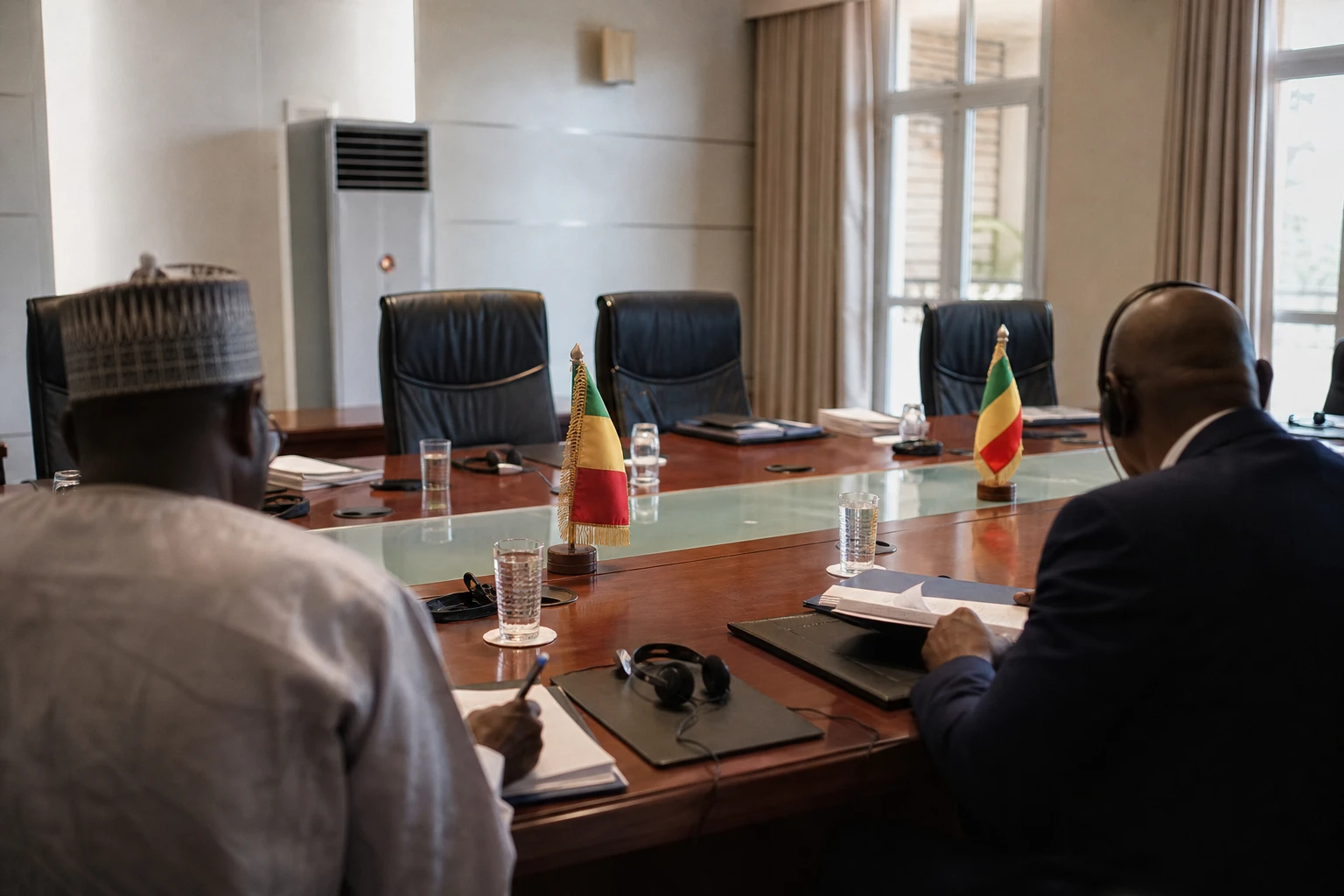
In Dioura, in the Mopti region, a barracks is not merely a military target. It is also a foothold in an area where people, weapons, livestock, crops and internal trade routes all move. When a position falls, the entire idea of territorial control is thrown into question, with immediate consequences for families, transporters and local markets.
The attack on 10 September 2026 is above all a reminder of a reality now firmly established in Mali: the country’s centre remains an area under constant pressure, between armed groups affiliated with al-Qaeda, army counter-attacks and the presence of Russian partners integrated into the security apparatus. In this theatre, each side tries to impose its own account of events, while the population lives with the consequences.
What is known about the toll so far
According to security and local sources cited by AFP, the assault on the Dioura camp left at least 50 Malian military personnel and five paramilitaries from Russia’s Africa Corps dead. The same sources also report that several dozen soldiers were taken prisoner. This toll remains attributed to corroborated sources, as the Malian army did not publish a detailed figure for human losses in its first public statement.
The Malian army, for its part, acknowledged the attack and announced air and ground counter-operations in the area. In statements reported by the local press, the general staff said it had launched a pursuit of the attackers and referred to the «neutralisation» of several terrorist fighters on motorbikes. This wording confirms the existence of a counter-offensive, without resolving all the questions about the exact number of casualties or the fate of the prisoners.
The Group for the Support of Islam and Muslims, known by its acronym JNIM, claimed the operation through its propaganda channels. The organisation says it took control of the barracks. The claim alone is not enough to establish all the tactical details, but it confirms the modus operandi of a group that alternates direct attacks, ambushes and harassment of Malian positions.
Why Dioura matters so much
Dioura is not an insignificant place. The town lies in central Mali, in an area where the state has been trying for years to maintain a military presence, while armed groups regularly test its lines of defence. The Mopti region is a sensitive crossroads. It links fragile rural areas to routes important for the informal economy, pastoral movements and trade with other regions of the country.
This attack is also part of a wider series of operations across the central Sahel. Since 2023, and even more so in 2025, jihadist groups have shown that they can strike fixed bases, isolate garrisons and then exploit the vacuum left after assaults. In Dioura, repeated attacks underline the difficulty of holding a camp over the long term without mobility, reliable intelligence and the capacity to send reinforcements quickly.
The use of Africa Corps adds a new dimension. This Russian organisation, which took over from the former Wagner set-up in Mali, is integrated into the security strategy of the transitional authorities. But its presence does not automatically protect the most exposed positions. On the contrary, it shows that the war in Mali is now viewed through a wider lens: that of external military alliances, their actual effectiveness and their political cost.
A Malian perspective, not just a Sahelian one
For Bamako, the issue is also political. Since Mali’s withdrawal from ECOWAS, the ruling junta has asserted greater sovereignty and a redefinition of its partnerships. In practice, every military setback inside the country revives a simple question: does the state control more territory than before, or does it now depend on foreign allies in its most sensitive areas?
For Malians, the impact is even more tangible. An attack such as the one in Dioura disrupts movement, delays supplies and increases uncertainty in markets across the Mopti region. It can also displace families, reduce herders’ activity and make villages already dependent on fluctuating security more vulnerable. In this kind of crisis, the capital Bamako debates strategy, while communities in the centre first experience the closure of public space.
The human toll must also be treated with caution. The figures being reported remain conditional in several media outlets and by security sources, as is common in the first hours after a large-scale assault. But even without absolute certainty about the final total, the trend is clear: Dioura is now among the heaviest blows suffered by the Malian army in recent months.
What this attack signals for what comes next
At regional level, Dioura confirms that the central Sahel remains a theatre of military realignment. JNIM is seeking strategic depth there. The Malian army is seeking to hold the ground. And Russian partners want to demonstrate that they can influence the security of a state at war. The balance of power is therefore being contested on the ground as much as in the accounts of events.
What happens next will depend on two points. First, the FAMa’s ability to secure the Dioura area over the long term after its counter-attack. Second, how Bamako chooses to count, or not count, its casualties and prisoners. In Mali’s war, institutional silence often fuels doubt. But the ground always has the final say.