
 Algeria
 Egypt
 Libya
 Morocco
 Sudan
 Tunisia
 Benin
 Burkina Faso
 Cabo Verde
 Côte d'Ivoire
 Ghana
 Guinea
 Guinea-Bissau
 Liberia
 Mali
 Mauritania
 Niger
 Nigeria
 Senegal
 Sierra Leone
 The Gambia
 Togo
 Cameroon
 Central African Republic
 Chad
 Equatorial Guinea
 Gabon
 Republic of the Congo
 São Tomé and Príncipe
 Burundi
 Comoros
 Djibouti
 Eritrea
 Ethiopia
 Kenya
 Madagascar
 Malawi
 Mauritius
 Mozambique
 Rwanda
 Seychelles
 Somalia
 South Sudan
 Tanzania
 Uganda
 Angola
 Botswana
 Eswatini
 Lesotho
 Namibia
 South Africa
 Zambia
 Zimbabwe
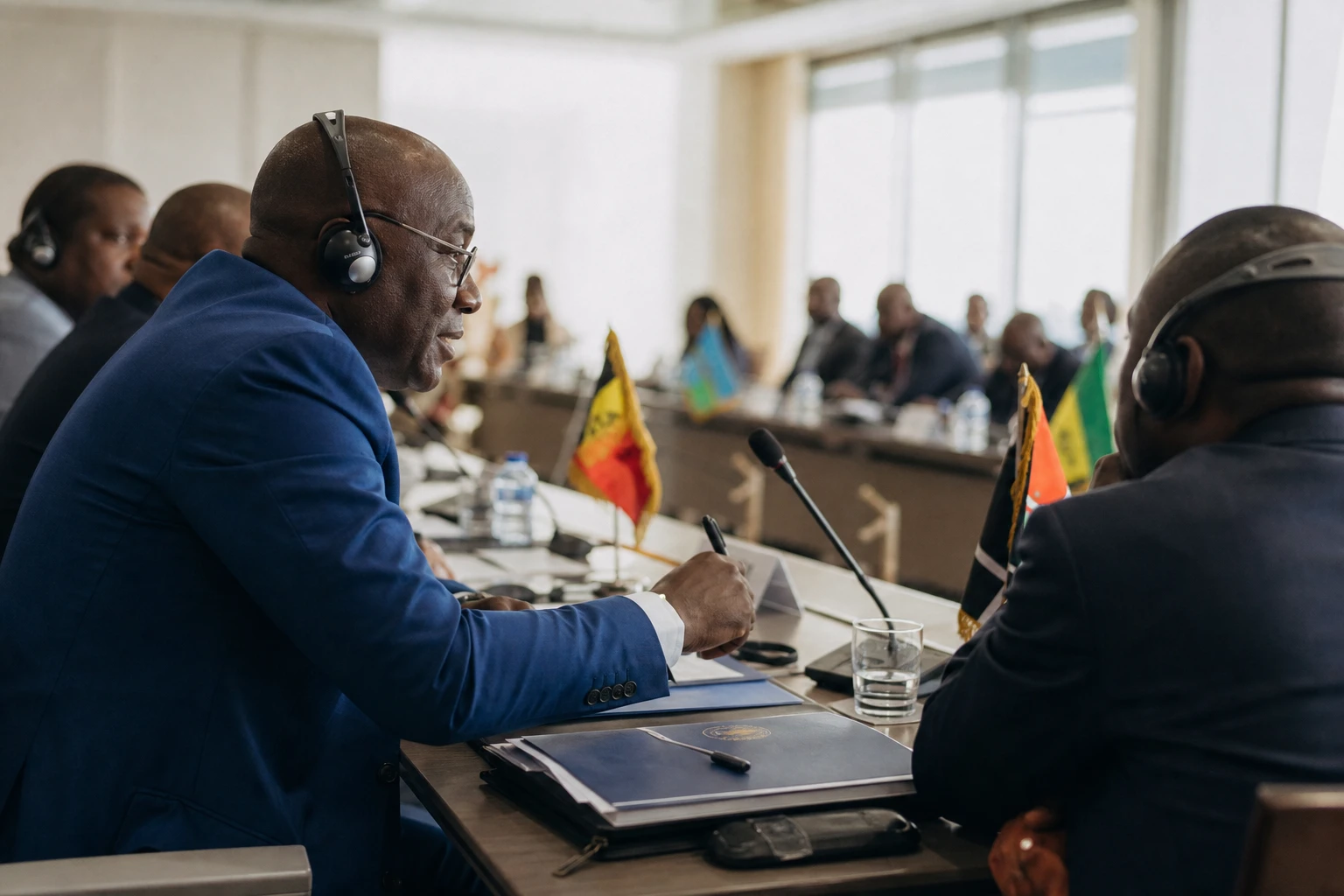
A controlled dialogue in a country seeking a lasting way out
In Kinshasa, the debate over national dialogue is not merely institutional. It touches on the war in the east, mistrust between political camps and the central question of who can still set a common framework without derailing it. In the Democratic Republic of the Congo, President Félix Tshisekedi has just taken a further step by establishing the mechanism tasked with preparing the talks, after announcing the launch of the process himself on 28 August 2026.
The context explains what is at stake. For several months, the DRC has been dealing with several fronts at once: internal political discussions in Kinshasa, regional peace processes and the ongoing crisis in the east of the country. The Southern African Development Community, or SADC, continues to reaffirm its support for peaceful and diplomatic solutions to stabilise the area, as the conflict has already unsettled the regional security balance.
A preparatory committee, not yet the dialogue itself
On 13 September 2026, a presidential order created a committee to organise the national dialogue. This point warrants clarification, because there is a difference between the structure now in place and the future preparatory commission, which is to oversee the political work. According to the text made public, the committee will not organise the discussions directly. It must first prepare the establishment of the preparatory commission and lay the administrative, material, logistical and security foundations for the process.
The presidency retains control of the essentials. The committee is attached directly to the Presidency of the Republic. It will be led by a co-ordinator and a deputy, both appointed by Félix Tshisekedi. The head of state will also appoint the other members, may add individuals or further resources, and will retain the power to dissolve it. A technical secretariat of eleven experts will support the body.
Its stated remit is precise: consult the groups likely to take part in the process, define the resources required, prepare the terms of reference, roadmap and background studies, then consolidate the contributions received. At this stage, however, the final timetable remains unclear. The presidency has only said that, after the committee’s preliminary report, a second order will officially convene the dialogue and set out its guiding principles, stages, representation arrangements and monitoring mechanisms.
Political reservations over the method and who gets a place
The process has not won unanimous support. Several opposition figures object less to the idea of dialogue than to the framework chosen by Kinshasa. The president’s plan has already drawn reservations from Martin Fayulu, who advocated a short format and challenged the idea of a framework set unilaterally by the head of state. The Sauvons la RDC movement, close to Joseph Kabila, has called for neutral, independent and impartial mediation under the auspices of the African Union and the United Nations, with dialogue held outside Congolese territory. The presidency has ruled out that option.
Representation therefore remains central. In a country as vast as the DRC, the form of a dialogue matters almost as much as its existence. If the committee appears too closed, it risks fuelling the perception that the process is being tightly controlled. If it is too broad without clear rules, it could become unmanageable. The credibility of the initiative hinges on this. The government says it wants an orderly political way out. The opposition, for its part, fears a mechanism directed from above and unable to secure acceptable compromises.
Congolese churches have long advocated negotiations. In June, the National Episcopal Conference of Congo, or CENCO, called for a shift from a « culture of power » to one of negotiation, reaffirming its support for the Social Pact for Peace and Coexistence in the DRC and the Great Lakes region, drawn up with the Church of Christ in Congo. This church-led initiative now serves as a point of reference for those seeking a dialogue less focused on institutional calculations.
A political response to a wider crisis
The national dialogue is taking place as the east of the country remains at the centre of tensions. UN reports and analyses by major international media describe a situation that continues to deteriorate, with persistent fighting, violations of ceasefire agreements and severe effects on civilians. In this context, President Tshisekedi has also set a red line: groups that fight with weapons, occupy parts of the territory or act on behalf of a foreign power will not be able to take part in the dialogue as political groups. He has also ruled out a general amnesty for serious crimes.
This political choice has a rationale. It seeks to prevent the dialogue from being seen as a reward for rebellion. But it also has a side effect: it narrows the scope for negotiation with certain armed actors, particularly those Kinshasa holds responsible for occupying parts of the national territory. At the same time, a committee placed directly under presidential authority reassures the majority, which wants to retain control of the process, but worries those calling for more detached mediation.
For the Congolese population, the stakes are tangible. In the major cities, political debate centres on the legitimacy of the framework and the opposition’s place in it. In the eastern provinces, the priorities are security, movement, access to public services and civilian protection. Traders, displaced families, local authorities and informal-economy workers are not waiting for an abstract grand statement. They are waiting for a measure of stability. This difference in impact is what gives the dialogue its real significance.
What Kinshasa is also testing across Africa
Beyond the DRC, the issue points to a recurring question across the continent: how to organise credible ways out of crises when institutions are contested, armed groups remain active and mediation efforts multiply. The African Union, SADC and other regional frameworks are already involved, directly or in the background. Angola has also stressed the importance of inter-Congolese dialogue, while Togo, through its mediator in the peace process in the east of the DRC, remains involved in African diplomatic efforts.
What happens next will be decisive. If the second order sets out more balanced representation and a clear timetable, the dialogue could become a useful forum for political realignment. If it remains too centred on the presidency, it risks becoming a mere instrument of endorsement. In the DRC, this distinction is not theoretical. It will determine whether Kinshasa opens a genuine cycle of compromise or adds another layer to an already complex crisis.



