
 Algeria
 Egypt
 Libya
 Morocco
 Sudan
 Tunisia
 Benin
 Burkina Faso
 Cabo Verde
 Côte d'Ivoire
 Ghana
 Guinea
 Guinea-Bissau
 Liberia
 Mali
 Mauritania
 Niger
 Nigeria
 Senegal
 Sierra Leone
 The Gambia
 Togo
 Cameroon
 Central African Republic
 Chad
 Equatorial Guinea
 Gabon
 Republic of the Congo
 São Tomé and Príncipe
 Burundi
 Comoros
 Djibouti
 Eritrea
 Ethiopia
 Kenya
 Madagascar
 Malawi
 Mauritius
 Mozambique
 Rwanda
 Seychelles
 Somalia
 South Sudan
 Tanzania
 Uganda
 Angola
 Botswana
 Eswatini
 Lesotho
 Namibia
 South Africa
 Zambia
 Zimbabwe
A neighbourhood standing firm against a fire that has become all too familiar
In Bukavu, the pain does not end with the tragedy itself. It lives on in burnt-out homes, school bags recovered from the rubble and families forced to start again without a point of reference. In the provincial capital of South Kivu, a fire is no longer just a local accident. It also exposes a fragile city, where urban space, schools and local safety are all caught up in the same vulnerability.
The shock is all the greater because the tragedy struck schoolchildren, against an already grim backdrop in the east of the Democratic Republic of the Congo. Bukavu has been in a complex institutional situation since 2025, marked by the presence of AFC/M23 and persistent security tensions in the provinces of North Kivu and South Kivu. In February 2025, the UN Security Council called for M23 to withdraw from Bukavu and other occupied areas.
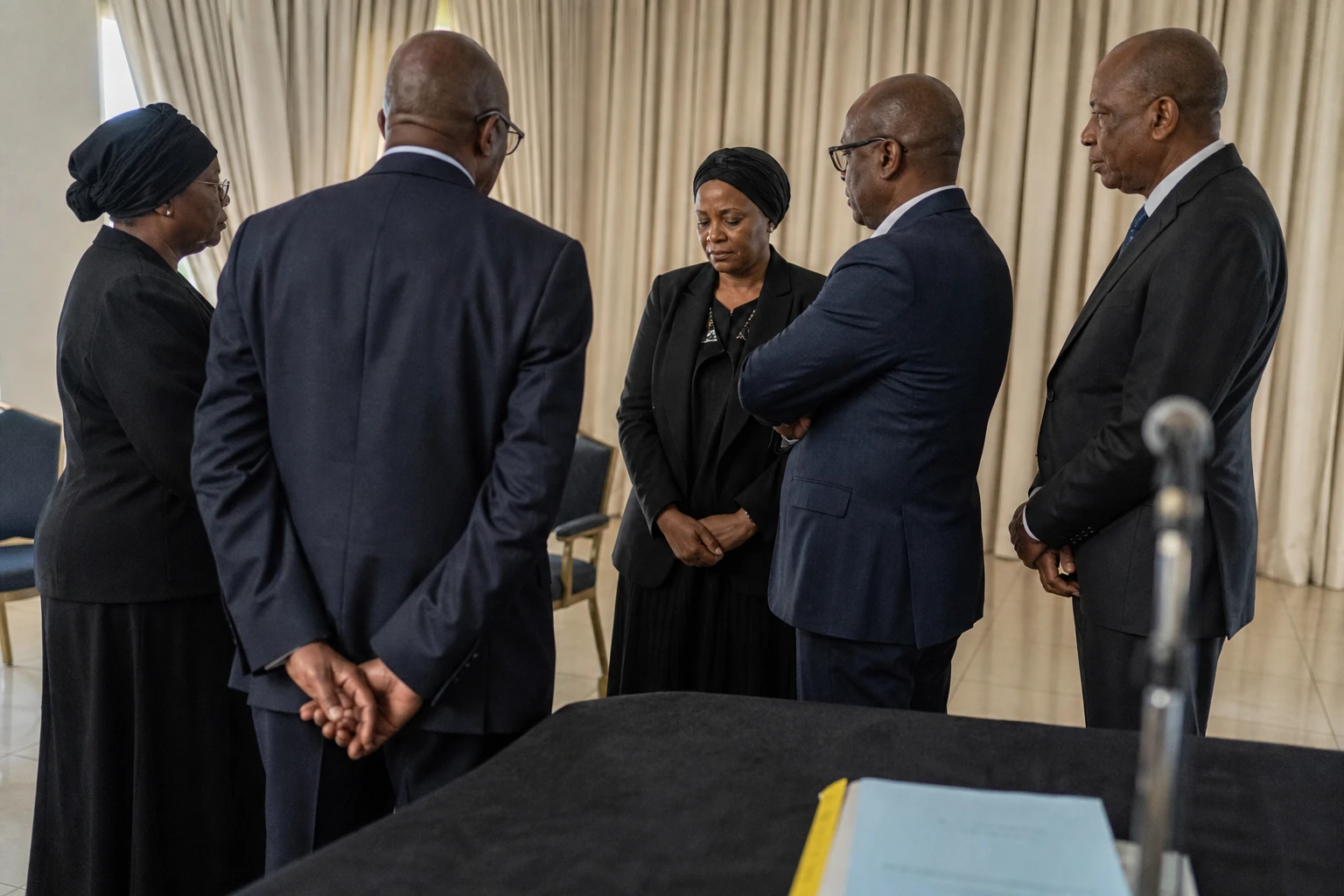
Funeral ceremony after three days of mourning
The 26 children who died in the fire were buried on Saturday, after three days of mourning had been declared in areas controlled by AFC/M23. The victims were 20 girls and six boys. The number of injured stood at 25, according to UNICEF, which confirmed that the fire had affected homes and two primary schools, in Furaha and Ujamaa. The UN agency also said that injured children were receiving care and that it was supporting the reunification of families separated in the panic.
The fire broke out on Thursday 10 September 2026, at around 8 or 9 a.m. according to cross-checked sources, while pupils were in class. In the confusion, a crush led to the deaths of several children. An initial toll put the number of dead at 20, then 27, before rising to 29 in some local hospital and administrative sources; UNICEF, for its part, put the figure at at least 26 children dead and 25 injured. These discrepancies underline the need for caution in the first hours after a disaster.
Education inspectors reported that some children had been trampled after falling to the ground, while others had died of asphyxiation. They also noted that the fire appeared to have started at several separate points, around 500 metres apart. At this stage, the cause of the fire remains unknown. The authorities in Kinshasa and the de facto administration in Bukavu have announced investigations.
Bukavu, a city exposed by its own density
This is not an isolated tragedy. Bukavu has seen a series of recurring fires for months. Congolese media have reported thousands of homes affected in South Kivu since the start of 2025, including more than 1,700 in Bukavu, according to statistics cited on a local programme. Other tallies point to hundreds of houses destroyed in a matter of days and more than 2,000 people left homeless.
The causes cited are often the same: high housing density, haphazard urbanisation, illegal electrical connections and inadequate emergency response capacity. In Kadutu, Ibanda and Bagira, neighbourhoods climb the hillsides, houses stand wall to wall, lanes are narrow and fires spread quickly. In these conditions, a fire in a home can reach a school, then an entire block, in just a few minutes. This is an urban reality, not an inevitability. But it calls for preventive policies that Bukavu has not received on a scale commensurate with the risk.
The consequences fall first on families. They lose children, as well as possessions, sometimes their homes, often both. Pupils return home with no school to attend, parents with no immediate income, and those affected with nowhere to take shelter. In a city where war has already weakened public services, fire adds another layer of vulnerability to the humanitarian crisis. UNICEF says children face lasting psychological distress in an environment marked by insecurity.
What this tragedy says about the DRC today
The tragedy’s significance extends beyond Bukavu. It raises questions about the Democratic Republic of the Congo’s ability to protect its children in cities where public authority is fragmented, security is contested and schools sometimes find themselves on the front line. In the east of the country, people are already living with displacement, pressure on social services and fragile infrastructure. A fire of this kind therefore reveals more than a technical failure. It also shows the human cost of a territory where the state is still partly prevented from acting.
The issue also has a regional dimension. The East African Community and SADC have been drawn into the Congolese conflict, while the African Union is closely monitoring the Great Lakes situation. Bukavu is thus another test of civil protection, continuity of schooling and urban management in a crisis zone. When children die in a school because a fire spreads through a densely built neighbourhood, the question is not only one of immediate rescue. It is also about urban planning, prevention and the effective return of public authority to essential services.
The coming days will show whether the announced investigation identifies specific responsibilities, and whether assistance for affected families follows. In Bukavu, the tragedy of the schoolchildren is a reminder of an often-overlooked truth: in a city under strain, children’s safety depends on more than classrooms. It also depends on streets, homes, electricity networks and the authorities’ ability to prevent an accident before it becomes a national tragedy.



