
 Algeria
 Egypt
 Libya
 Morocco
 Sudan
 Tunisia
 Benin
 Burkina Faso
 Cabo Verde
 Côte d'Ivoire
 Ghana
 Guinea
 Guinea-Bissau
 Liberia
 Mali
 Mauritania
 Niger
 Nigeria
 Senegal
 Sierra Leone
 The Gambia
 Togo
 Cameroon
 Central African Republic
 Chad
 Equatorial Guinea
 Gabon
 Republic of the Congo
 São Tomé and Príncipe
 Burundi
 Comoros
 Djibouti
 Eritrea
 Ethiopia
 Kenya
 Madagascar
 Malawi
 Mauritius
 Mozambique
 Rwanda
 Seychelles
 Somalia
 South Sudan
 Tanzania
 Uganda
 Angola
 Botswana
 Eswatini
 Lesotho
 Namibia
 South Africa
 Zambia
 Zimbabwe
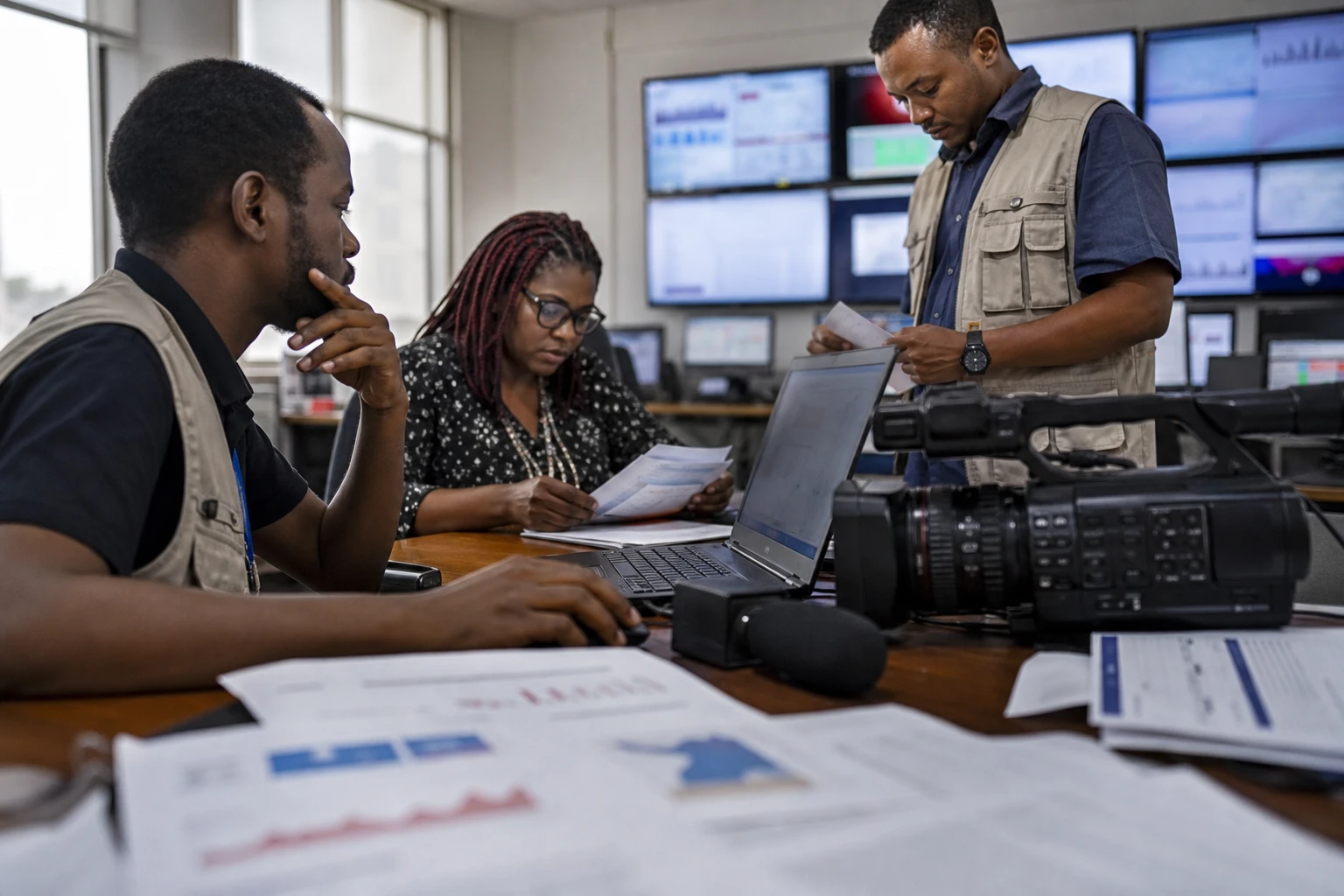
A virus travelling faster than response teams
In the Democratic Republic of the Congo, the emergency is not just the number of people falling ill. It is the distance between a first symptom and care, between an identified contact and a case that slips through follow-up, between a health centre and an isolated area. In this Ebola outbreak, every delay weighs heavily on families, healthcare workers and local markets where people and goods circulate alike.
The country is facing its 17th Ebola outbreak since 1976, against an already strained healthcare backdrop. The Congolese health ministry is maintaining an active surveillance system, with daily reports published as part of the response. The World Health Organization has classified the outbreak as a public health emergency of international concern in May 2026, reflecting a risk that extends beyond national borders. In Kinshasa, the government, WHO and Africa CDC launched a revised 180-day plan on 4 September to speed up the response. The Congolese health ministry’s surveillance dashboard and the revised plan presented in Kinshasa show a response that is still evolving.
The figures that show the scale of the crisis
As of 7 September 2026, DR Congo had recorded 6,757 confirmed cases and 3,267 deaths, a crude case fatality rate of 48.3%, according to WHO. The same tally reported at least 1,611 patients had recovered, including 1,590 in the country. The virus was still active in 61 health zones across six provinces: Bas-Uélé, Haut-Uélé, Ituri, North Kivu, South Kivu and Tshopo. Transmission was therefore continuing to spread, no longer confined to the initial outbreak area in the north-east. WHO’s latest bulletin and its outbreak tracking page confirm this trajectory.
The spread is all the more concerning because the outbreak is affecting areas where access to healthcare is uneven. WHO highlights the combined impact of insecurity, highly mobile populations, cross-border flows and displaced communities. In this context, cases can travel faster than investigation teams, especially when deaths still occur at home before any medical alert is raised. The result is clear: the response cannot rely on hospitals alone. It must also involve field surveillance, contact tracing and community engagement.
Why the response is still facing challenges on the ground
The Democratic Republic of the Congo is not facing a simple question of beds or stocks. It is dealing with a problem of trust, geography and logistics. Health authorities have launched targeted vaccination with Ervebo in high-risk areas, but this vaccine does not cover Bundibugyo, the virus responsible for this outbreak. The strategy therefore relies more on rapid isolation, contact tracing, infection prevention and safe burials. WHO also notes that no vaccine or treatment has yet been approved specifically for this form of Ebola. WHO’s bulletin states this plainly.
On the ground, several obstacles are slowing the response chain. Roads are long, distances are great and infrastructure remains fragile in several eastern provinces. In some communities, the disease is denied or poorly understood. Elsewhere, traditional funeral practices complicate safe burials when death is sudden and families want to retain control of the ritual. Healthcare workers, meanwhile, often work in difficult conditions, amid social tensions, delayed pay or refusals to co-operate at some sites. These frictions, more than the virus’s virulence alone, are allowing Ebola to advance.
Kinshasa, the east of the country and the regional dimension
The Congolese central government knows the stakes go beyond public health. A prolonged outbreak affects the informal economy, small businesses, transport and the supply chains linking provinces. It also puts further strain on services already under pressure in the east of the country, where insecurity and population displacement complicate any straightforward strategy. The authorities’ priority is therefore to contain the virus without further paralysing local activity or fuelling fear-driven measures that would unnecessarily isolate entire communities.
At regional level, the crisis is a reminder that Central Africa remains an area of intense movement. The affected Congolese provinces have links with Uganda, Rwanda and South Sudan, as well as with ECCAS and SADC countries along various routes. This requires cross-border health co-ordination, consistent messages for travellers and close monitoring of entry points. Africa CDC and WHO have also stressed the need to avoid blanket travel restrictions, which are often of little use and very costly for local economies. The real front here remains early detection and public trust.
What this 17th outbreak says about the continent
This Ebola outbreak in the Democratic Republic of the Congo is a reminder of a familiar reality that is still too often anticipated too late: African health emergencies no longer unfold in a single district or a single country. They move along trade routes, through conflicts, mines, markets, separated families and healthcare systems of uneven strength. When an outbreak spreads, it tests national capacity, regional solidarity and the speed of continental mechanisms at the same time.
There are now three indicators to watch. First, the ability to reduce community deaths, which remain a sign that care has broken down. Second, control of transmission in new or remote health zones. Finally, co-ordination between Kinshasa, WHO, Africa CDC and neighbouring countries, because an outbreak spreading quickly in eastern DR Congo can become a regional issue within days. The 180-day plan presented in Kinshasa will therefore need to deliver visible results, not only in treatment centres but also in villages, border posts and the corridors of movement linking DR Congo to the rest of Central and East Africa.



