
 Algeria
 Egypt
 Libya
 Morocco
 Sudan
 Tunisia
 Benin
 Burkina Faso
 Cabo Verde
 Côte d'Ivoire
 Ghana
 Guinea
 Guinea-Bissau
 Liberia
 Mali
 Mauritania
 Niger
 Nigeria
 Senegal
 Sierra Leone
 The Gambia
 Togo
 Cameroon
 Central African Republic
 Chad
 Equatorial Guinea
 Gabon
 Republic of the Congo
 São Tomé and Príncipe
 Burundi
 Comoros
 Djibouti
 Eritrea
 Ethiopia
 Kenya
 Madagascar
 Malawi
 Mauritius
 Mozambique
 Rwanda
 Seychelles
 Somalia
 South Sudan
 Tanzania
 Uganda
 Angola
 Botswana
 Eswatini
 Lesotho
 Namibia
 South Africa
 Zambia
 Zimbabwe
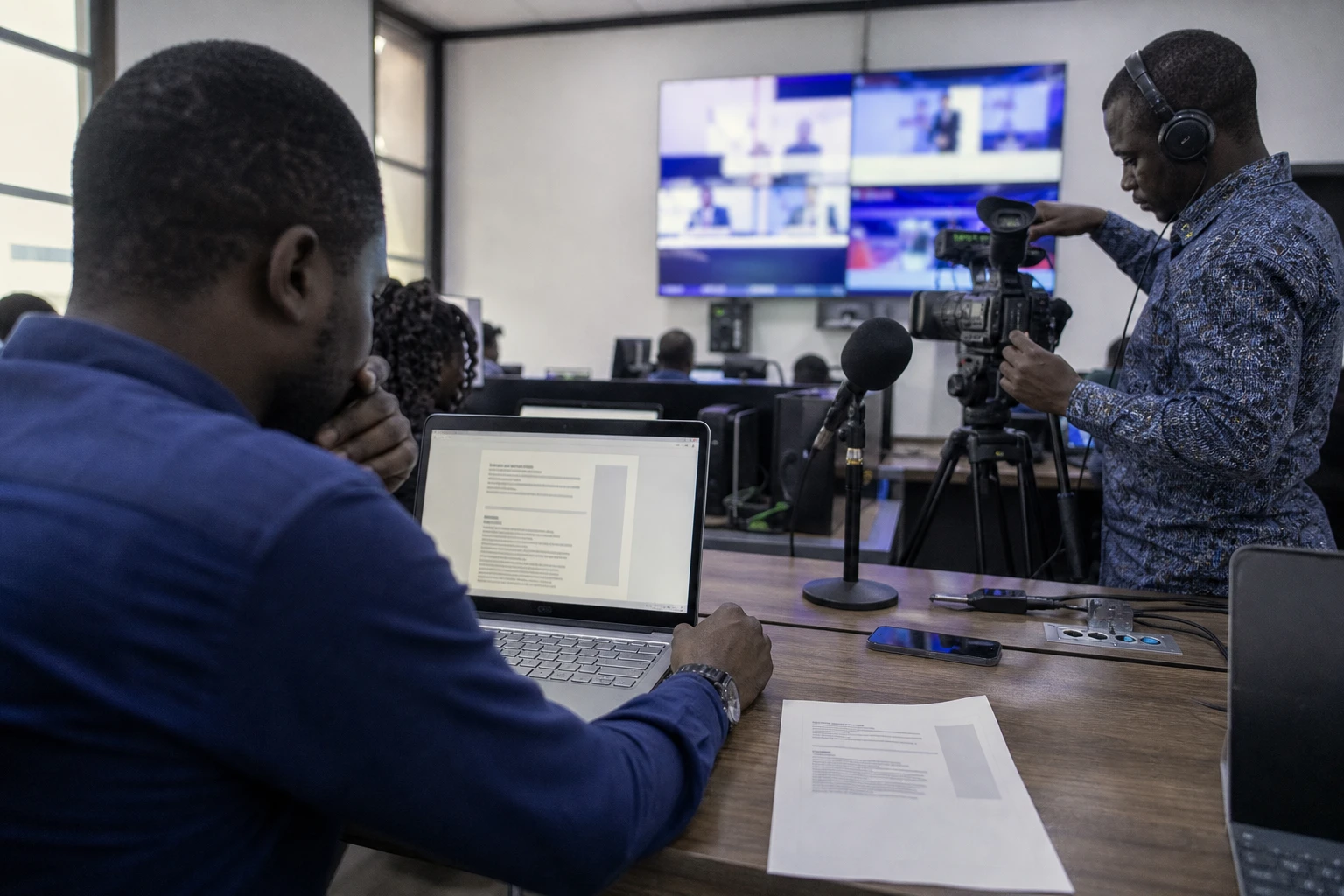
In Kinshasa, the government seeks to shape a dialogue that goes beyond the political arena
In the Democratic Republic of the Congo, negotiations never take place solely in Kinshasa’s salons. They also involve the east of the country, the provinces, churches, political parties, communities and, above all, a population that has lived with the toll of the crisis for far too long. It is against this backdrop that a presidential order established the framework for the committee tasked with preparing the national dialogue, a step presented as the starting point of a broader process.
The challenge is simple to state but difficult to meet: to rebuild a minimum level of trust in a country where security, political cohesion and the legitimacy of institutions remain contested. On 27 August 2026, the head of state had already announced the opening of a national dialogue for peace, cohesion and the refoundation of the state, promising an organising committee appointed by presidential order. Public television subsequently broadcast the text setting out its structure.
A national framework under pressure, with the east of the country in the background
DR Congo is entering this phase against an already fraught backdrop. On the one hand, Kinshasa wants to show that it remains in control of the political initiative. On the other, violence in the east continues to set the pace. The government and the presidency present the dialogue as a response to political, social and security divisions, while Radio Okapi notes that the debate also concerns inclusivity, particularly in relation to armed groups and the opposition.
The choice of a preparatory committee is not incidental. It first makes it possible to lock down the format, participants, timetable and rules of the game before the actual proceedings begin. The presidency said the committee would submit a report to the head of state, so that a second order could convene the national dialogue. In other words, the process is moving forward in stages, with strong centralisation in the presidency.
This approach is a reminder that, in the Congolese institutional system, a presidential order is a powerful executive act. It can set out the organisation and operation of a public body without a lengthy prior parliamentary debate. In the Congolese context, this speed may reassure those who support a way out of the crisis. It may also fuel the mistrust of those who fear a dialogue too tightly controlled from the top of the state.
What the text says, and what it reveals about the balance of power
The core of the presidential message is clear: the dialogue must be presented as a tool for peace, not as a political blank cheque. In his address on 28 August 2026, Félix Tshisekedi said he wanted a process that was “not hijacked”, representative and secure, and ruled out the idea of a general amnesty for serious crimes. This line matters. It draws a boundary between political reconciliation and criminal impunity.
For the government, the preparatory committee must first give the initiative an institutional form. For the opposition, the question is different: who will be in the room, with what mandate, and to discuss what? Several opposition figures have for months been calling for a broader framework capable of addressing electoral tensions, governance and the security crisis. By contrast, the presidential camp insists on a dialogue “rooted in the provinces” and intended to start on the ground, not just in Kinshasa’s elite circles.
The debate is therefore less theoretical than it might appear. It concerns the representation of Congolese people, the role of religious denominations and civil society, and the red line drawn by the executive in relation to armed actors. This is also where mistrust could resurface: if the format seems too closed, the dialogue will be seen as an exercise in legitimisation. If it is too open without safeguards, it could become a forum for one-upmanship with no concrete outcome.
A Congolese process that also matters to the region
The significance of this process extends far beyond the capital. DR Congo remains a central African pivot, as well as a point of friction for the Great Lakes region and broader cooperation frameworks such as ECCAS, SADC and the East African Community. Peace initiatives that fail in Kinshasa or in the east almost always have knock-on effects on neighbouring countries, trade corridors, population movements and regional diplomatic balances.
The humanitarian context reinforces this reading. Recent events are a reminder that DR Congo is facing several emergencies at once, including the Ebola outbreak in the country’s north-west, reported by the authorities and corroborated by international agencies. When a health crisis overlaps with security and political tensions, even minor institutional disorganisation weighs more heavily on the provinces than on the circles of power.
Across Africa, this dialogue will therefore be watched as a test of approach. The continent has seen several national consultation formats, with mixed results. In DR Congo, the question is not simply how to “bring actors into dialogue”. It is how to turn a political process into a stable decision-making framework capable of producing concrete commitments on security, justice, governance and national cohesion. This is the capacity that Congolese people, regional partners and African institutions will be watching in the weeks ahead.



