Algeria
 Libya
 Morocco
 Sudan
 Tunisia
 Benin
 Burkina Faso
 Cabo Verde
 Côte d'Ivoire
 Ghana
 Guinea
 Guinea-Bissau
 Liberia
 Mali
 Mauritania
 Niger
 Nigeria
 Senegal
 Sierra Leone
 The Gambia
 Togo
 Cameroon
 Central African Republic
 Chad
 DR Congo
 Equatorial Guinea
 Gabon
 Republic of the Congo
 São Tomé and Príncipe
 Burundi
 Comoros
 Djibouti
 Eritrea
 Ethiopia
 Kenya
 Madagascar
 Malawi
 Mauritius
 Mozambique
 Rwanda
 Seychelles
 Somalia
 South Sudan
 Tanzania
 Uganda
 Angola
 Botswana
 Eswatini
 Lesotho
 Namibia
 South Africa
 Zambia
 Zimbabwe
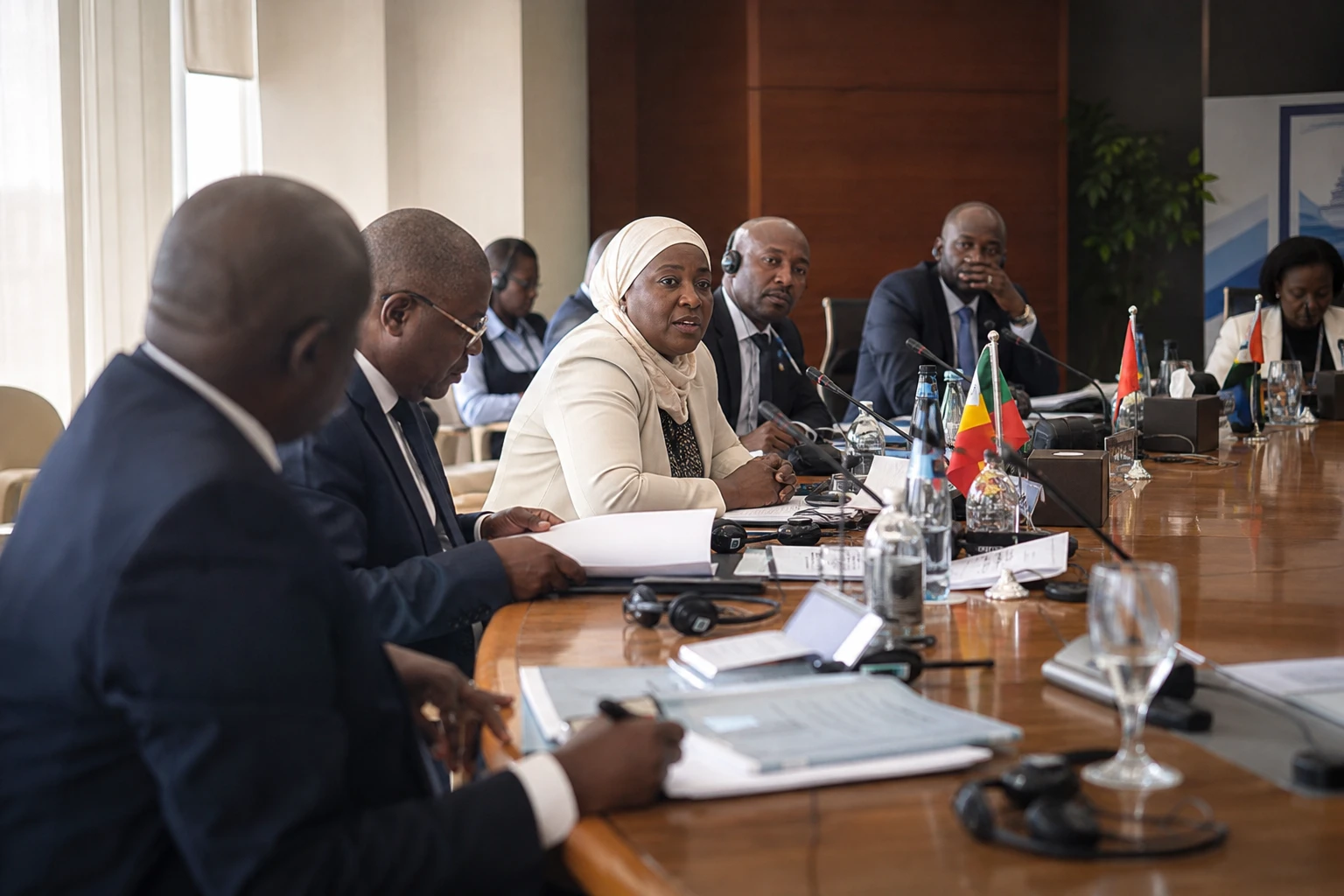
As routes shorten, African ports are not all playing the same tune
Maritime freight between Asia and Europe is easing again, but falling rates do not tell the whole story. Above all, they reflect a reshaping of services, port calls and shipping lines’ priorities. For Egypt, the Suez Canal remains at the centre of the action. For African ports, the impact may be direct, indirect or very limited, depending on their place in the logistics chain.
As of 10 September 2026, the Drewry World Container Index remained stable at $4,476 per 40-foot container, but rates on Asia-Europe routes continued to fall: Shanghai-Genoa stood at $4,216 and Shanghai-Rotterdam at $3,997. A week earlier, the same routes had recorded steeper declines. This easing comes as shipping companies adjust their services around the Red Sea, the Suez Canal and congestion in Asia.
The Suez Canal is seeing ships return, but normality is still some way off
In today’s Egypt, the Suez Canal is more than infrastructure. It is also an economic barometer. The Suez Canal Authority describes it as a strategic route for Egypt and global trade. The International Monetary Fund, for its part, estimates that the decline in Red Sea traffic has reduced foreign-currency revenues linked to the canal. The vulnerability of this source of income therefore weighs on the country as Cairo seeks to stabilise its external accounts.
The shift seen in recent weeks is real. In February 2026, the Suez Canal Authority said that Hapag-Lloyd and Maersk, as part of their Gemini cooperation, had begun rerouting some rotations through Suez instead of via the Cape of Good Hope. On 9 June, the authority also announced the first transit of the CMA CGM Vendôme on an Asia-Europe service, and then, on 18 August, said that 199 CMA CGM ships had passed through the canal since the start of the year. On 22 August, it reported the first passage of the container ship Bangkok Maersk. These signs point to a gradual but still selective return.
This return does not mean the Red Sea has become a completely predictable corridor again. In its own communications, the Suez Canal Authority stresses shipping companies’ caution and the importance of security in the resumption of routes. Companies return when they judge the detour unnecessary, not because all risks have disappeared. Egypt therefore faces a twofold challenge: recovering volumes while maintaining its operational credibility with customers who have become highly alert to even the slightest regional tension.
Lower costs, but more fragmented supply chains
For African importers buying from Asia, falling freight rates are an immediate piece of good news. Markets in Nigeria, Kenya, South Africa and Côte d’Ivoire remain heavily dependent on manufactured goods from Asia. When transport costs fall, the landed cost comes down. But that reduction does not automatically translate into lower prices on shop shelves. Margins, taxes, exchange rates and distribution delays often absorb part of the gain.
The most important issue is not just price. It is predictability. Drewry notes that the partial resumption of services via Suez is restoring effective capacity on the Asia-Europe route, while carriers continue to manage supply closely. In other words, ships are returning, but schedules remain vulnerable to congestion in Asia and shipping companies’ commercial decisions. For African businesses, that means delays remain irregular even as average rates fall.
This reality affects the continent’s major ports in different ways. Hubs that rely on transshipment, such as Tanger Med, feel changes in shipping routes sooner. Those that primarily serve their hinterland, such as Mombasa or Lomé, are less exposed to a simple fluctuation in intercontinental flows. Morocco also benefited from the diversions in 2024 and 2025. Its Tanger Med complex handled more than 11 million TEUs in 2025, an increase of 8.4%. The port also accounted for a significant share of Morocco’s transshipment, according to public information from the group and national authorities.
Morocco, Egypt, West Africa: each hub reads the same map differently
Morocco’s case is revealing. Nador West Med is emerging as a second major Mediterranean hub. The kingdom has confirmed public and private investment of 51 billion dirhams for the project, which is expected to offer initial capacity of 5 million TEUs alongside a complementary energy component. This expansion gives Morocco room to manoeuvre as some traffic may return to Suez. It also reflects a port resilience strategy designed to span several years, rather than respond to a single market shock.
In West and East Africa, the picture is different. Economies more oriented towards imports of finished goods stand to benefit first from lower transport costs. Platforms that depend mainly on regional transit benefit instead from stable service frequencies and reliable connections. That is where the real battle is being fought: not only over the price of a container, but also over the quality of port services, the speed of customs clearance, rail and road links, and the ability to absorb disruptions without stalling the informal economy, which remains the main social safety net in many countries.
For Egypt, this period is symbolically important. The Suez Canal has shown that it can regain major port calls even in a still-sensitive region. But the recovery remains gradual and dependent on the situation in the Red Sea and at Bab el-Mandeb. For the African Union and coastal economies, the stakes are broader: securing maritime routes, modernising ports and preventing a distant crisis from once again driving up the cost of living across the continent. This is where an understated but decisive part of Africa’s economic sovereignty is at stake.