
 Algeria
 Egypt
 Libya
 Morocco
 Sudan
 Tunisia
 Benin
 Burkina Faso
 Cabo Verde
 Côte d'Ivoire
 Ghana
 Guinea
 Guinea-Bissau
 Liberia
 Mali
 Mauritania
 Niger
 Nigeria
 Senegal
 Sierra Leone
 The Gambia
 Togo
 Cameroon
 Central African Republic
 Chad
 Equatorial Guinea
 Gabon
 Republic of the Congo
 São Tomé and Príncipe
 Burundi
 Comoros
 Djibouti
 Eritrea
 Ethiopia
 Kenya
 Madagascar
 Malawi
 Mauritius
 Mozambique
 Rwanda
 Seychelles
 Somalia
 South Sudan
 Tanzania
 Uganda
 Angola
 Botswana
 Eswatini
 Lesotho
 Namibia
 South Africa
 Zambia
 Zimbabwe
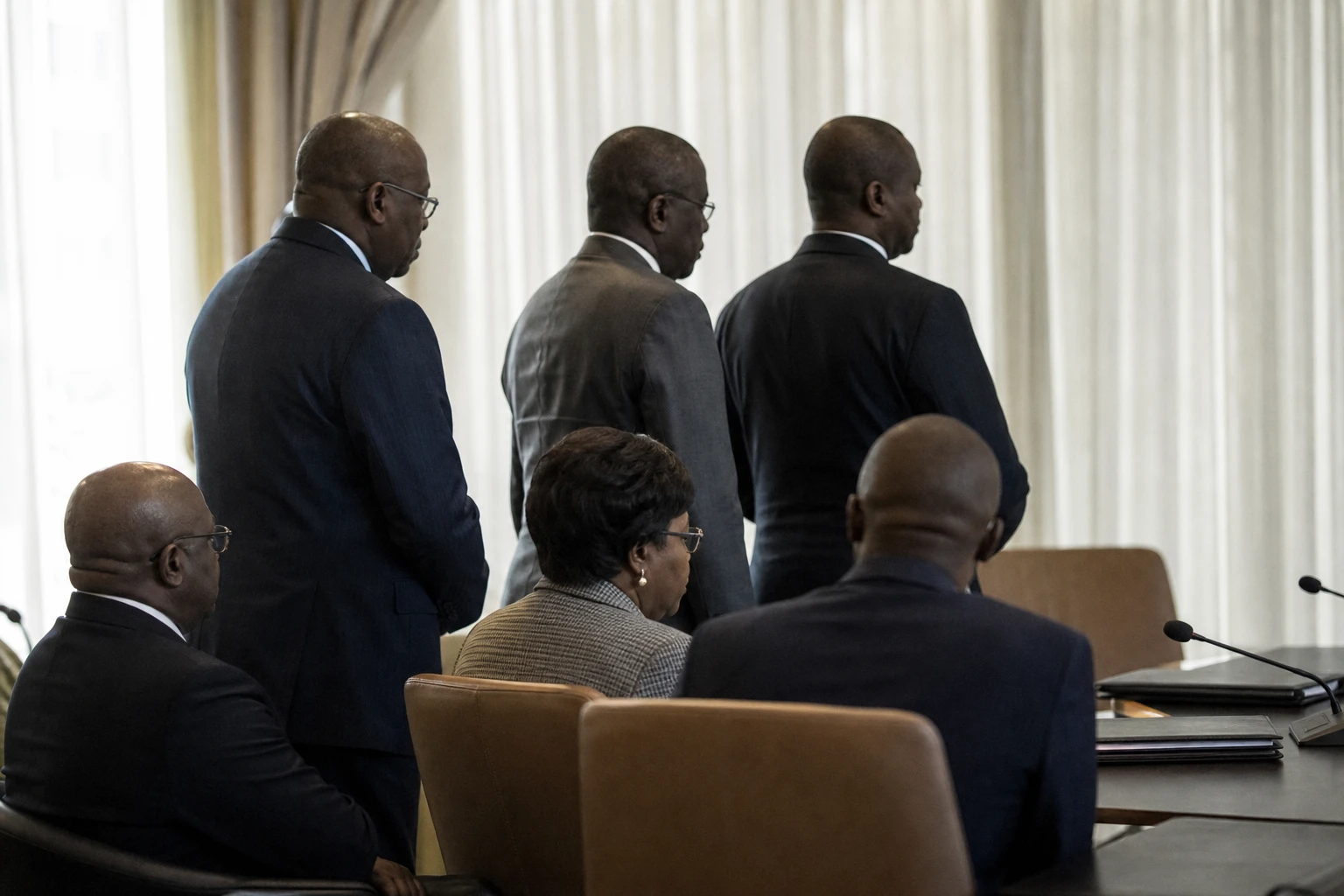
A dialogue launched under pressure from two crises
In Kinshasa, political debate is no longer confined to the corridors of Parliament. It is also unfolding in the shadow of the war in the east, where fighting and negotiations are proceeding in parallel without truly converging.
That is the central issue in the Democratic Republic of the Congo at present: the presidential majority wants to establish a national dialogue presented as a response to the crisis of cohesion, while part of the opposition sees it as a framework too tightly controlled to be genuinely inclusive. In a country so vast, where security in the east weighs on political life in the capital, the line between peace, institutional reform and the battle over 2028 is becoming more fragile by the day.
In the east, war continues to shape the political landscape
The regional backdrop remains one of a multifaceted crisis. The conflict in the Kivus reached a new threshold in early 2025, when Goma and then Bukavu fell to the M23, amid fighting that Kinshasa and the UN attributed to support from the Rwandan Defence Forces. The Security Council condemned the offensives in Resolution 2773, adopted on 21 February 2025, which demands the withdrawal of the M23 and a ceasefire.
Since then, diplomacy has piled up the various formats. Washington hosted a peace agreement between Kinshasa and Kigali on 4 December 2025. Doha then served as the setting for a framework agreement between the Congolese government and the AFC/M23 on 15 November 2025, followed by terms of reference signed on 2 February 2026. On paper, the channels exist. On the ground, the war has not ended.
For the DRC, a member of SADC and the East African Community, this sequence also matters at the regional level. It tests the ability of African mediation efforts to produce more than a string of announcements. It also requires the African Union to hold to its position on territorial integrity, as conflicts in the Great Lakes region continue to shape political power relations in Kinshasa.
What Tshisekedi is setting up in Kinshasa
On 28 August 2026, President Félix-Antoine Tshisekedi Tshilombo announced the opening of a “National Dialogue for Peace, Cohesion and the Refoundation of the State”. According to the Presidency, the process is to last three months and remain separate from the Washington and Doha discussions. The head of state also set a red line: armed groups fighting the constitutional order or occupying part of the territory will not be able to participate as political components.
This framework immediately prompted reservations. The opposition grouped around the Article 64 Coalition, C64, maintained its call for mobilisation against any change to the Constitution. It announced a national march on 15 September 2026, the day Parliament returns, and then confirmed a peaceful sit-in outside the Palais du Peuple in Kinshasa. It says it is defending Articles 70 and 220 of the Constitution, which regulate the presidential term and prohibit any revision concerning its number or duration.
The substance of the disagreement is straightforward. For the government, the dialogue should help restore national cohesion in a country under military pressure. For the opposition, the chosen format looks like a mechanism for filtering participants, with the venue, agenda and attendees already largely mapped out. The question is therefore not only one of peace. It also concerns the political space afforded to opponents of the regime and how the security crisis might be used to delay the institutional timetable.
Churches, between mediation and suspicion
In this standoff, CENCO and ECC play a central role. Since 2025, the two denominations have been promoting the “Social Pact for Peace and Living Well Together”, an initiative designed to bring Congolese actors back towards a broader political dialogue, including on the east and national tensions. They also called for the postponement of an opposition march in July 2026, pledging to advance the consultation process.
But this mediation has not escaped suspicion. Some opponents question its neutrality, arguing that the churches are caught between the need to save the dialogue and the risk of backing a format too favourable to the government. Others see them as one of the few channels capable of preserving a common voice in a fractured political arena. The role of Congolese religious institutions in national crises therefore remains crucial, but contested.
The president, for his part, has tightened the framework further by announcing that armed movements linked to the occupation of territories would not be received as political actors in the dialogue. This decision clarifies the institutional position, but also complicates the search for a comprehensive solution, since the war in the east continues to influence debate over legitimacy, state reform and presidential tenure.
What the Congolese sequence reveals
The DRC finds itself at a familiar crossroads in Central Africa: when security falters, politics reorganises around the emergency. That does not mean every crisis leads to an extension of those in power. But it shows that an armed conflict can become an argument over timing, method and the balance of power. This is precisely what part of the Congolese opposition fears.
The country is thus entering a phase in which everything will be read on two levels: domestically, the sincerity of the dialogue and its ability to include without neutralising; regionally, the consistency between Kinshasa, Doha, Washington and African peace initiatives. For Congolese people, the question is immediate. Will the dialogue broaden political space, or consolidate an institutional agenda already mapped out? For Central Africa, the answer will say much about the real value of mediation in a crisis where war and the Constitution are competing for the same timetable.



