Algeria
 Egypt
 Libya
 Sudan
 Tunisia
 Benin
 Burkina Faso
 Cabo Verde
 Côte d'Ivoire
 Ghana
 Guinea
 Guinea-Bissau
 Liberia
 Mali
 Mauritania
 Niger
 Nigeria
 Senegal
 Sierra Leone
 The Gambia
 Togo
 Cameroon
 Central African Republic
 Chad
 DR Congo
 Equatorial Guinea
 Gabon
 Republic of the Congo
 São Tomé and Príncipe
 Burundi
 Comoros
 Djibouti
 Eritrea
 Ethiopia
 Kenya
 Madagascar
 Malawi
 Mauritius
 Mozambique
 Rwanda
 Seychelles
 Somalia
 South Sudan
 Tanzania
 Uganda
 Angola
 Botswana
 Eswatini
 Lesotho
 Namibia
 South Africa
 Zambia
 Zimbabwe
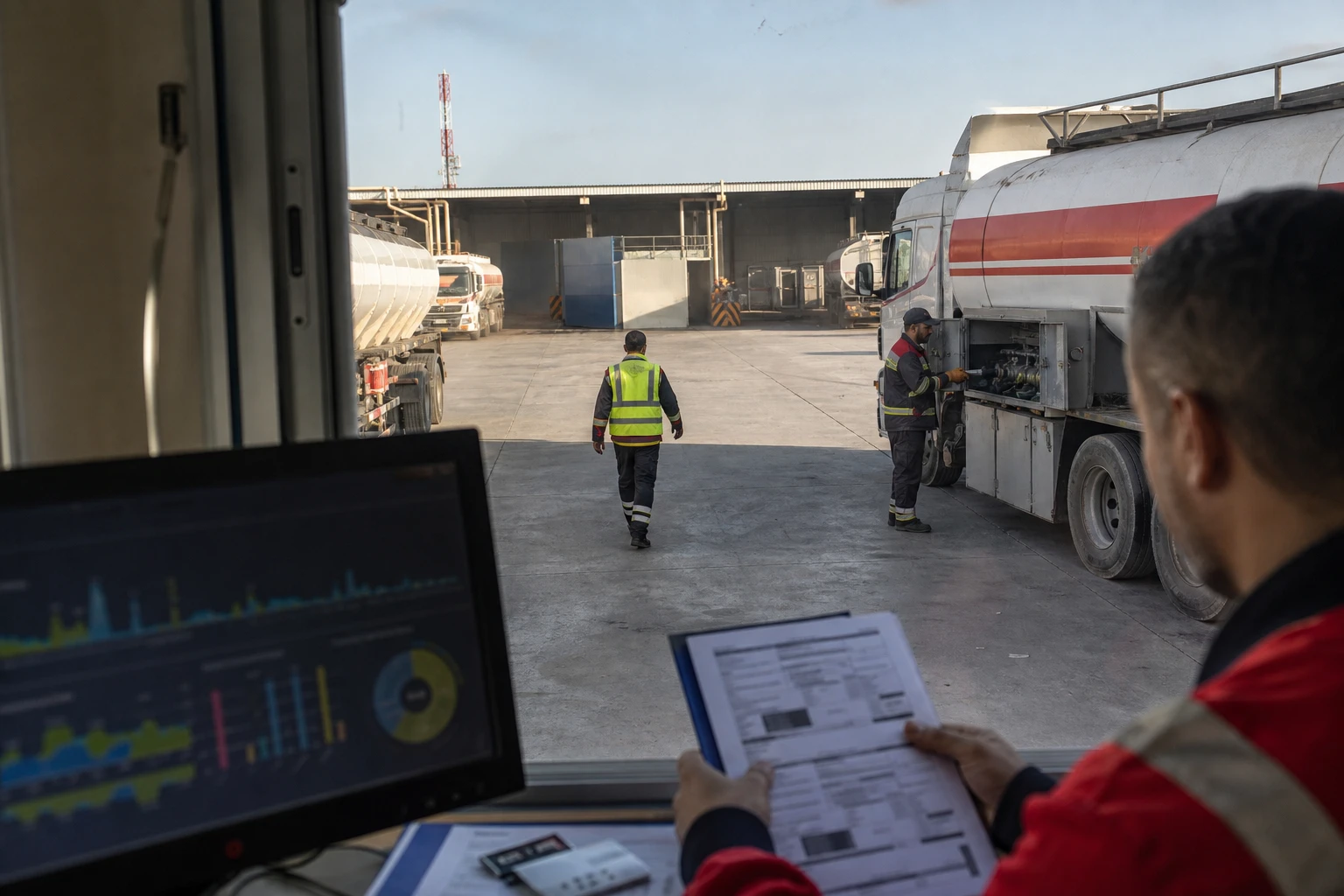
As oil prices rise, Morocco first looks at the bill
In Rabat, the question is not simply whether Brent stays above $100. The real question is more straightforward and more political: who absorbs the shock — the state, businesses or households? Morocco built its 2026 budget on much cheaper oil. But as soon as crude prices rise, the energy bill, transport prices and room for budgetary manoeuvre all come under pressure at once.
The context is clear. The Kingdom relies heavily on energy imports, and its foreign trade remains exposed to shocks in international markets. By the end of June 2026, the Foreign Exchange Office had already reported a 23.5% increase in the trade deficit, to 198.4 billion dirhams, as imports grew faster than exports. This vulnerability did not begin this week; it simply serves as a reminder that an oil shock never affects just one spending item. It spreads to the external accounts, foreign exchange reserves, production costs and, in time, the state budget.
Oil above $100, but a budget built on $65
On the markets, Brent broke through the $100 mark before closing at $107.63 on Thursday 10 September, according to financial reports carried that day. The move was driven by escalating tensions in the Middle East and concerns over maritime traffic, particularly around strategic routes serving the global market. Market sources have even raised the possibility of Brent topping $120 if disruption persists.
For Morocco, the problem lies in the gap between this price and the assumptions used in preparing the 2026 Finance Bill. The Ministry of Economy and Finance did publish the 2026 Finance Bill documents, presented in Rabat in autumn 2025, with a trajectory based on keeping public finances in balance. The citizen’s budget and official documents highlight a clear objective: to protect purchasing power, support investment and contain the deficit. But Brent remaining above $100 for an extended period changes the arithmetic.
It is important to distinguish between the price on a given day, the average price for the year and the price actually paid by the Moroccan economy. This distinction matters. Importers can hedge part of their needs in advance, cushioning the shock in the short term. But if current levels persist, the impact will eventually work its way through the entire chain. Businesses face higher logistics costs. Households pay more for travel and transported goods. And the state must weigh social spending against investment and the deficit.
Buffers exist, but they are not unlimited
Morocco is not without a safety net. Since 2015, petrol and diesel prices have been liberalised, passing much of the shock on to the market rather than the public budget. This arrangement protects the state’s accounts, but shifts the adjustment on to motorists, transport operators and businesses. In other words, the budget feels the impact less quickly, while purchasing power and competitiveness take the hit sooner.
Public support, meanwhile, remains partial. The 2026 citizen’s budget provides for continued support for butane gas, sugar, national flour and soft wheat. It also maintains transfers and targeted assistance to preserve social stability. But these safety nets come at a cost. According to the Moroccan business press, the compensation allocation of 13.8 billion dirhams for 2026 had already been largely spent by the end of July, even before the latest rise in oil prices. The ministry has also published a “summary of the report on compensation for 2026”, a sign that this item is being closely monitored.
In the spring, the government had already authorised additional credits as part of a 20 billion dirham envelope intended to address several urgent needs, including compensation. This gives an indication of the level of budgetary vigilance. But if oil remains above $100 for an extended period, this safety valve may no longer be enough on its own. The choice then becomes as political as it is financial: allow some of the increase to pass through, or extend support further.
A budgetary period under political pressure
The timing adds another constraint. The campaign for Morocco’s legislative elections on 23 September 2026 began on 10 September, just as oil prices rose another notch. The authorities have governed this period with specific rules, while the High Authority for Audiovisual Communication set an electoral period and conditions for access to public media. In such a context, any rise in fuel or gas costs has an immediate bearing on the social climate and the outgoing government’s economic message.
Public finance figures nevertheless show that Rabat still has some breathing space. By the end of July 2026, ordinary revenue was growing, while the Treasury deficit remained below the level recorded a year earlier, according to data available on the ministry’s budget dashboards. Remittances from Moroccans living abroad, tourism and the recovery in some sectors are supporting the overall picture. This is an important point: Morocco is not entering this period in the midst of an open budget crisis. Rather, it has a real, but finite, safety margin.
In the short term, then, the oil shock does not doom the 2026 budget. It makes it more demanding. The government will have to choose more carefully between general subsidies and targeted aid, between operating expenditure and investment, and between immediate relief and the deficit trajectory. For urban households, the rise will first be felt in transport and in prices passed through logistics chains. In rural areas and small businesses, it will be felt even sooner in the cost of inputs and travel.
What this pressure also says about the regional picture
The Moroccan case goes beyond the national context. In North Africa, where the Arab Maghreb Union remains weakly integrated, importing economies such as Morocco are more exposed to energy shocks than net hydrocarbon producers. This is a reminder of a straightforward continental reality: the energy transition is not only about major projects. It is also about the ability of states to cushion shocks without undermining social stability.
For Morocco, what happens next will hinge on three points to watch: how long Brent stays above $100, the actual scale of compensation in the second half of the year, and the evolution of foreign trade through year-end. If prices ease quickly, the impact will remain manageable. If they stay high, Rabat will face tougher trade-offs, with 2027 already shaping up to be a year of heavy public spending on the social state, water and preparations for projects linked to the 2030 World Cup.