Egypt
 Libya
 Morocco
 Sudan
 Tunisia
 Benin
 Burkina Faso
 Cabo Verde
 Côte d'Ivoire
 Ghana
 Guinea
 Guinea-Bissau
 Liberia
 Mali
 Mauritania
 Niger
 Nigeria
 Senegal
 Sierra Leone
 The Gambia
 Togo
 Cameroon
 Central African Republic
 Chad
 DR Congo
 Equatorial Guinea
 Gabon
 Republic of the Congo
 São Tomé and Príncipe
 Burundi
 Comoros
 Djibouti
 Eritrea
 Ethiopia
 Kenya
 Madagascar
 Malawi
 Mauritius
 Mozambique
 Rwanda
 Seychelles
 Somalia
 South Sudan
 Tanzania
 Uganda
 Angola
 Botswana
 Eswatini
 Lesotho
 Namibia
 South Africa
 Zambia
 Zimbabwe
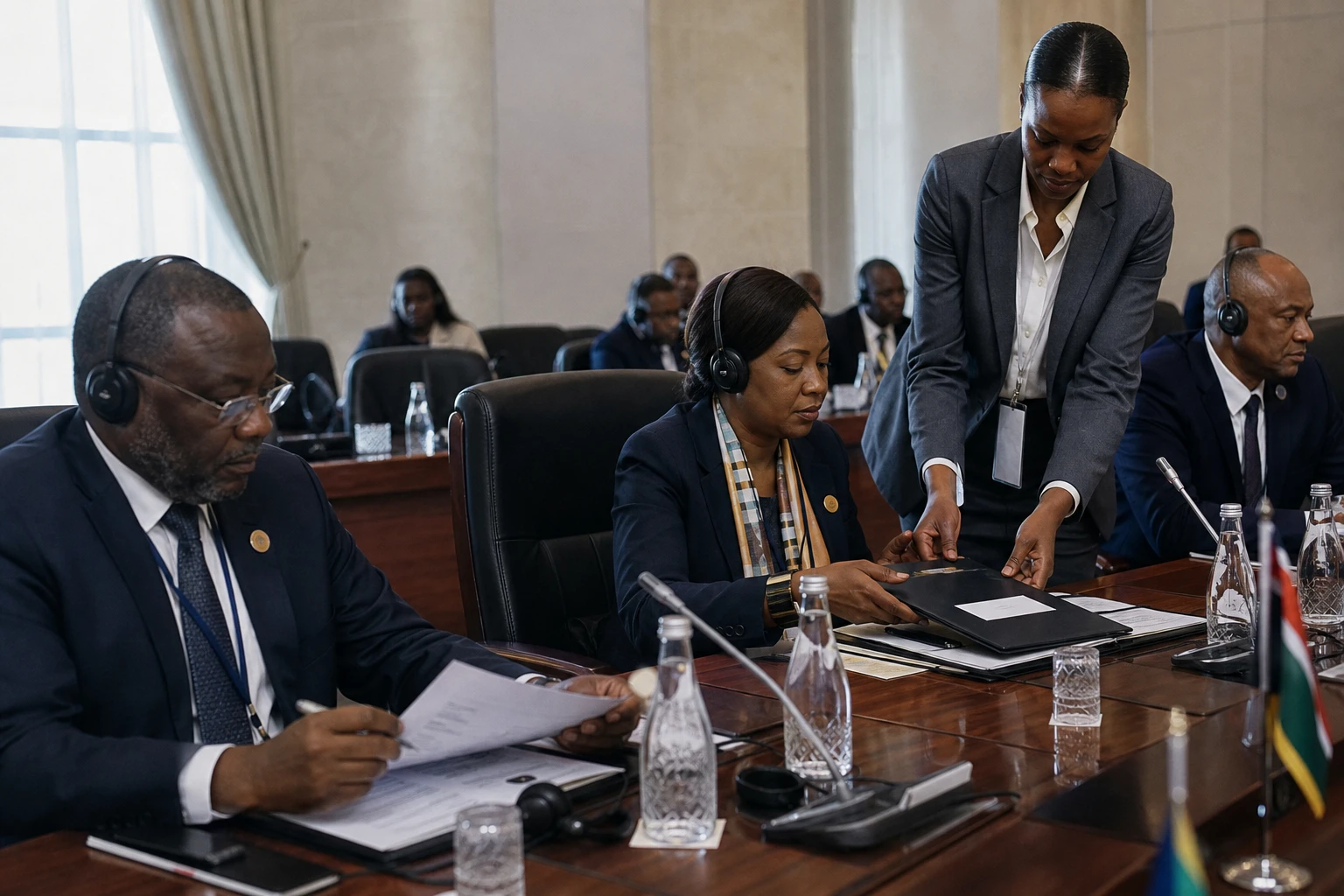
In Béjaïa, a mining project that extends beyond Tala Hamza
In the Soummam Valley, the issue is about more than a mine. It also concerns water, farmland, roads, jobs and Algeria’s place in its own industrial strategy. In Béjaïa, the Tala Hamza-Oued Amizour zinc and lead project has now entered a visible phase of construction, after years of delays and local tensions.
The project is part of a broader national push. For several years, Algiers has been advancing major mining projects, including Gara Djebilet for iron ore and the eastern phosphate complex. Since the April 2026 reshuffle, the sector has been overseen by a separate Ministry of Mines and Mining Industries, headed by Mourad Hanifi, a sign of the political importance attached to the sector in diversifying Algeria’s economy.
From site access to public works, the project takes shape
On 17 March 2026, Prime Minister Sifi Ghrieb launched preparatory work on access to the mine in Béjaïa, between Amizour and Tala Hamza. Public services then outlined several associated projects: a high-voltage power line led by Sonelgaz, an access bridge over the RN75 and a motorway interchange. At the end of July, the government again named Tala Hamza among the three strategic mega-mining projects being monitored at central-government level.
On the industrial side, the joint venture Bejaia Zinc & Lead, formerly Western Mediterranean Zinc, is leading the project with Terramin and the Algerian public partners ENOF and ORGM. The ownership structure has remained stable: Terramin holds 49%, and the two state-owned companies 51%. Updated studies published in March 2026 refer to a resource of about 53 million tonnes of ore, with average grades of 5.3% zinc and 1.3% lead. The selected scenario envisages underground mining and processing capacity of close to 2 million tonnes a year.
Production targets remain ambitious. Technical information released in spring 2026 refers to a target of about 170,000 tonnes of zinc and 30,000 tonnes of lead a year, while the March study gives figures of about 178,000 tonnes of zinc concentrate and 33,000 tonnes of lead concentrate. Start-up costs are estimated at around $415 million, with nearly $40 million more over the life of the mine. The differences in the figures reflect the distinction between contained metal and concentrate, but confirm the project’s scale.
Underground mining to limit the footprint, but not all concerns are allayed
The decision to make the mine entirely underground addresses a long-standing concern. In the valley, residents and associations have raised the risk to farmland and groundwater, in a region where agriculture remains central to families and local communities. Protests have already taken place, including rallies and awareness marches, as the project gained public visibility in 2021 and 2022.
The authorities and the company are now highlighting a less intrusive approach: underground extraction, backfilling galleries with cemented paste, storing some of the tailings underground and transporting concentrates in sealed containers to the port of Béjaïa. This design aims to reduce subsidence risks and limit surface discharges. The promise is clear, but its credibility will depend on the quality of environmental monitoring, water oversight and transparency about actual discharges.
For Béjaïa province, the stakes are twofold. On the one hand, the project could create direct and indirect jobs, boost port logistics and strengthen the local industrial base. On the other, it requires sensitive trade-offs between mining, valley agriculture, water security and social acceptance. In an economy where formal and informal activity coexist to a significant extent, a project of this kind could stimulate services, transport and subcontracting. It could also fuel concerns if residents feel that the benefits quickly leave the area while the costs remain.
A test for Algeria’s mining sector, watched well beyond Béjaïa
Tala Hamza-Oued Amizour has become a test of approach for Algiers. The country wants to reduce its dependence on hydrocarbons without relinquishing sovereign control over its resources. In this context, ore is no longer merely a raw material for export. It is a lever for industrial transformation, provided infrastructure is in place, financing is secured and local opposition is taken seriously.
The project also resonates across North Africa and the continent. It is a reminder that mining is about more than the resource underground. It involves roads, energy, water, ports, environmental standards and the distribution of value. For the African Union and neighbouring economies, the Algerian project illustrates a broader trend: states are seeking to capture more local value from strategic minerals while facing higher social expectations around protecting local communities and land.
The next steps will unfold over three timeframes. First, the completion of access roads and energy infrastructure in Béjaïa. Next, the finalisation of long-term financing, still under discussion with an Algerian public bank. Finally, the ramp-up of underground construction, which will show whether Tala Hamza becomes a symbol of a well-managed mining revival or another project caught between industrial promise and local scrutiny.