Egypt
 Libya
 Morocco
 Sudan
 Tunisia
 Benin
 Burkina Faso
 Cabo Verde
 Côte d'Ivoire
 Ghana
 Guinea
 Guinea-Bissau
 Liberia
 Mali
 Mauritania
 Niger
 Nigeria
 Senegal
 Sierra Leone
 The Gambia
 Togo
 Cameroon
 Central African Republic
 Chad
 DR Congo
 Equatorial Guinea
 Gabon
 Republic of the Congo
 São Tomé and Príncipe
 Burundi
 Comoros
 Djibouti
 Eritrea
 Ethiopia
 Kenya
 Madagascar
 Malawi
 Mauritius
 Mozambique
 Rwanda
 Seychelles
 Somalia
 South Sudan
 Tanzania
 Uganda
 Angola
 Botswana
 Eswatini
 Lesotho
 Namibia
 South Africa
 Zambia
 Zimbabwe
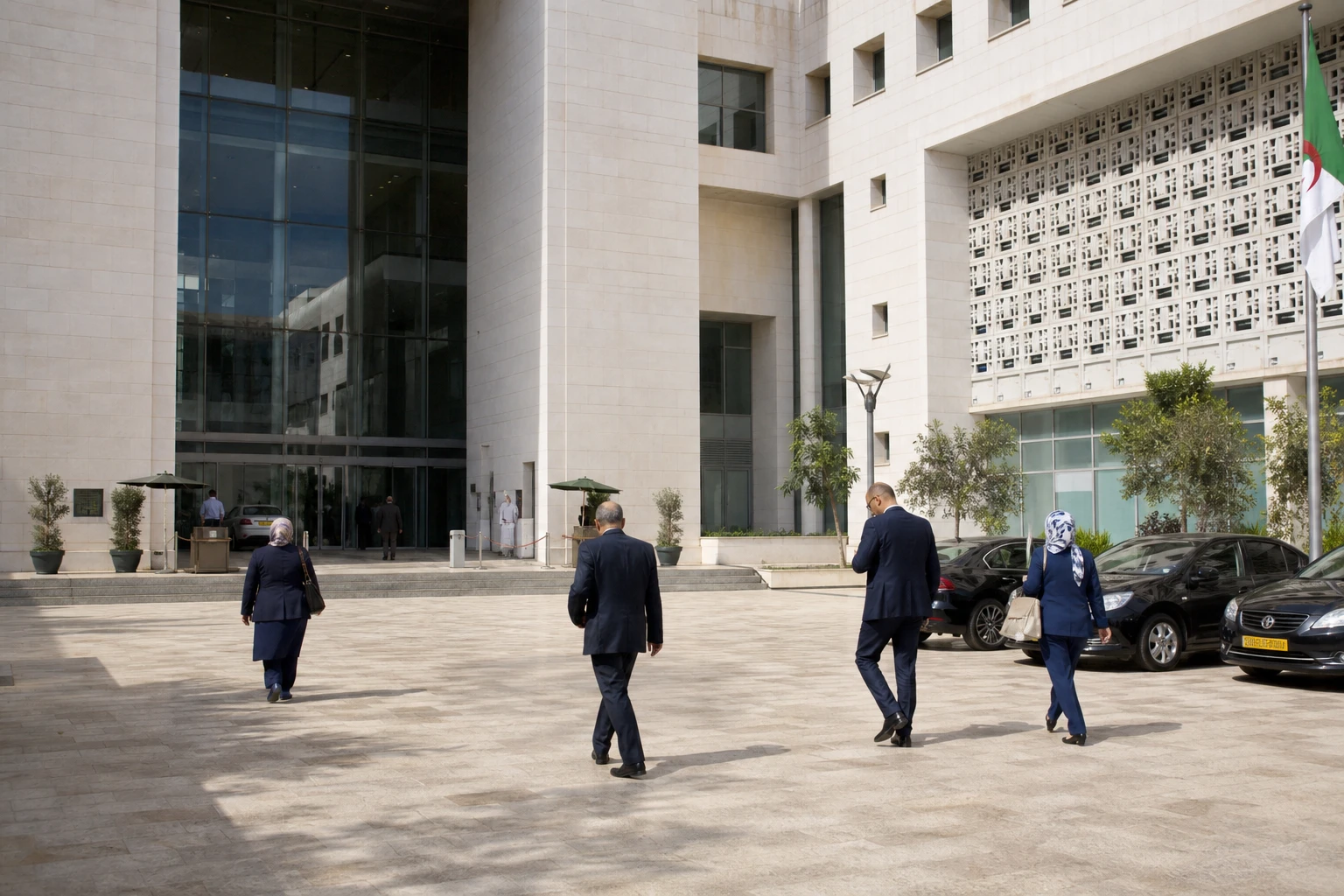
When diplomatic lines become strained, the effects quickly extend beyond the face-off between two capitals
In Algiers, a diplomatic break is never read simply as an angry gesture. It also sets out a red line in a regional environment where power rivalries, competing mediation efforts and accusations of interference now intersect from the Mediterranean to the Gulf. In this case, Algeria has chosen to turn a longstanding dispute into a formal decision concerning the United Arab Emirates.
The country had already toughened its tone over several months. On 2 September 2026, Algerian Radio confirmed that the authorities had begun the process of denouncing the air services agreement signed with the United Arab Emirates in 2013 and ratified in 2014. This step does not resolve everything on its own, but it signals that a bilateral relationship is entering a phase of concrete disengagement.
Algeria and the regional context: asserted sovereignty, cautious diplomacy, an Arab world under pressure
Algiers’ decision is part of a broader diplomatic approach. On 7 September, in Cairo, Ahmed Attaf, Minister of State responsible for Foreign Affairs, reaffirmed Algeria’s commitment to national and inclusive solutions in the Arab world, “far from foreign interference”, according to APS. This sequence matters: it places the move against Abu Dhabi within a wider doctrine of rejecting outside intervention in Arab crises.
It is also worth remembering that Algeria is not speaking from a geopolitical vacuum. In the Maghreb, the Arab Maghreb Union remains paralysed by political and border tensions. To the east and in the Sahel, balances are fragile. Within the African Union’s Peace and Security Council, Algiers continues to advocate an approach based on sovereignty and institutional stability. In this context, every bilateral crisis is also viewed through its potential impact on regional alliance networks.
The United Arab Emirates, for its part, occupies a distinctive position in several African and Arab affairs. It is involved in financial flows and investment, as well as in conflicts where its role is often debated. It is precisely this combination of economic power and diplomatic activism that fuels tensions in several African and Arab capitals.
What Algeria has decided, and why the break is more than a political signal
On Thursday 10 September 2026, Algiers announced that it was severing diplomatic relations with Abu Dhabi, saying it had exhausted, according to state television, the means available to preserve bilateral ties. The wording is weighty. It indicates that the Algerian authorities did not present the decision as an impulsive move, but as the culmination of an already entrenched stand-off.
President Abdelmadjid Tebboune had laid the groundwork by hardening his accusations. In an interview broadcast in July 2026 on public media, he described the Emirates as a “tiny state” with a “very negative impact”, going so far as to say that “wherever they set foot, blood flows”, according to Algerian media that carried the interview. These remarks amount to a strong political attack. Above all, they reflect a conviction: Algiers believes Abu Dhabi is not content with an economic role, but is influencing regional destabilisation.
The diplomatic break should not be confused with a simple exchange of statements. It could complicate consular channels, slow coordination on citizens’ affairs and make investment or air links more sensitive issues. The precedent of the air services agreement denounced in February 2026 shows that the disagreement already affected very practical areas. In other words, the crisis is not merely symbolic. It affects concrete tools for travel, trade and co-operation.
The stakes for Algerians: state diplomacy, the real economy and regional power dynamics
For the Algerian state, the decision sends a message of firmness. It is intended to show that national sovereignty is not negotiable, especially when leaders believe they have evidence of interference. For the public, however, the stakes are more practical: what will the consequences be for travel, business exchanges, investment projects and movement between the two countries? In an economy where external ties matter for jobs, transport and services, the diplomatic break could have indirect effects even before any further economic measures are taken.
The decision also comes at a time when Algeria is seeking to broaden its diplomatic room for manoeuvre. In recent days, Algiers has pursued several co-operation initiatives with other partners, such as Slovakia, showing that it is not reducing its foreign policy to confrontation. The Algerian approach is better understood as a recalibration: diversifying alliances while rejecting what it sees as intrusive conduct.
At the regional level, the issue points to a broader question: who shapes the balance of power in the Arab world and North Africa? Algeria has long defended a doctrine of non-interference, but does so in its own way, with direct and sometimes blunt language. This sets it apart from other capitals that prefer to preserve their Gulf alliances. That difference in approach matters. It also explains why a bilateral crisis can quickly take on political significance far beyond the Algerian-Emirati relationship alone.
A sequence to watch beyond Algiers and Abu Dhabi
This issue should now be monitored on three levels. First, bilaterally, with the possible closure of diplomatic channels and any practical measures that may follow. Second, at the Arab level, where several capitals are closely watching how Algiers redefines its place in the rivalries of the Gulf and the Maghreb. Finally, across Africa, because tensions between states outside the continent often affect mediation, financing and partnerships that also involve Algeria and its neighbours.
For now, the most important point is not simply the break itself. It is what the decision reveals: an Algeria determined to maintain control over its strategic neighbourhood, even at the cost of a high diplomatic price. In a region where power struggles are often waged quietly, Algiers has chosen the clearest possible gesture.