Algeria
 Egypt
 Libya
 Sudan
 Tunisia
 Benin
 Burkina Faso
 Cabo Verde
 Côte d'Ivoire
 Ghana
 Guinea
 Guinea-Bissau
 Liberia
 Mali
 Mauritania
 Niger
 Nigeria
 Senegal
 Sierra Leone
 The Gambia
 Togo
 Cameroon
 Central African Republic
 Chad
 DR Congo
 Equatorial Guinea
 Gabon
 Republic of the Congo
 São Tomé and Príncipe
 Burundi
 Comoros
 Djibouti
 Eritrea
 Ethiopia
 Kenya
 Madagascar
 Malawi
 Mauritius
 Mozambique
 Rwanda
 Seychelles
 Somalia
 South Sudan
 Tanzania
 Uganda
 Angola
 Botswana
 Eswatini
 Lesotho
 Namibia
 South Africa
 Zambia
 Zimbabwe
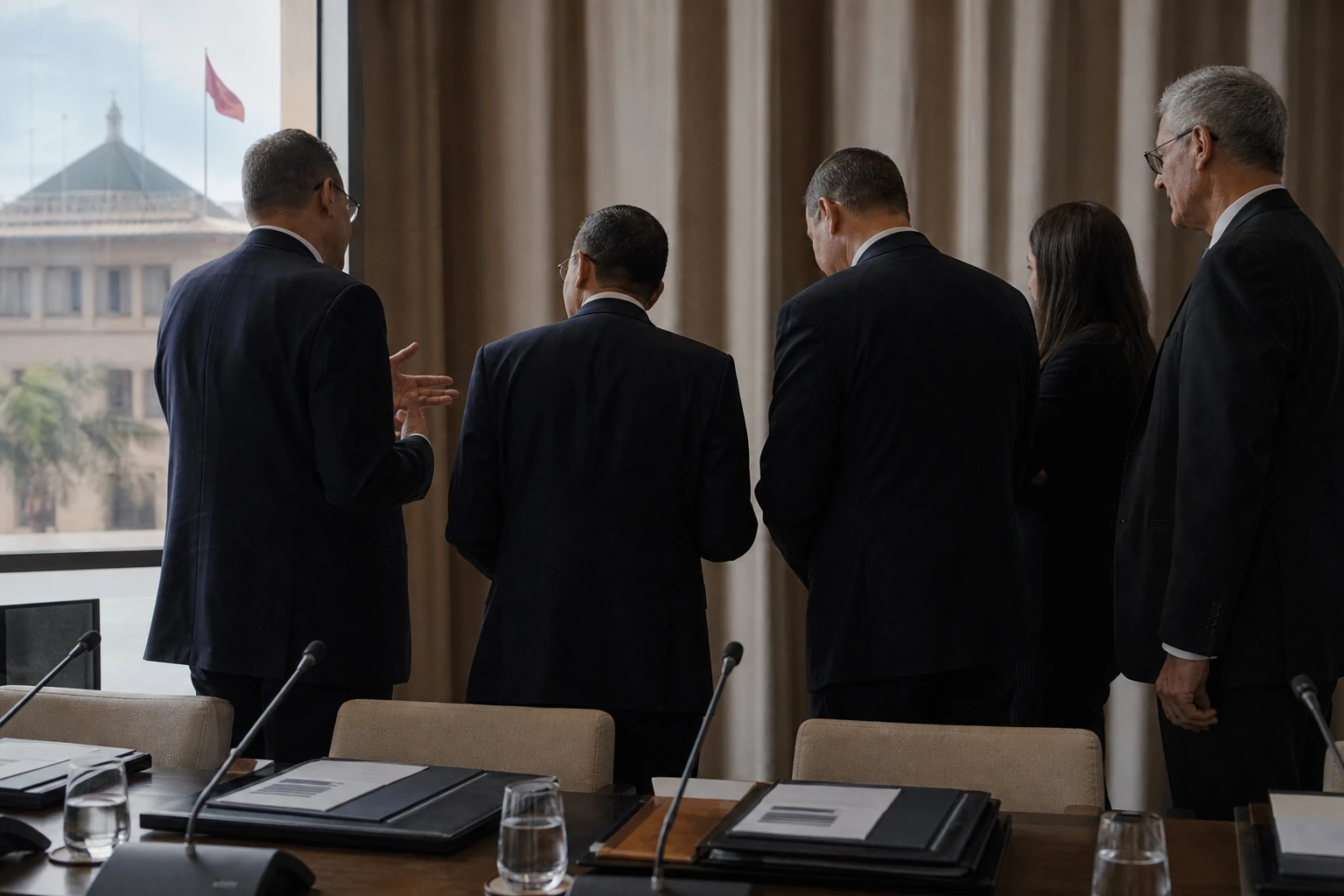
A second engine for Moroccan silver
In southern Morocco, silver is no longer just a historic resource. It is becoming a strategic asset, driven by industrial projects now targeting world-class volumes. At the centre of this shift, the Boumadine project is attracting attention because it would not merely add to existing production: it could change the scale of the group operating it and strengthen Morocco’s position in the African precious metals market.
This shift is taking place within a mining landscape that is well established in Morocco. The Zgounder mine, in the Anti-Atlas, has returned to the forefront following the expansion of its processing plant. Meanwhile, Imiter, operated by Managem, remains a longstanding national benchmark. The two sites show that the country is not limited to extraction: it is also seeking to consolidate a more technical, capital-intensive mining chain geared towards exports.
Boumadine gathers momentum
On 9 September 2026, Aya Gold & Silver presented an updated preliminary economic assessment of Boumadine, a polymetallic project in Morocco. The report extends the industrial strategy already visible at Zgounder: higher production, a longer mine life and an increased economic value. It estimates a 14-year mine life, initial investment of $463 million and an after-tax net present value of $3.5 billion, with an internal rate of return of 93%.
Silver remains at the heart of the project, although Boumadine is also expected to produce zinc, lead, pyrite, gold and silver in the form of payable concentrates. The updated study forecasts 81.2 million ounces of silver over the future mine’s life, up from 69.8 million ounces in the previous version. This increase is fuelling the prospect of a second growth pillar for the company in Morocco.
The group’s chief executive describes the project as capable of doubling the company’s silver production. That claim should, however, be read as a projection, not an established fact. A preliminary study sets out a framework, but does not replace detailed engineering, financing or the start of production. At this stage, Boumadine remains a development asset.
Zgounder confirms the industrial shift
Boumadine’s expansion would be less credible without Zgounder’s successful restart. In 2025, Aya Gold & Silver produced 4,829,151 ounces of silver at Zgounder, alongside 172,129 ounces of silver equivalent at Boumadine, for a consolidated total of 5,001,280 ounces of silver equivalent. The company also reported record production in the fourth quarter of 2025, with 1.37 million ounces of silver in the quarter alone.
Zgounder is no marginal operation. Located in the central Anti-Atlas, the mine is described by the group as a primary silver operation, a rarity in the sector. Commercial production at the expanded plant was declared on 29 December 2024, and the ramp-up continued throughout 2025. The site is targeting a mine life through to 2036, with estimated average annual production of 6 million ounces of silver.
This progress carries symbolic weight in Morocco. Imiter, long regarded as the country’s leading benchmark, remains a major asset for Managem, which has been producing there since 1969. But Zgounder has now moved to a different scale. The debate is therefore no longer simply about ranking mines, but about Morocco’s ability to sustain several competitive silver-producing hubs in the south and centre of the country.
What this means for Rabat, local communities and the region
For people in Rabat, the issue goes beyond mining results. A growing mine means export revenues, skilled jobs, subcontractors, roads, services and increased energy needs. For communities in the Anti-Atlas, it also means greater flows of capital, more pressure on infrastructure and rising expectations of tangible local benefits. The gap remains clear between the financial logic of markets and everyday life in mining provinces.
Morocco is also gaining weight in North Africa, where mineral resources serve as an industrial lever. The country is not part of an economic community such as ECOWAS, but it is part of the Maghreb and, more broadly, a continent-wide contest for mining investment, local processing and transport infrastructure. Across Africa, a project such as Boumadine reflects a wider trend: governments and operators want to capture more value locally before ore is exported.
The next steps in the project will also be important to watch. Aya has already said it wants to advance Boumadine to more detailed studies beyond the scenario set out in the updated PEA. The next phase will show whether the 2026 promise becomes a solid industrial plan, with costs, reserves and a production timetable confirmed. That is where the project’s true significance for Morocco and the African silver market will be determined.