Algeria
 Egypt
 Libya
 Morocco
 Sudan
 Tunisia
 Benin
 Burkina Faso
 Cabo Verde
 Côte d'Ivoire
 Ghana
 Guinea
 Guinea-Bissau
 Liberia
 Mali
 Mauritania
 Niger
 Nigeria
 Sierra Leone
 The Gambia
 Togo
 Cameroon
 Central African Republic
 Chad
 DR Congo
 Equatorial Guinea
 Gabon
 Republic of the Congo
 São Tomé and Príncipe
 Burundi
 Comoros
 Djibouti
 Eritrea
 Ethiopia
 Kenya
 Madagascar
 Malawi
 Mauritius
 Mozambique
 Rwanda
 Seychelles
 Somalia
 South Sudan
 Tanzania
 Uganda
 Angola
 Botswana
 Eswatini
 Lesotho
 Namibia
 South Africa
 Zambia
 Zimbabwe
A sector under pressure, when every franc counts
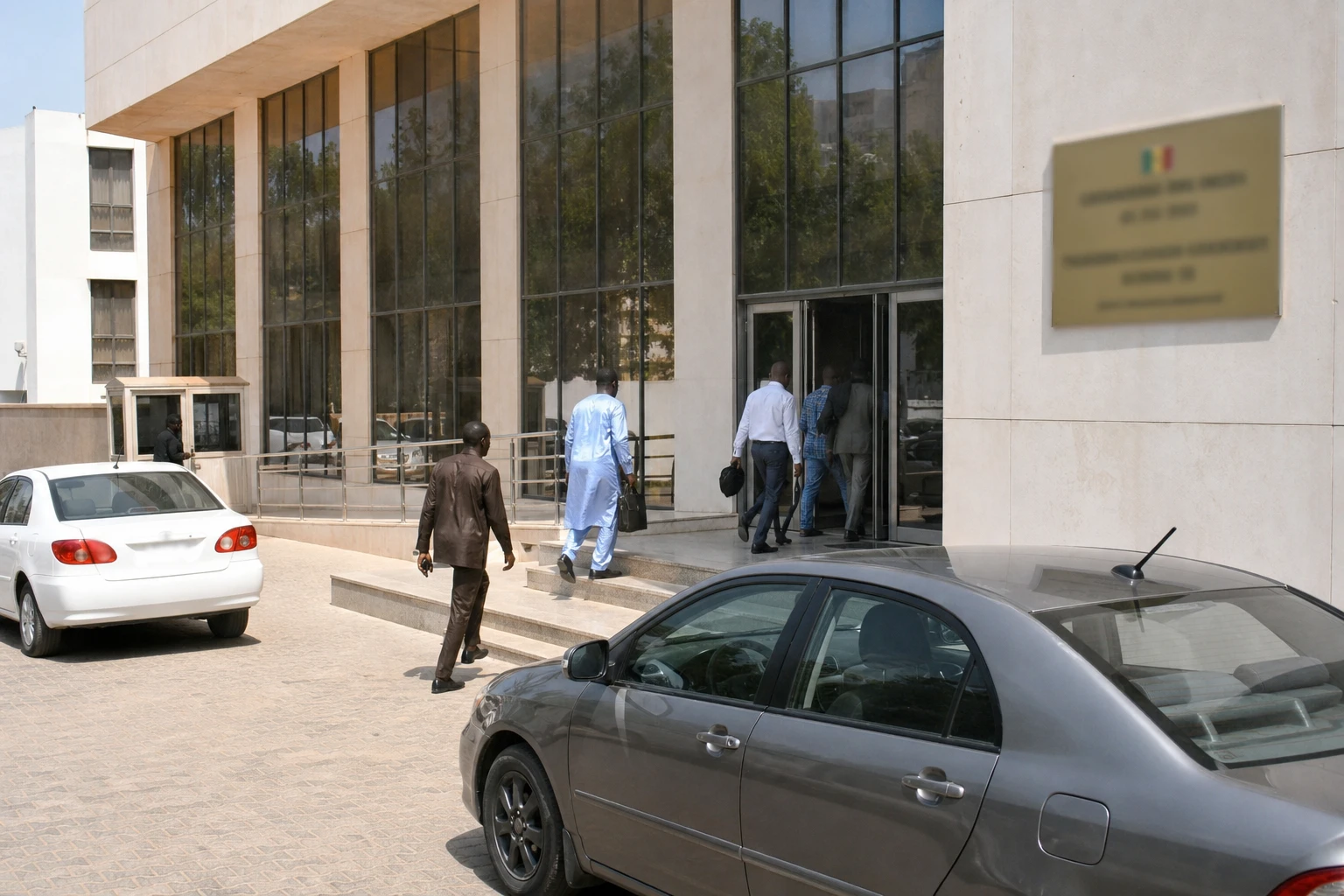
In Senegal, the battle over mining is not being fought only in Dakar’s offices. It has a direct bearing on public revenues, jobs, local authorities and the state’s ability to fund its priorities without further narrowing its already limited room for manoeuvre.
As the authorities seek to put the public finances back on track while restarting the economy, extractive resources are once again becoming a key lever. The debate now centres on a simple question: how can more value be captured without undermining investment or triggering a long series of legal disputes?
Contract review, licence audit and a new public doctrine
Since spring 2026, the Senegalese government has embarked on a wide-ranging review of agreements and contracts concluded in strategic sectors, including mining, hydrocarbons, energy and infrastructure. The review forms part of a more assertive political approach, which the authorities present as a tool of economic sovereignty.
The clearest signal came in March 2026, with the announcement that about 71 mining and quarrying licences would be withdrawn. The sites concerned cover several substances, from gold to construction materials. The stated aim is twofold: to clean up the sector and restore order to licences deemed irregular, inactive or inadequately regulated.
On 8 September 2026, during his general policy statement to the National Assembly in Dakar, Prime Minister Ahmadou Al Aminou Lo confirmed that around 30 mining agreements were being renegotiated. He also said the state was ready to face potential disputes, stressing that renegotiation did not mean giving up, but rebalancing.
The government links this initiative to a broader reform of the mining framework. A new Mining Code is due to replace the one in force since 2016. The authorities also want to strengthen the mining cadastre, make publication of agreements more transparent and improve oversight of licences, royalties and operators’ obligations.
What the authorities are seeking: revenue, discipline and rebalancing
The core of the issue is the public finances. Senegal needs stronger, more predictable and more secure revenues. In this context, mining is not merely an export sector. It is becoming a tool for strengthening public finances, alongside domestic taxation, hydrocarbons and the rationalisation of certain public expenditures.
The authorities want to raise annual revenues from the mining sector to about 600 billion CFA francs by 2029, from 370 billion in 2019. This ambition marks a change in scale. It requires greater oversight, but also the ability to turn extracted wealth into more visible gains for the budget, mining regions and local value chains.
At the same time, figures already made public show the sector’s weight. Senegal’s extractive revenues reached 380.03 billion CFA francs in 2023, according to data from ITIE Senegal. Mining accounts for a very large share. This confirms that the debate over mining agreements is not symbolic. It concerns a substantial pool of resources that already exists.
The authorities also want to send investors a message: legal certainty remains guaranteed for those who comply with the rules, but undue benefits will be challenged. This approach is intended to distinguish good-faith partners from those who may have benefited from overly favourable clauses, excessive tax exemptions or incomplete payments.
ICS, phosphates, gold: different cases, the same issue
Industries Chimiques du Sénégal (ICS) has become a focal point for some of the tensions. The company is at the heart of the phosphate industry and is strategically important to agriculture because it produces fertiliser. It therefore lies at the intersection of mining policy, food sovereignty and local industry.
The government has cited a shortfall of 1,075.9 billion CFA francs in its case, arising from taxes, royalties and exemptions it considers irregular. This very large figure should be treated with caution, as it reflects the government’s interpretation of the case. But it illustrates the scale of the allegations and the political will to change a sector long seen as closed off.
ICS is not an isolated case. Senegal is also home to major operators in mineral sands and gold, notably in areas such as Thiès, Kédougou and Saint-Louis, depending on the projects. For the state, the question is no longer simply how to produce. It is now about negotiating better, exercising stronger oversight and redistributing more effectively.
The effects on the ground will vary. For the public finances, better tax returns could ease some of the pressure. For companies, the period ahead looks more uncertain, especially if contractual clauses are reviewed. For employees, the priority is continuity of operations. For municipalities and neighbouring communities, the issues are jobs, local benefits and the management of environmental impacts.
A regional precedent, but a model still to be built in Senegal
Senegal is not acting alone. In West Africa, several states have already renegotiated mining contracts or rewritten their codes to take back control of their resources. Mali has launched a revamp of its mining framework. Guinea has withdrawn numerous licences. In each case, the stated aim is similar: to capture more value at national level.
But the paths differ. Some countries have increased revenues, at the cost of prolonged tensions with companies or proceedings before international arbitration. Senegal appears keen to avoid direct confrontation. Its message remains more measured: firmness in defending the public interest, while maintaining a clear framework for investment.
This caution matters in the ECOWAS region, where regulatory stability is as important as the assertion of sovereignty. A poorly calibrated tightening could deter useful investment. Conversely, a reform that is too timid would allow the revenue losses the state says it wants to address to persist.
The next steps will hinge on very practical questions: which contracts will be renegotiated, which benefits will be challenged, what deadlines will be imposed and which potential disputes will go to arbitration. That is where the credibility of Senegal’s new mining doctrine will be tested, as it balances the demand for sovereignty, the need for confidence and the promise of tangible results for Senegalese people.