Algeria
 Egypt
 Libya
 Morocco
 Sudan
 Tunisia
 Benin
 Burkina Faso
 Cabo Verde
 Côte d'Ivoire
 Ghana
 Guinea
 Guinea-Bissau
 Liberia
 Mauritania
 Niger
 Nigeria
 Senegal
 Sierra Leone
 The Gambia
 Togo
 Cameroon
 Central African Republic
 Chad
 DR Congo
 Equatorial Guinea
 Gabon
 Republic of the Congo
 São Tomé and Príncipe
 Burundi
 Comoros
 Djibouti
 Eritrea
 Ethiopia
 Kenya
 Madagascar
 Malawi
 Mauritius
 Mozambique
 Rwanda
 Seychelles
 Somalia
 South Sudan
 Tanzania
 Uganda
 Angola
 Botswana
 Eswatini
 Lesotho
 Namibia
 South Africa
 Zambia
 Zimbabwe
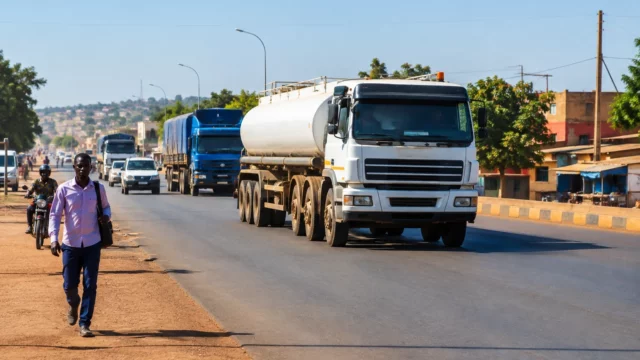
A road in central Mali, a shifting front
In central Mali, ambushes are no longer targeting convoys alone. They are also testing the strength of a security arrangement built on overlapping alliances: the Malian army, local dozo auxiliaries and Russian Africa Corps partners. On 7 September 2026, near Kaka, not far from Sofara, this arrangement was tested again, in an area where armed groups have long moved between Mopti and the country’s secondary central routes.
The latest incident comes as Mali continues to face intense jihadist pressure, particularly from the Group for the Support of Islam and Muslims, an Al-Qaeda affiliate. In April 2026, coordinated attacks had already hit several towns, while the African Union Peace and Security Council again called, at the end of the month, for close monitoring of the situation in Mali.
What is known about the attack
According to several corroborating local sources, a patrol was ambushed at Kaka, in the Mopti region. Initial reports put the death toll at at least 11: four members of the Russian Africa Corps and seven traditional dozo hunters from the Dan Na Ambassagou group. Other sources have reported a higher toll, but the figures have not been publicly confirmed by the Malian authorities or the Russian contingent. JNIM claimed responsibility for the attack and released images of some of the victims, without giving a precise total.
The method used was far from insignificant. Dozos are traditional hunters often mobilised as self-defence groups in several villages in central Mali. In this area, they act as armed intermediaries for communities seeking protection from jihadist attacks, although their presence can also contribute to lasting local militarisation.
On 6 September, the day before the ambush, a Malian army drone strike in Bourkouma reportedly killed a woman and her baby and wounded several civilians, according to local sources cited by the press. Some see it as a possible trigger for reprisals. Here too, the lack of an immediate official statement leaves the precise sequence of events unclear.
Why this incident matters beyond Mopti
Since June 2025, the Africa Corps has taken over from Wagner in Mali, as Russia’s security presence has become more openly acknowledged by Moscow. Consistent press reports and analyses say that the force, controlled by Russia’s Defence Ministry, accompanies the FAMa in several regions, from Bamako to the northern regional capitals. The setback at Kaka therefore undermines a narrative already shaken by a series of major attacks since the start of 2026.
On the ground, the impact is immediate. For people in central Mali, security is about travel, markets, livestock and access to roads. For the authorities in Bamako, it is also a question of political credibility. Mali is already facing logistical pressures, tight budget conditions and an economy exposed to security shocks, although the IMF still expects growth of 5.5% in 2026. Within WAEMU, the situation in Mali also weighs on the wider regional bloc, which is already vulnerable to security and climate risks.
The stakes also extend beyond the relationship between Bamako and Moscow. In the Sahel, jihadist groups exploit coordination failures, community rivalries and gaps in local authority. The African Union has recently warned of a resurgence in attacks on defence forces and civilians in the region. In this context, every successful ambush is a reminder of a simple reality: without lasting control of routes, reliable intelligence and a clear political response, the superiority proclaimed in official statements remains highly fragile.
In the short term, what warrants close attention is whether the death toll is officially confirmed, whether the Malian general staff responds, and how JNIM seeks to exploit the incident in its war of manoeuvre around Mopti, Ségou and the roads leading to Bamako. In a Mali already caught between military transition, jihadist pressure and a reshaping of foreign support, Kaka looks less like an isolated incident than another symptom of an internal front that remains far from stabilised.