Algeria
 Egypt
 Libya
 Morocco
 Sudan
 Tunisia
 Benin
 Burkina Faso
 Cabo Verde
 Ghana
 Guinea
 Guinea-Bissau
 Liberia
 Mali
 Mauritania
 Niger
 Nigeria
 Senegal
 Sierra Leone
 The Gambia
 Togo
 Cameroon
 Central African Republic
 Chad
 DR Congo
 Equatorial Guinea
 Gabon
 Republic of the Congo
 São Tomé and Príncipe
 Burundi
 Comoros
 Djibouti
 Eritrea
 Ethiopia
 Kenya
 Madagascar
 Malawi
 Mauritius
 Mozambique
 Rwanda
 Seychelles
 Somalia
 South Sudan
 Tanzania
 Uganda
 Angola
 Botswana
 Eswatini
 Lesotho
 Namibia
 South Africa
 Zambia
 Zimbabwe
An electoral overhaul that goes beyond closing an institution
In Ivory Coast, electoral matters are never just about an organisational chart. They touch on trust, civil peace and the state’s ability to get all sides to accept the rules of the game. The liquidation of the former Independent Electoral Commission (CEI), launched in Abidjan on 7 September 2026, is part of precisely this effort to establish a more credible new framework for future elections.
The country, whose constitutional capital is Yamoussoukro, remains marked by often-contested electoral periods. In this context, the government presents the reform as a step towards institutional normalisation, while the opposition wants to ensure that the next mechanism does not reproduce the same suspicions.
What the liquidation does—and does not—settle
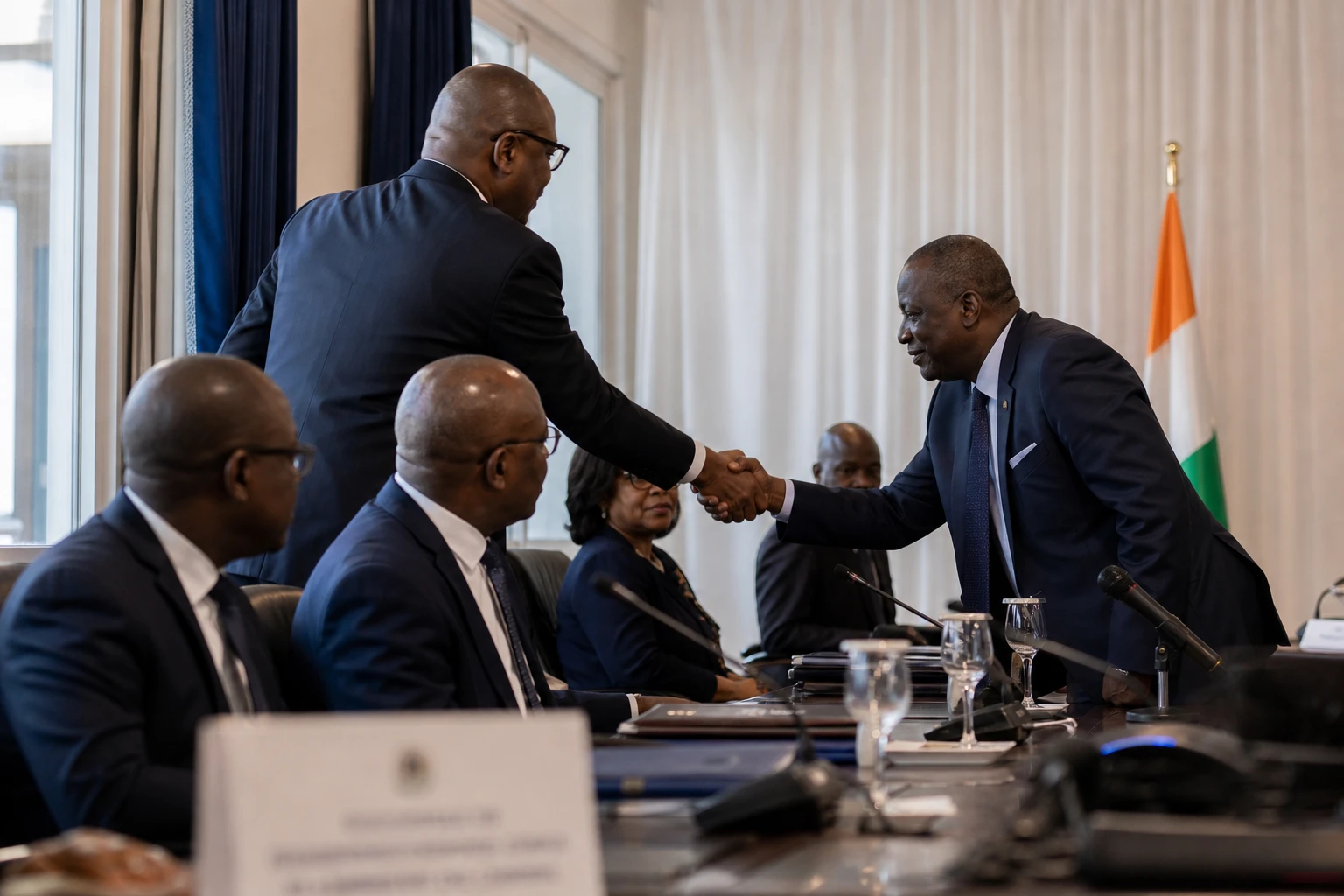
The handover between outgoing secretary-general Kouassi Guy Euloge and liquidator Lassana Sylla officially launched the operational phase of winding up the former CEI. The ceremony was held at the institution’s headquarters in Abidjan, in the presence of Gilbert Koné Kafana, the president of the Republic’s high representative.
Established by a law dated 9 October 2001, the CEI organised national elections and referendums for around 25 years. Its dissolution was decided by the Council of Ministers on 6 May 2026, at the end of the latest electoral cycle and in light of recurring reservations about it expressed by both the government and part of the opposition.
The liquidator must now deal with three practical matters: inventorying and safeguarding the former CEI’s assets, settling its debts and claims, and determining the administrative and social status of its staff. Several Ivorian media outlets report that the last issue is already a sensitive one, particularly as the school year approaches, because it affects entire families.
The real issue: who will oversee future elections?
Dissolution alone is not enough. The most political question remains unanswered: which body will replace the CEI? On 22 June 2026, the government held an information session on the main features of the future electoral management framework, promising a more neutral, transparent and credible mechanism. But the regulations announced to accompany this transition had not yet been made public by the time of the liquidation.
In response to this uncertainty, opposition parties and civil society organisations have put forward their own proposal. On 8 June 2026, they presented a draft High Electoral Council, conceived as an independent authority free from government oversight and partisan influence. This counterproposal shows that the debate is not just about a structure, but about the very nature of the electoral umpire.
On 29 June 2026, several civil society organisations backed the reform launched by the executive, welcoming a mechanism intended to address their longstanding demands. By contrast, political leaders such as Charles Blé Goudé have stressed the need for inclusive dialogue and raised questions about the appointment of members, their neutrality and the traceability of results.
This difference of opinion captures the central issue. For the government, the reform must restore trust. For the opposition, it must first ensure that no side can suspect the umpire of playing the match. In a country where electoral competition directly affects political and social stability, the composition of the future body will matter as much as its name.
A signal for Ivory Coast—and for West Africa
The Ivorian process has implications beyond the country’s borders. In West Africa, ECOWAS closely monitors electoral processes and regularly deploys observation or support missions, drawing on its Additional Protocol on Democracy and Good Governance. It has notably supported the Ivorian electoral process through assistance and observation during previous elections.
This regional context matters. At a time when several West African countries are seeking to strengthen their electoral institutions, Ivory Coast is sending a dual message: on the one hand, it wants to move on from a contested body; on the other, it must prove that the new structure will not merely look better on paper, but will command broader consensus in practice.
The continental dimension is the same. For the African Union and regional organisations, electoral credibility remains a test of stability. In Ivory Coast, this test is attracting particular attention because the authorities want to make the reform an instrument of pacification, while opposition groups see it as the last opportunity to secure guarantees before the next elections. The next steps will therefore depend less on the liquidation itself than on how quickly Abidjan sets out the new body, its appointment rules and its actual degree of independence.