
 Algeria
 Egypt
 Libya
 Morocco
 Sudan
 Tunisia
 Benin
 Burkina Faso
 Cabo Verde
 Côte d'Ivoire
 Ghana
 Guinea
 Guinea-Bissau
 Liberia
 Mali
 Mauritania
 Niger
 Nigeria
 Senegal
 Sierra Leone
 The Gambia
 Togo
 Cameroon
 Central African Republic
 Chad
 Equatorial Guinea
 Gabon
 Republic of the Congo
 São Tomé and Príncipe
 Burundi
 Comoros
 Djibouti
 Eritrea
 Ethiopia
 Kenya
 Madagascar
 Malawi
 Mauritius
 Mozambique
 Rwanda
 Seychelles
 Somalia
 South Sudan
 Tanzania
 Uganda
 Angola
 Botswana
 Eswatini
 Lesotho
 Namibia
 South Africa
 Zambia
 Zimbabwe
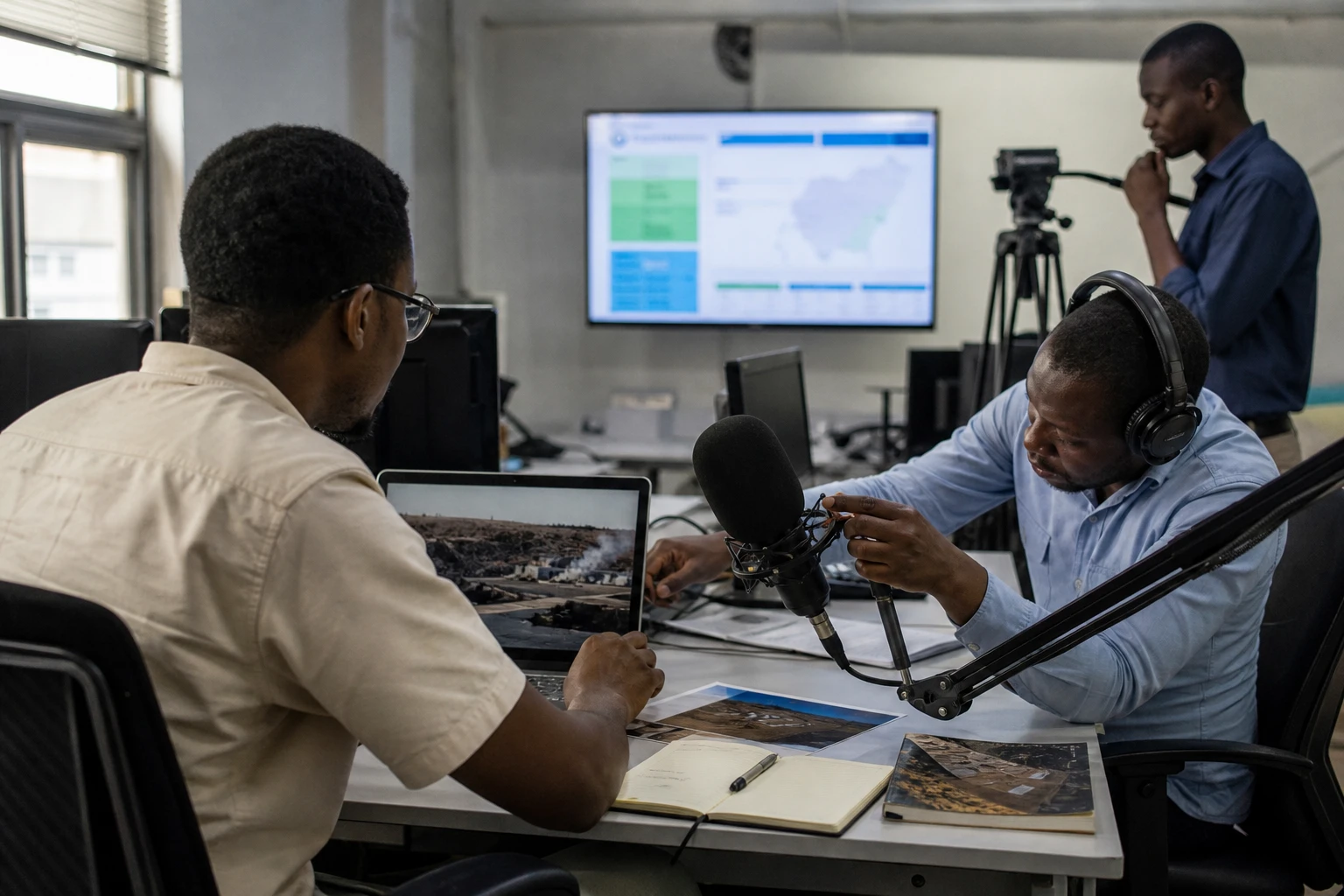
Mining data, Kinshasa’s new arena for sovereignty
In the Democratic Republic of the Congo, the battle for the subsoil is no longer fought only in mines, quarries or export markets. It is also shifting to a more discreet but decisive lever: geological knowledge. In Kinshasa, the state now wants a clearer picture of its mineral resources, better-organised records and greater control over what it knows about them. In a country where copper, cobalt, lithium, tantalum and gold are in high demand, information itself is becoming a strategic resource.
This move comes in a specific regional context. The DRC, whose capital is Kinshasa, is part of the SADC, the Southern African Development Community, where the mining, energy and industrial interests of several neighbours intersect. The country also remains central to global supply chains for critical metals. The Congolese government is therefore seeking to take the initiative after years in which exploration was concentrated in a few areas of the mining region of Katanga, far short of the country’s full territorial expanse.
The National Geological Survey estimates that systematic exploration covers only about 20% of Congolese territory. In other words, much of the country’s potential remains poorly documented. This shortcoming weighs on the state and investors, and ultimately on the country’s ability to negotiate contracts from a position of strength.
What the Congolese state is preparing
At the heart of the plan is a national geological data bank, which is expected to be fully operational by the end of 2026. The goal is twofold: to centralise survey records and then organise access to information through a tiered system. Basic data would be available free of charge, while information deemed sensitive could be subject to a fee. This structure would help fund new mapping campaigns while retaining control over data considered strategic.
The project has gained momentum with a $180 million contract signed in January with Spanish company Xcalibur. The programme covers more than 700,000 square kilometres, using airborne surveys, geophysics, the digitisation of archives and advanced data analysis. Other initiatives also involve public and technical partners, including France’s BRGM and South Africa’s Council for Geoscience. The logic is clear: build a stronger scientific base to identify areas with high potential and reduce the country’s geological blind spot.
This shift is no minor matter. The Congolese Ministry of Mines has already included the establishment of a geological data bank among its public priorities, showing that the issue is not an isolated idea but a longstanding reform goal, now revived with greater resources and more concrete plans. Digitising archives and centralising information are also intended to reduce data loss, duplication and grey areas that too often complicate the granting of mining rights.
At the same time, the Congolese presidency has confirmed that the issue forms part of a broader strategy for sovereignty over resources and data. At a meeting in Houston on 16 June 2026, Félix-Antoine Tshisekedi Tshilombo received promoters of a national critical minerals data programme, while reiterating that sovereignty over resources and data was a red line. This highlights the political coherence of the approach: Kinshasa wants to attract partners without handing them control of the information.
An economic issue, but also a political one
The strategy addresses a concrete problem. The DRC holds a central position in critical minerals. In 2024, it accounted for about 75% of global cobalt production and 55% of known reserves, according to the US Geological Survey. The country is also a major copper producer. Yet this abundance is not enough to guarantee economic sovereignty. Without reliable data, the state often negotiates using information held by mining companies or external consultants.
Kinshasa therefore faces a twofold challenge. First, to steer investors towards areas that remain underexplored. Second, to gain greater control over the value created upstream, even before a mine opens. This is where data becomes an instrument of power. Whoever knows where deposits are located, their quality and the technical conditions involved can also influence future industrial decisions.
The government is also seeking to move away from dependence on a handful of mining corridors. Exploration activity is currently heavily concentrated in the copper-cobalt belt of Lualaba and Haut-Katanga. The rest of the country remains insufficiently documented. This limits the diversification of projects and perpetuates a two-tier mining landscape: on one side, areas already integrated into global markets; on the other, vast expanses that remain poorly understood, even by the administration itself.
However, the choice of public control is not universally supported. Some industry players argue for greater data openness, saying broad access would encourage competition, research and investment. It is a familiar debate in mining countries: too much secrecy can sometimes deter new operators, while too much openness can reduce the state’s ability to protect its strategic interests. The DRC is seeking a balance that is more political than purely technical.
A decision with implications beyond the DRC
The issue reaches beyond the country’s borders. The DRC remains at the centre of global competition for critical minerals, as major powers, battery makers and clean-technology manufacturers seek to secure their supplies. In this landscape, control of geological data is becoming almost as important a negotiating tool as production itself.
The country has already shown that it can intervene further downstream, in cobalt exports. In 2025, Kinshasa first imposed a temporary suspension and then a quota system, which was subsequently extended until 2027, according to reports carried by Reuters and several business media outlets. The current approach goes further still: the aim is no longer just to regulate volumes leaving the country, but to control the information that determines where future projects will take shape.
For Central Africa, the signal is significant. The DRC is seeking to turn a natural advantage into institutional capacity. If the national data bank works, it could serve as a model for other countries on the continent seeking to organise their mining policies more effectively without handing their archives to the highest bidder. The challenge is therefore not simply to find minerals. It is also to know, on its own terms, what it possesses before surrendering, processing or negotiating it.



