Algeria
 Egypt
 Libya
 Morocco
 Sudan
 Tunisia
 Benin
 Burkina Faso
 Cabo Verde
 Côte d'Ivoire
 Ghana
 Guinea
 Guinea-Bissau
 Liberia
 Mali
 Niger
 Nigeria
 Senegal
 Sierra Leone
 The Gambia
 Togo
 Cameroon
 Central African Republic
 Chad
 DR Congo
 Equatorial Guinea
 Gabon
 Republic of the Congo
 São Tomé and Príncipe
 Burundi
 Comoros
 Djibouti
 Eritrea
 Ethiopia
 Kenya
 Madagascar
 Malawi
 Mauritius
 Mozambique
 Rwanda
 Seychelles
 Somalia
 South Sudan
 Tanzania
 Uganda
 Angola
 Botswana
 Eswatini
 Lesotho
 Namibia
 South Africa
 Zambia
 Zimbabwe
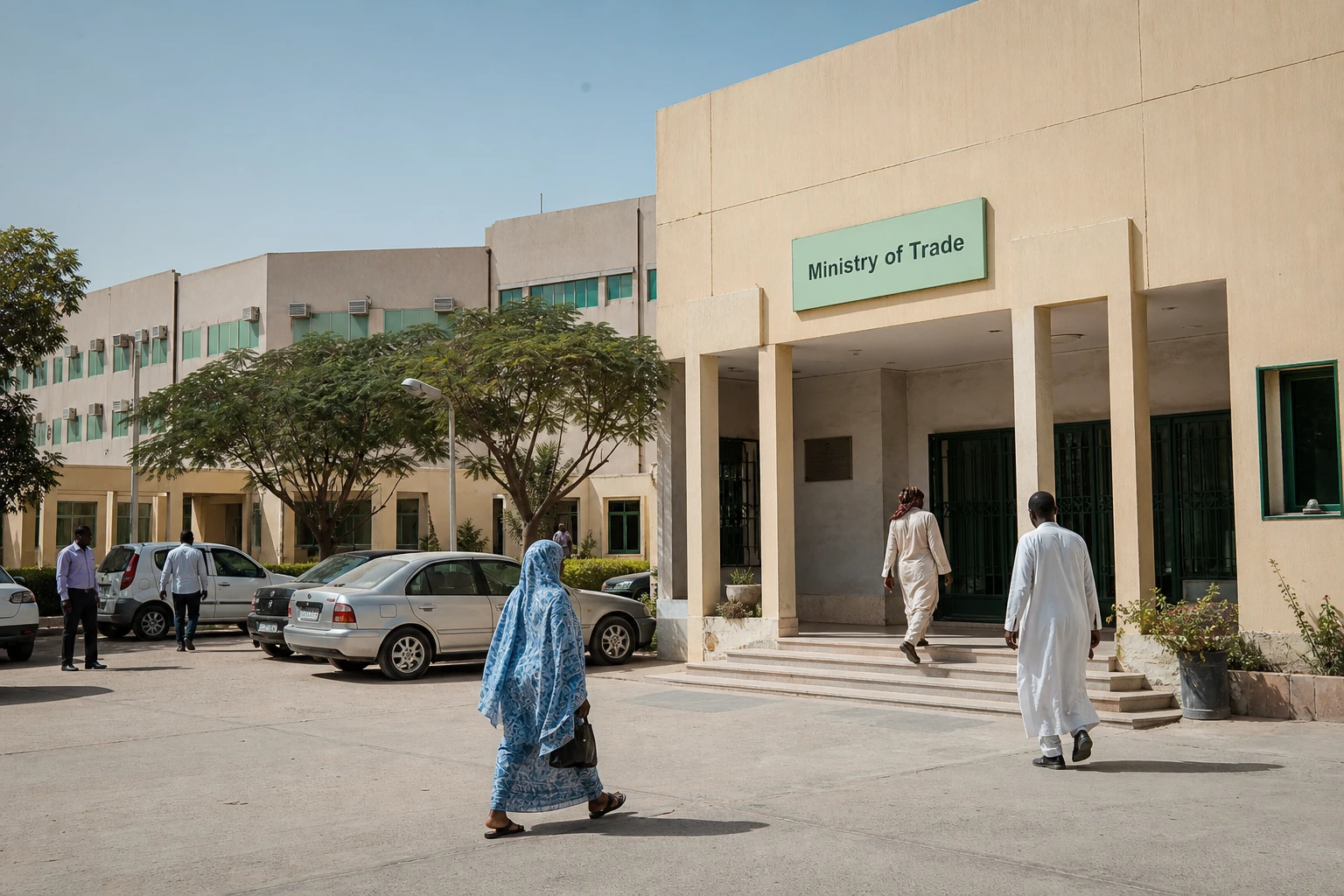
In Rosso, a small tax can hold up a major flow
On the banks of the Senegal River, the Rosso crossing is more than a simple landing stage. It is a daily artery for traders, transport operators and families living between Mauritania and Senegal. When a fee is imposed without a clear basis, the cost of a journey can quickly wipe out a day’s profit. The decision announced on 4 September 2026 to end charges on passengers using the Rosso ferry therefore addresses a very practical problem: allowing people and goods to move without unnecessary obstacles.
This crossing matters far beyond the town of Rosso, in Mauritania. It links two trading hubs, Rosso-Mauritania and Rosso-Senegal, separated by the river, and handles part of the traffic between Nouakchott and Dakar. The issue is not merely administrative. It affects the price of fabrics, food, fuel and transport and, more broadly, the smooth flow of a West African corridor still marked by border delays.
Mauritania’s measure and what it changes immediately
According to the administrative circular cited by Mauritanian media, security services and government departments must no longer collect fees from passengers using the Rosso ferry. The measure took effect immediately. It follows repeated complaints from travellers and traders who denounced payments they considered arbitrary, sometimes charged more than once on the outward and return journeys. The immediate effect of the decision is central: for users, this is not a future change, but relief already visible at the ferry terminal.
Accounts from Senegalese women traders illustrate the scale of the problem. Some say they had to pay several times in a single day, with amounts varying from one official to another. In a small business, these sums quickly eat into profits. They also affect the stock available, the frequency of return trips and vendors’ ability to keep prices affordable. For the real economy of markets and bus stations, scrapping an informal or poorly justified tax often matters more than a grand statement of principle.
The decision’s scope extends beyond passengers on foot. According to the information available, it applies to all ferry users, including those who keep the local logistics chain running. In this border area, trade depends on short, frequent journeys that generate little profit individually. Reducing their cost gives some breathing room to fabric sellers, small importers, market gardeners and families crossing to sell, shop or visit relatives.
Rosso, a border hub at the heart of integration
Rosso has long been at the centre of ambitions to deepen integration between Mauritania and Senegal. The African Development Bank approved funding for the Rosso Bridge in December 2016, presenting it as the first major direct link between the two countries. Project documents say the bridge will connect the two towns of Rosso, now separated by the river, and replace a crossing served by a ferry. The project is under way, with completion scheduled for 31 December 2026, according to the AfDB’s project monitoring database.
The project is part of a broader effort to improve regional corridors, notably the trans-African highway linking Tangier to Lagos and the Algiers-Dakar corridor. Mauritanian institutions have themselves described the bridge as a way to increase trade, address missing links in Trans-African Corridor No. 1 and strengthen cooperation between the two banks. In other words, Rosso is more than a border post. It is an infrastructure link that can affect transport costs, delivery times and cross-border trade.
The Senegal River also has an important institutional dimension. The Senegal River Basin Development Authority (OMVS) advocates a framework for navigation and equal treatment of users in the basin. In this context, any practice that slows or makes movement through Rosso more expensive runs counter to the spirit of river cooperation promoted by the riparian countries. Nouakchott’s signal is therefore clear on two levels: cleaning up the crossing now and preparing the ground for a shift to a more modern crossing.
An economic issue, but also a political one
For Mauritania, the decision also has a governance dimension. By removing a fee without a clear basis, the authorities are showing that they intend to take back control of a space where collection practices can blur the line between enforcement, public services and rent-seeking. This matters in a country where Rosso is at once a gateway, a commercial hub and a sensitive point for monitoring movement. The town concentrates transit, agriculture and market activity, all of which require clarity, not a pile-up of charges.
For Senegal, the absence of an equivalent measure so far leaves an imbalance in treatment. Cross-border trade does not depend solely on goodwill on one side of the river. It requires bilateral coordination, particularly in an area where retail trade is highly sensitive to even the smallest crossing cost. The fact that women traders have welcomed the Mauritanian decision first shows where the most visible pressure lay for the users interviewed. But until arrangements are harmonised on both sides, movement will remain less than fully fluid.
This case also says something about West Africa in 2026. Borders are increasingly seen as economic interfaces rather than simple dividing lines. The Rosso Bridge, the Nouakchott-Dakar corridor and trade facilitation measures all point in the same direction: less friction, more movement and deeper practical integration. Mauritania’s decision fits this trend. It is a reminder that a reform that appears modest can have an immediate impact on cross-border trade and on the credibility of regional integration policy. This will be especially true if the bridge progresses according to the announced timetable and if the two states manage to harmonise their crossing procedures before the structure opens fully.