Algeria
 Egypt
 Libya
 Morocco
 Sudan
 Tunisia
 Benin
 Burkina Faso
 Cabo Verde
 Côte d'Ivoire
 Ghana
 Guinea
 Guinea-Bissau
 Liberia
 Mali
 Mauritania
 Nigeria
 Senegal
 Sierra Leone
 The Gambia
 Togo
 Cameroon
 Central African Republic
 Chad
 DR Congo
 Equatorial Guinea
 Gabon
 Republic of the Congo
 São Tomé and Príncipe
 Burundi
 Comoros
 Djibouti
 Eritrea
 Ethiopia
 Kenya
 Madagascar
 Malawi
 Mauritius
 Mozambique
 Rwanda
 Seychelles
 Somalia
 South Sudan
 Tanzania
 Uganda
 Angola
 Botswana
 Eswatini
 Lesotho
 Namibia
 South Africa
 Zambia
 Zimbabwe
In Niamey, state security now rests on a fragile balance
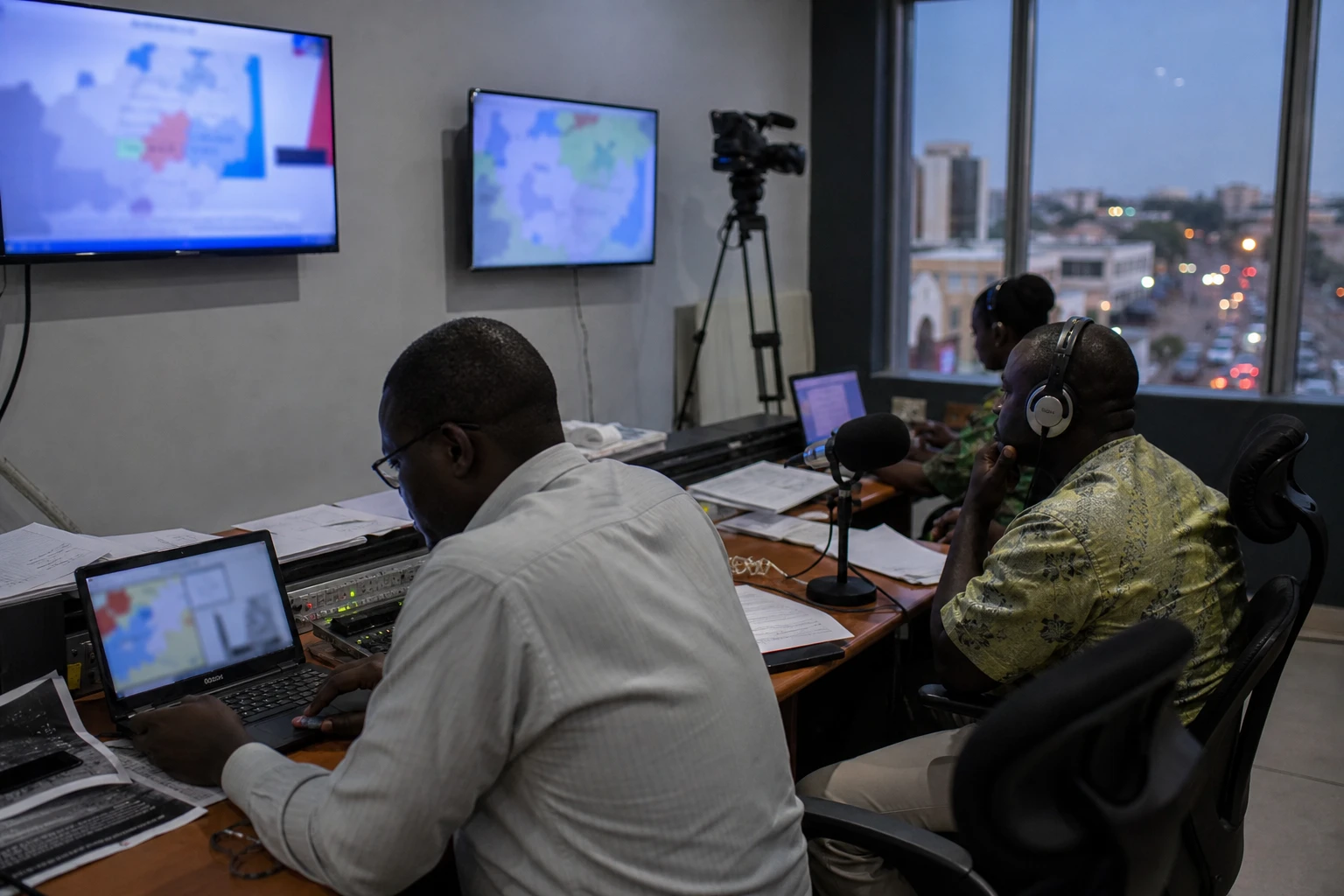
In Niger’s capital, the question is no longer just how to fight armed groups. It is also who protects the government when the front line moves closer to the institutions of state. The mutiny that took place in Niamey on the night of 28–29 August 2026 brought this reality into sharp focus: in Niger, regime security and national security are increasingly becoming one and the same.
The context is familiar, but remains stark. Since the coup of 26 July 2023, General Abdourahamane Tiani has led the country. Niger subsequently broke with ECOWAS, the West African bloc, from which its withdrawal took effect on 29 January 2025. Along with Mali and Burkina Faso, the country has also established the Alliance of Sahel States, or AES, as an alternative political framework.
This regional realignment has not resolved the underlying issue. Attacks by groups linked to Islamic State and al-Qaeda continue to target the country’s armed forces, particularly in western Niger, around Tillabéri and Dosso. Air Base 101, incorporated into Diori Hamani International Airport, has become a sensitive location because it brings together symbols of sovereignty, military assets and the protection of the seat of power.
Mutiny contained, then immediately politicised
Accounts from several sources broadly agree on the main facts: mutinous soldiers targeted Niamey’s Air Base 101 and other sensitive sites in the capital. Forces that remained loyal to the government regained control after a tense stand-off. The intervention of Russia’s Africa Corps was decisive, according to several analysts and diplomats quoted in the international press. Russia’s ambassador to Niamey, Viktor Voropaev, himself acknowledged that Russian forces had helped suppress the mutiny.
The official Nigerien account and that of the AES emphasise the loyalty of the defence and security forces. A statement issued by the Nigerien government described an attempted destabilisation that had been contained thanks to the professionalism of loyalist forces. The AES adopted the same line, expressing its support for the institutions of the Republic of Niger.
The most important political point is not simply that calm has returned. It is the signal that has been sent. For the first time so clearly, the Africa Corps appears not only as a counter-insurgency force, but as a force safeguarding the regime. This interpretation is shared by specialist analysts quoted by several international media outlets, who estimate that about 200 Russian personnel were present at the site, while other sources describe a larger deployment around Niamey airport.
The Africa Corps: an instrument of war and political survival
The issue extends beyond Niger. The Africa Corps, under the direct control of Russia’s Ministry of Defence, has succeeded the Wagner Group in several African operations. The distinction matters. Wagner gave Moscow room for deniability. The Africa Corps, by contrast, is a more transparent state instrument, and therefore one for which it takes greater political responsibility. In Niger, it is used to train, support and provide security.
This presence is tied to a very concrete equation. Niger remains a strategically important country in the Sahel, beset by armed insurgencies but also rich in uranium, oil and gold. Several analysts stress that Moscow offers more than military assistance. It also protects economic and diplomatic interests. When a regime survives, its mining, energy and geopolitical partnerships survive with it.
For frontline soldiers, the picture is more nuanced. The argument for sovereignty carries real weight in public opinion, especially after the departure of French troops and the deterioration of relations with several Western partners. But everyday insecurity has not disappeared. Fighting against jihadist groups continues, and Nigerien units remain exposed to logistical pressures, a lack of equipment and operational fatigue. Several analysts quoted in the press also point out that counter-insurgency forces do not always feel sufficiently supported by the military government.
This internal tension has a direct consequence: the military government must now manage two risks at once. On one side is the external armed enemy. On the other is the rift within its own ranks. This is where Russian support becomes politically useful. It helps the government hold Niamey, even without bringing lasting peace to the west of the country. In other words, stability at the centre takes precedence over full control of the territory.
A regional message for the Sahel and beyond
The episode’s significance extends beyond Niger’s borders. In the Sahel, the juntas in Niamey, Bamako and Ouagadougou have built a narrative of breaking with former colonial powers and with ECOWAS, which they portray as too intrusive. The AES also reaffirmed its support for Niger and its institutions in Niamey after the mutiny. This language of sovereignty remains central to their political legitimacy.
But this proclaimed sovereignty is running up against a new security dependence. For Moscow, the interest is clear: to retain allies in West Africa, exert influence in international forums and protect strategic resources. For Nigerien authorities, the advantage is immediate: access to reinforcements able to intervene quickly in the capital. The imbalance is less apparent in the rhetoric than in the facts.
The region must now watch two implicit deadlines. First, Niger’s ability to contain further internal unrest without opening another political front. Second, the evolution of Russia’s role in the Sahel, while the war in Ukraine continues to absorb most of Moscow’s resources. In short, the Africa Corps can help save a government. It is not, however, enough to resolve the causes of the instability that has weakened Niger since 2023.