Algeria
 Egypt
 Libya
 Morocco
 Sudan
 Tunisia
 Benin
 Burkina Faso
 Cabo Verde
 Côte d'Ivoire
 Ghana
 Guinea-Bissau
 Liberia
 Mali
 Mauritania
 Niger
 Nigeria
 Senegal
 Sierra Leone
 The Gambia
 Togo
 Cameroon
 Central African Republic
 Chad
 DR Congo
 Equatorial Guinea
 Gabon
 Republic of the Congo
 São Tomé and Príncipe
 Burundi
 Comoros
 Djibouti
 Eritrea
 Ethiopia
 Kenya
 Madagascar
 Malawi
 Mauritius
 Mozambique
 Rwanda
 Seychelles
 Somalia
 South Sudan
 Tanzania
 Uganda
 Angola
 Botswana
 Eswatini
 Lesotho
 Namibia
 South Africa
 Zambia
 Zimbabwe
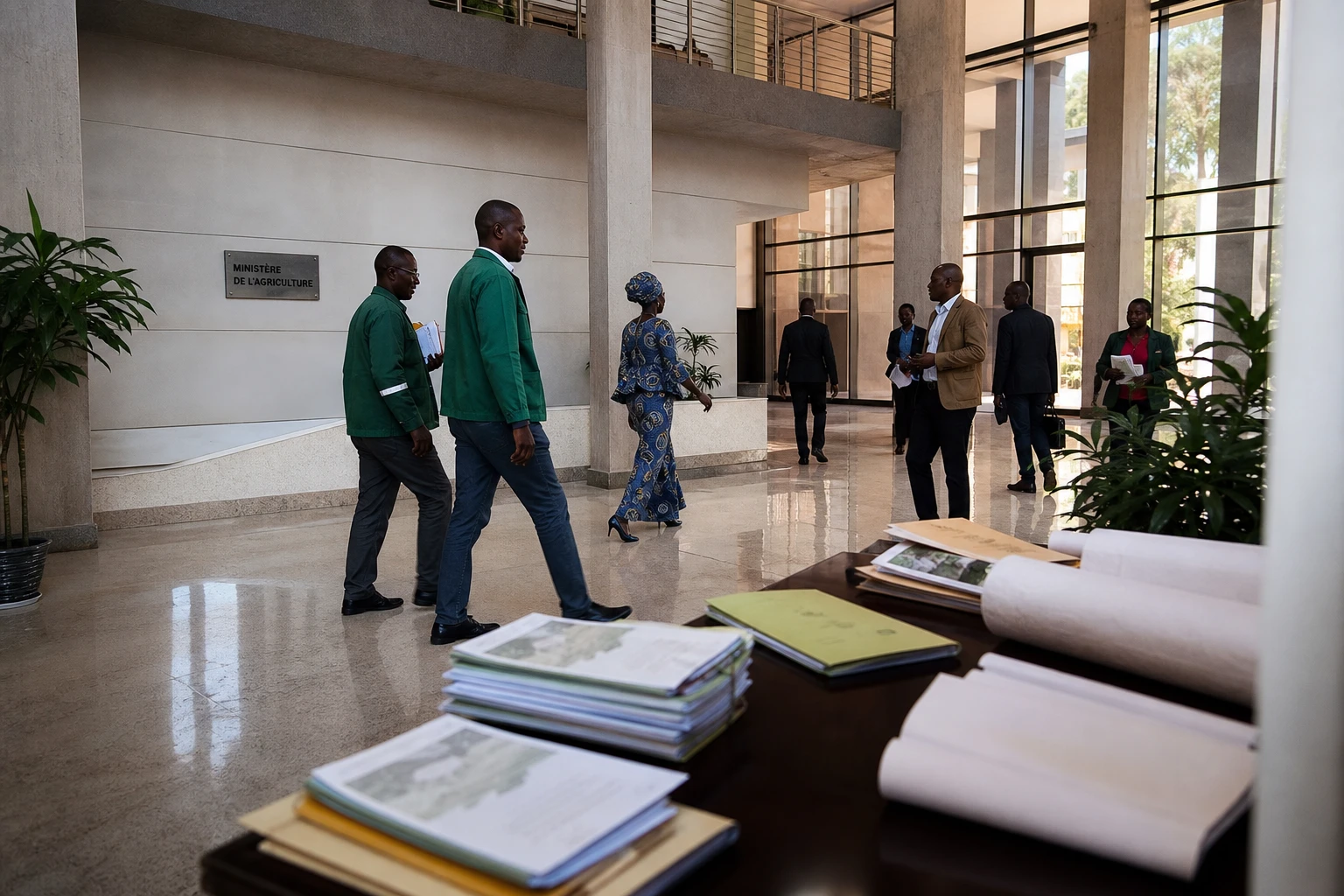
Rice, a tangible test of food sovereignty for Guineans
In Conakry, rice is more than a simple agricultural product. It is a daily staple, a matter of purchasing power and a marker of sovereignty. When the import bill remains high, every increase in yields matters as much as a grand speech about self-sufficiency. Guinea is therefore seeking rapid solutions, while recognising that the battle is fought in the fields, in hydro-agricultural infrastructure and through the spread of techniques suited to rice-growing areas.
This strategy is unfolding in a regional environment familiar to members of ECOWAS, the Economic Community of West African States. Across the sub-region, rice is both a food crop and one of the most imported cereals. Guinea, for its part, remains classified by the FAO as a low-income, food-deficit country, explaining the urgency attached to local production.
Two partnerships, one shared approach: learn fast, produce more
On 4 September 2026, in Conakry, Guinea’s Ministry of Agriculture signed a memorandum of understanding with Brazil’s Daniel Franco Institute. The stated objective is clear: to support the ambition of rice self-sufficiency through the transfer of experience, methods and production tools. The agreement was presented as support for modernising the sector, in a country where yields remain far below Asian and South American standards.
This move towards Brazil extends another avenue already opened with China. In Koba, in the Boké region, the authorities launched a hybrid-rice trial in August 2026 with YILONGHE Plantation and Développement Agricole Guinée SARL. The project provides for a demonstration phase covering 1,000 hectares, of which 500 have already been granted to the Chinese partners, as well as the transfer of hybrid seed production techniques to Guinean farmers. The Prime Minister’s Office had already received the company in July, presenting hybrid rice as a lever for food self-sufficiency.
The choice of these two partners is not insignificant. China remains one of the world’s rice-growing giants, with production far exceeding that of most African countries and long experience of hybrid rice, developed on a large scale since the 1970s. Brazil, for its part, is a major producer in Latin America and a recognised player in tropical and irrigated rice cultivation. For Conakry, the challenge is less diplomatic than technical: to raise yields, secure seeds and professionalise production methods.
The productivity gap remains the real dividing line
The figures show the scale of the challenge. FAO data and international agricultural databases indicate that China and Brazil achieve yields far higher than Guinea’s. According to the figures used by market observers, Guinea produces around 1.5 to 1.9 tonnes per hectare, depending on the datasets and years considered, while China and Brazil are much higher. This gap reflects more than differences in climate. It also points to irrigation, mechanisation, access to inputs, seed quality and technical support.
Guinea is not starting from zero. The government says it launched the 2026-2027 agricultural campaign in Koba on 8 April 2026, with the ambition of making 2026 a turning point for the agricultural sector. The same official source cited more than 1.5 million tonnes of rice produced during the previous campaign, an increase of 14%. The country has also included agriculture in the Simandou 2040 programme, its major framework for economic transformation. The programme’s agricultural pillar envisages long-term investment and reforms to restructure the sector.
But reliance on foreign supplies remains high. USDA projections for Guinea show rice imports of around 1.2 million tonnes for 2024/2025, a level that confirms the tension between local production and national consumption. In other words, the question is not simply how to produce more. Losses must also be reduced, storage improved, market access widened and local rice brought to urban centres at a competitive cost. In a country where household demand is substantial, the quality of logistics matters almost as much as raw productivity.
What these choices say about Guinea’s trajectory
Turning to China and Brazil simultaneously reveals an approach. Guinea is not just seeking funding. It is looking for expertise, adapted varieties and demonstration projects that can deliver quickly. This approach reflects the logic of Simandou 2040, which aims to use the revenues and multiplier effect of major projects to modernise agriculture, rural roads and value chains. It is also consistent with the broader revival of agricultural cooperation through the launch of the AgriConnect programme with the World Bank in April 2026.
For Guinean farmers, the stakes are very concrete. Higher yields can change the profitability of a growing season, but only if hybrid seeds are accessible, water is managed and agricultural extension services keep pace. For urban households, the real promise would be greater availability of local rice and less dependence on global markets. For the state, finally, the challenge is both budgetary and political: every tonne produced locally eases pressure on imports, but every failed rollout is a reminder that food sovereignty is built over time.
Across West Africa, Guinea’s latest moves warrant attention. Many ECOWAS states are seeking to reduce their dependence on imported rice. The question, then, is not just whether a partnership works in Guinea. It is whether a model combining experimentation, technology transfer and public investment can be replicated in other rice-growing areas in the region. The coming months will show whether Koba becomes merely a pilot site or a lasting foothold for Guinea’s rice sector.