Algeria
 Egypt
 Libya
 Morocco
 Sudan
 Tunisia
 Benin
 Burkina Faso
 Cabo Verde
 Côte d'Ivoire
 Ghana
 Guinea
 Guinea-Bissau
 Liberia
 Mali
 Mauritania
 Niger
 Nigeria
 Senegal
 Sierra Leone
 The Gambia
 Togo
 Cameroon
 Central African Republic
 Chad
 DR Congo
 Equatorial Guinea
 Gabon
 Republic of the Congo
 São Tomé and Príncipe
 Burundi
 Comoros
 Djibouti
 Eritrea
 Ethiopia
 Kenya
 Madagascar
 Malawi
 Mauritius
 Mozambique
 Rwanda
 Seychelles
 Somalia
 South Sudan
 Tanzania
 Angola
 Botswana
 Eswatini
 Lesotho
 Namibia
 South Africa
 Zambia
 Zimbabwe
A road project with significance beyond Busoga
In Kampala, the issue is not simply building a road. It is also about connecting rural producers more quickly to markets, schools, health centres and the country’s commercial routes. In a country where roads remain the most crucial logistical tool in daily life, every kilometre that is passable changes the movement of goods, workers and services. The new road project planned in eastern Uganda is grounded in this very practical logic.
The project is in the Busoga region, around Jinja, in eastern Uganda. It also affects districts looking towards Lake Kyoga and, more broadly, the links between the north and south of the country. This matters. In East Africa, domestic connectivity shapes local trade as much as regional integration driven by the East African Community.
What Uganda’s Parliament has approved
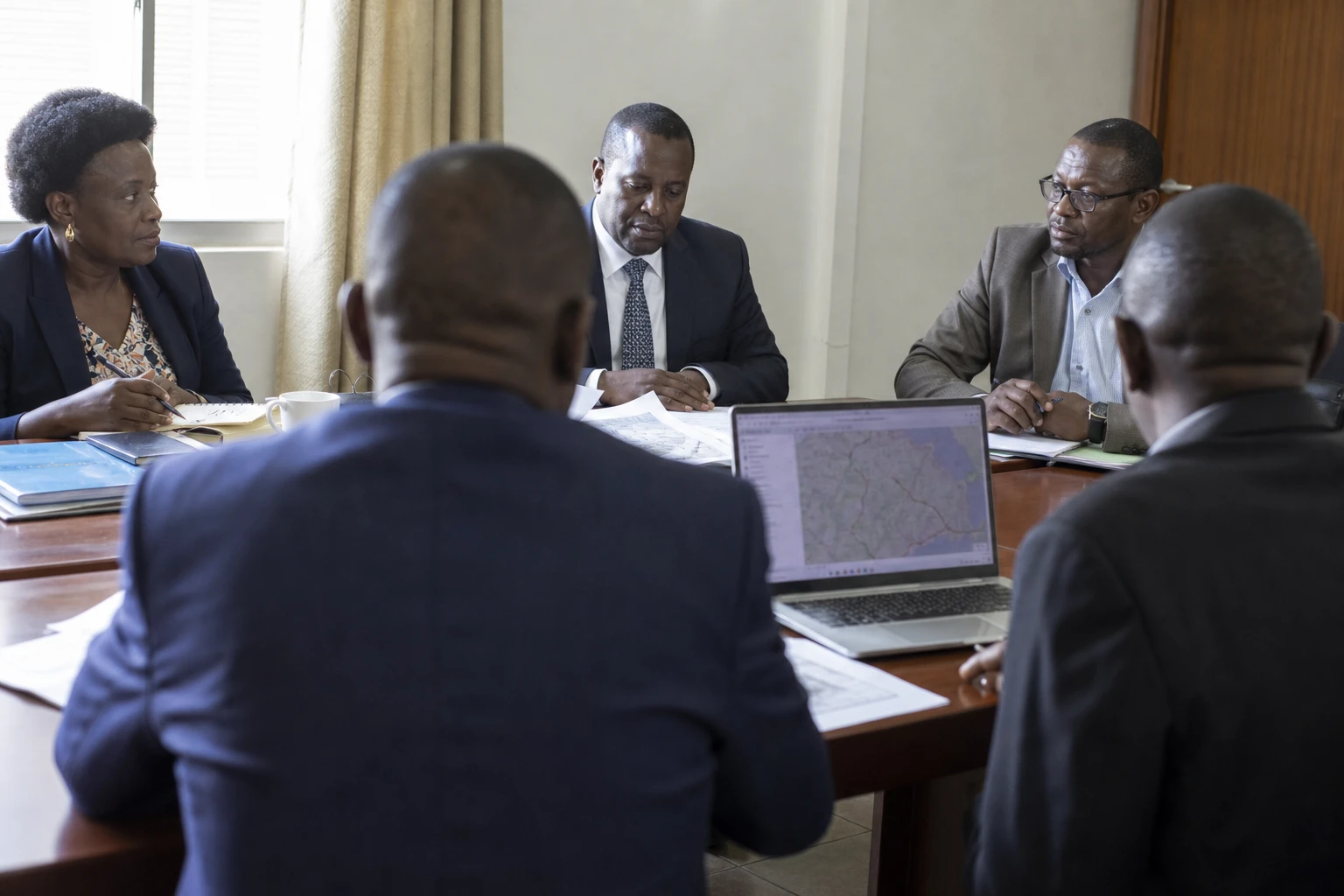
On Thursday 3 September 2026, Uganda’s Parliament gave the green light to borrowing of up to €207.75 million, or about $241.28 million, to finance the design and construction of the Jinja–Mbulamuti–Kamuli–Bukungu route. The programme also includes 10 kilometres of roads in Jinja, compensation for people affected by land acquisition and supervision of the works.
The announced route covers 127 kilometres. According to information presented to MPs, it is intended to serve as a strategic corridor for Busoga, link the area to Lake Kyoga and provide an alternative route between northern and southern Uganda. The financing is to be secured from Citi Bank and other financial institutions.
This proposal did not come out of nowhere. In October 2025, the same project had already been submitted to Parliament with a higher budget of around €230.45 million, before being revised. This shows that the Ugandan government adjusted the financing package during deliberations, probably to account for design costs, insurance and land requirements. This is an inference based on the available parliamentary documents.
Finance Minister Henry Musasizi defended the decision as part of a broader public investment strategy. For the 2026/2027 financial year, Uganda’s budget provides 8.79 trillion shillings for transport infrastructure. Official priorities cover national, urban and community roads, as well as bridges, ferries, ports and railways.
Why this road matters to the rural economy
The first concern is agriculture. In rural areas, a road in poor condition increases transport costs, reduces the frequency of journeys and makes essential goods more expensive. By contrast, a road that is passable all year round improves access to markets and limits post-harvest losses. The IMF recently estimated that 53% of Uganda’s rural population had access to a road that was passable all year round. That is higher than in several low-income countries, but still insufficient to support the rapid transformation of rural areas.
The Jinja–Mbulamuti–Kamuli–Bukungu project could therefore have a direct impact on small-scale producers, informal transport operators, market traders and households travelling for healthcare or to send their children to school. In Busoga, where the economy relies heavily on local trade, the benefit cannot be measured only in minutes saved on a journey. It can also mean better management of the dry season, improved access to medicines and higher prices for agricultural produce.
But the investment also carries a political and budgetary cost. In Uganda, borrowing for infrastructure remains a key tool. It makes it possible to speed up projects. It also increases the future debt-servicing burden if projects are slow to generate visible economic gains. The fact that the proposal already features in budget documents and the debt sustainability analysis shows that the executive is seeking to present it as sustainable over the long term.
Land remains a decisive issue. Parliament explicitly included compensation for affected landowners, a sign that land acquisition could delay the work if it is not addressed early. This issue recurs in Ugandan road projects. It affects timelines, compensation and the trust of local residents. In other words, the project’s success will depend as much on technical delivery as on social management.
A signal for Kampala and East Africa
For Kampala, the road also serves a broader competitiveness objective. The authorities want to cut logistical costs, ease domestic trade and strengthen Uganda’s position on regional corridors. This direction aligns with the East African Community’s strategy, where the movement of goods and people still depends on road, rail and port bottlenecks. Infrastructure is therefore a tool for integration as well as a local development project.
The continental significance is clear. When a country such as Uganda invests in a domestic corridor, it is seeking to better connect its agricultural areas to national markets, as well as to the cross-border trade that drives East Africa. At African Union level, this type of project supports the goals of the African Continental Free Trade Area, which requires roads, bridges and supply chains capable of handling increased flows. Without reliable domestic networks, regional integration remains theoretical.
Three stages will therefore need to be watched: the effective signing of the loan, the timetable for the start of the works and the management of land compensation. If these three elements move forward together, the project could provide practical support for Busoga and the country’s north–south links. If they fall out of sync, the road risks joining the long list of projects that are useful on paper but delayed in implementation.