Algeria
 Egypt
 Libya
 Morocco
 Sudan
 Tunisia
 Benin
 Burkina Faso
 Cabo Verde
 Côte d'Ivoire
 Ghana
 Guinea
 Guinea-Bissau
 Liberia
 Mali
 Mauritania
 Niger
 Nigeria
 Sierra Leone
 The Gambia
 Togo
 Cameroon
 Central African Republic
 Chad
 DR Congo
 Equatorial Guinea
 Gabon
 Republic of the Congo
 São Tomé and Príncipe
 Burundi
 Comoros
 Djibouti
 Eritrea
 Ethiopia
 Kenya
 Madagascar
 Malawi
 Mauritius
 Mozambique
 Rwanda
 Seychelles
 Somalia
 South Sudan
 Tanzania
 Uganda
 Angola
 Botswana
 Eswatini
 Lesotho
 Namibia
 South Africa
 Zambia
 Zimbabwe
When the shopping basket becomes a political symbol
In Dakar, the empty basket served as more than a protest prop. It summed up a very real social fatigue: households watching the price of rice, oil, rent, electricity and transport weigh more heavily than their monthly income. The march held on Saturday 5 September 2026 gave visible form to this discontent in a capital where the cost of living has become a daily topic of conversation as well as a political issue.
The mobilisation is part of a broader period in which popular demands intersect with the state’s budgetary choices. In Senegal, citizen movements now find a powerful platform on social media. Here, the call came from influencers and content creators gathered around the “30 days for a fair price” campaign, with a simple idea: to turn diffuse anger into organised pressure.
Government announcements, but little respite for households
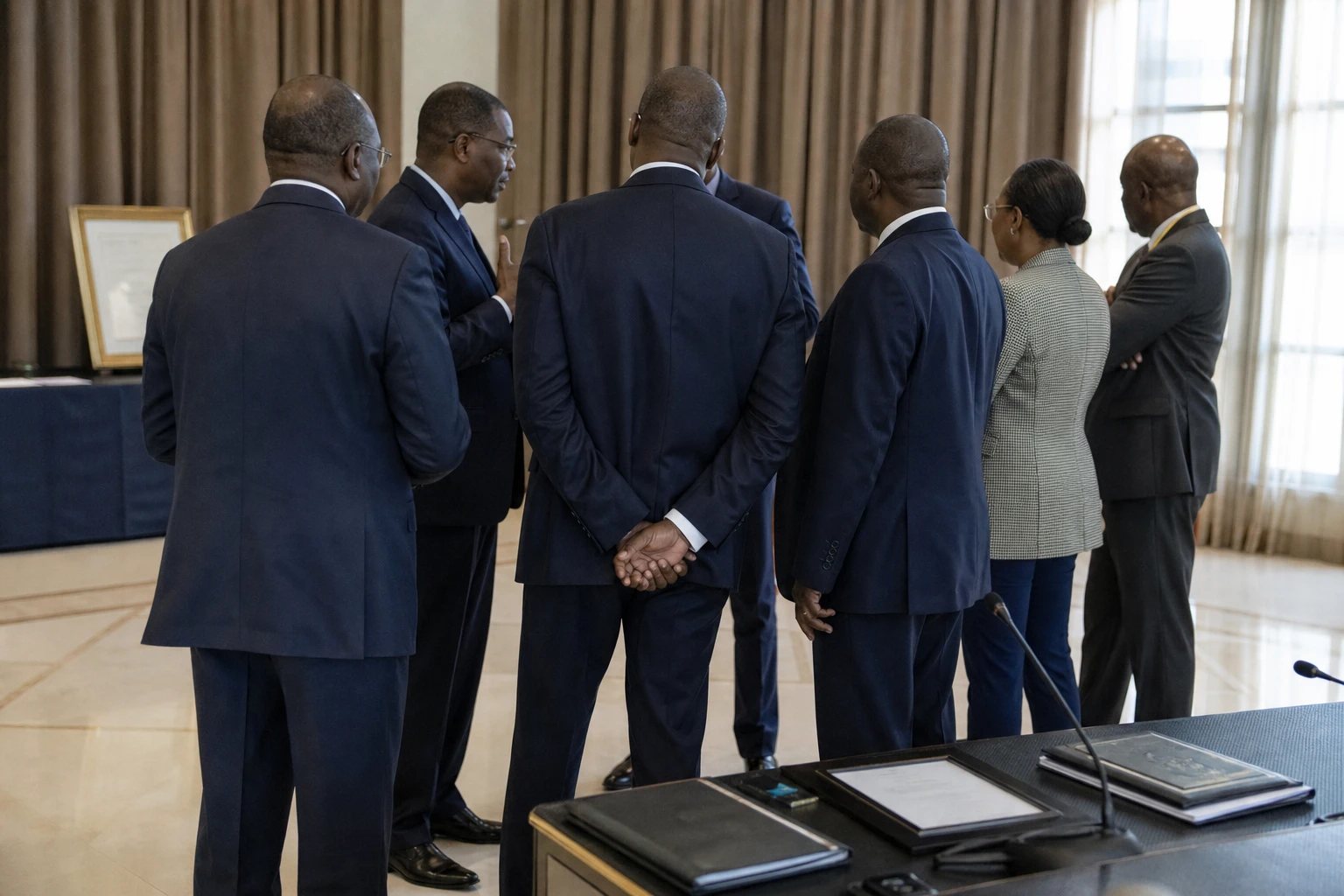
The Senegalese government says it has heard the warning. At the Council of Ministers meeting on 2 September 2026, President Bassirou Diomaye Faye stressed the need to protect purchasing power, regulate rents and rigorously apply measures to combat the high cost of living. The same statement also refers to strategic monitoring of the country’s supplies and the intention to stabilise prices for everyday consumer goods.
The executive has already taken several measures. Onion imports, which had been temporarily suspended, were authorised again on 31 August 2026 to avoid pressure on the domestic market. A few weeks earlier, the government had also adjusted pump prices for fuel, explaining that energy subsidies were reaching a level that was difficult for public finances to sustain.
These decisions reflect a delicate balance. On the one hand, the state wants to protect consumers. On the other, it is seeking to limit what it considers an excessively heavy bill for price support. In between, households see only the checkout total. For many urban families, particularly in Dakar’s suburbs, the combined impact of rent, food and energy remains immediate.
An economy under pressure from debt, the budget and talks with the IMF
The Dakar march also comes amid a strained macroeconomic climate. On 1 September 2026, the International Monetary Fund announced a staff-level agreement with Senegal on a 36-month programme worth about $2.2bn, intended to support economic and financial reforms for 2026-2029. The Senegalese government, for its part, confirmed that a technical agreement had paved the way for this financing.
This is not merely a technical issue. It directly affects daily life. An IMF programme generally entails commitments to budgetary discipline, reform and monitoring of public accounts. For the state, the challenge is to restore partners’ confidence and ease pressure on cash flow. For households, the question is more immediate: will these adjustments eventually bring prices down or, on the contrary, delay support that would be visible in the short term? This is one of the central questions in Senegal’s current debate.
The political context adds another layer of complexity. Since Bassirou Diomaye Faye came to power, the promise of a more sovereign and fairer state has run up against the legacy of disputed debt, tight budgetary room for manoeuvre and high social expectations. In this context, every decision on prices, rents or imports becomes a test of credibility.
What the march says about Senegal and West Africa
The Dakar mobilisation extends beyond Senegal. It is a reminder that the high cost of living remains a major source of social tension in West Africa, even in relatively urbanised and connected countries. Senegal, a member of ECOWAS, sits at the intersection of two realities: a market economy highly dependent on imports for certain products, and strong demand for food sovereignty, particularly for staple goods.
The case of onions illustrates this well. The country alternates between periods of protecting local production and turning to imports to prevent price spikes. This pattern shows that a food sovereignty policy cannot be measured solely by domestic production. It also depends on logistics, storage, transport and the ability to regulate markets without disadvantaging small producers or penalising consumers.
At its heart, the empty-basket march says one simple thing: Senegalese people are not only challenging prices. They are asking for clarity. They want to know how the state protects incomes, regulates rents and stabilises supplies, and when budgetary reforms will have a tangible effect. In the coming weeks, the Prime Minister’s general policy statement, scheduled for 8 September 2026, will reveal much about how the executive intends to respond to this expectation.
In Dakar, the empty basket has therefore become a language. It speaks of purchasing power, but also of governance, public priorities and the relationship between the state and its citizens. In a country where the capital concentrates jobs, markets, high rents and political activity, this image carries a wider significance: it measures the government’s ability to turn a promise of social justice into tangible results before households run out of patience.