Algeria
 Egypt
 Libya
 Morocco
 Sudan
 Tunisia
 Benin
 Burkina Faso
 Cabo Verde
 Côte d'Ivoire
 Ghana
 Guinea-Bissau
 Liberia
 Mali
 Mauritania
 Niger
 Nigeria
 Senegal
 Sierra Leone
 The Gambia
 Togo
 Cameroon
 Central African Republic
 Chad
 DR Congo
 Equatorial Guinea
 Gabon
 Republic of the Congo
 São Tomé and Príncipe
 Burundi
 Comoros
 Djibouti
 Eritrea
 Ethiopia
 Kenya
 Madagascar
 Malawi
 Mauritius
 Mozambique
 Rwanda
 Seychelles
 Somalia
 South Sudan
 Tanzania
 Uganda
 Angola
 Botswana
 Eswatini
 Lesotho
 Namibia
 South Africa
 Zambia
 Zimbabwe
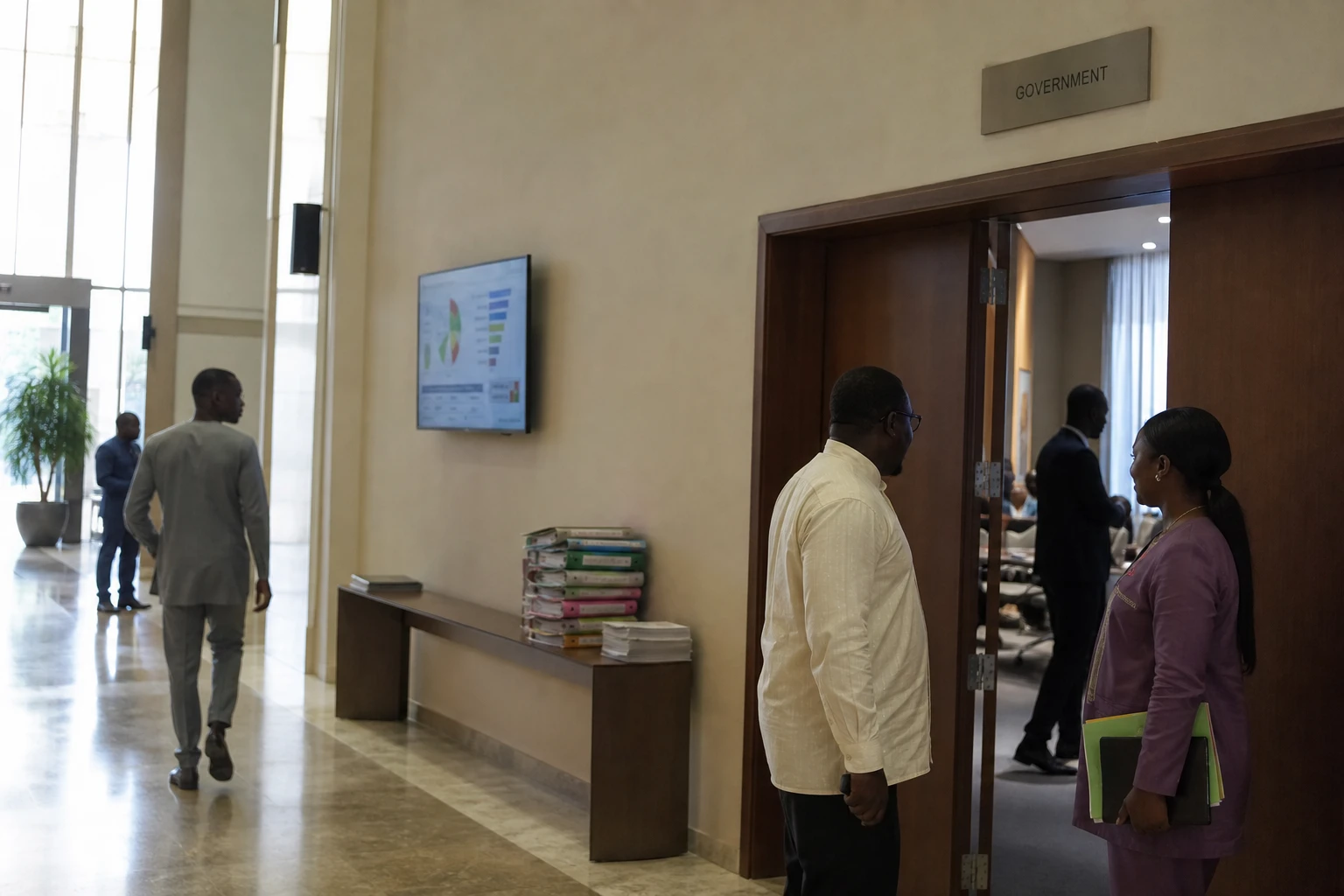
In Conakry, the government tightens its focus on results
In Guinea, talk of development is no longer enough to convince. As the fifth anniversary of 5 September 2021 approaches, President Mamadi Doumbouya is now emphasising delivery, a presence on the ground and budgetary discipline. The message is clear: ministers must show what is changing concretely in the lives of Guineans, not merely announce projects.
This approach comes as the country is still marked by the transition that began after the coup of 5 September 2021, followed by a political period dominated by the reorganisation of the state apparatus, ministerial reshuffles and the gradual resumption of relations with ECOWAS, the Economic Community of West African States. Guinea was suspended from the regional organisation in 2021, before restrictions and sanctions were gradually lifted, according to the French authorities, with financial and economic normalisation completed in early 2024.
Demands described as “non-negotiable”
On Thursday 3 September 2026, at a cabinet meeting, Mamadi Doumbouya set out five demands that he described as non-negotiable. The first concerns discipline in project implementation, with monthly progress monitoring. The second calls for more rigorous management of public funds, in a context in which the head of state says he rejects waste and prestige spending.
Third, projects must be better prepared before they are funded. The president is calling for robust feasibility studies and a maintenance plan, to prevent infrastructure from being inaugurated too quickly and then falling into disrepair for lack of upkeep. The fourth demand is that public investment should benefit Guineans more, through jobs, training and skills transfer. Finally, ministers are being told to spend more time on the ground. “A minister does not govern from his office,” the head of state summed up, according to local media reports on the meeting.
These instructions have not come out of nowhere. In recent months, the presidency has already stressed exemplary conduct, rigour and the adjustment of government action. In April 2026, it had already linked the swearing-in of government members to requirements for public accountability. In August, an expanded extraordinary cabinet meeting again put the focus on national priorities. The watchword now is therefore less proclamation than proof.
An approach that responds to political and social expectations
The call to order also has political significance. Two weeks earlier, two ministers had been dismissed, with no detailed explanation published by the authorities. The signal to the government team is therefore twofold: the executive wants to speed things up, but also intends to tighten the chain of accountability. In a state where major projects strongly shape public expectations, a lack of visible results can quickly fuel frustration, both in cities and across the country.
For Guineans, the issue is tangible. In the capital, Conakry, expectations concern traffic, public services, electricity and the smooth running of the economy. In the regions, they are more focused on effective access to roads, schools, health centres and administrative services. The president’s message about being on the ground reflects this tension: a government seen as too centralised would be of little use to a large country with varied realities and costly domestic transport.
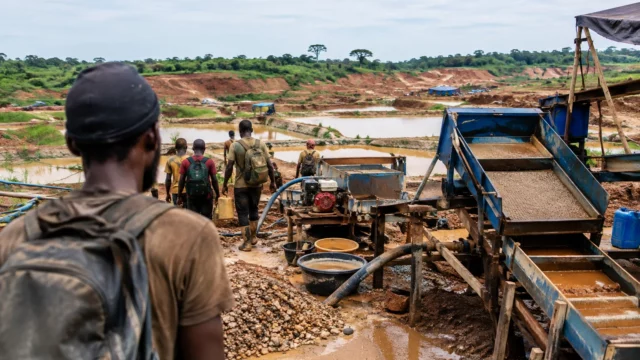
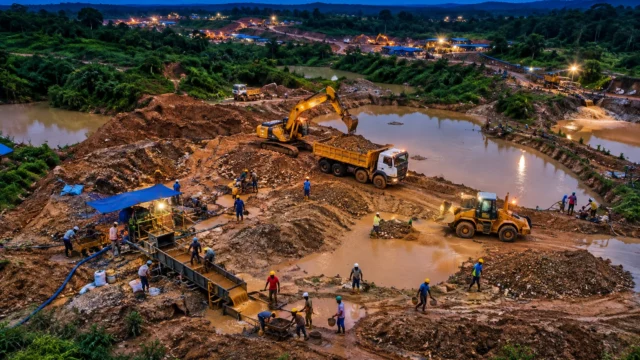
The budgetary discipline raised by the head of state also touches on a sensitive issue: the Guinean state’s ability to turn its resources, particularly mineral wealth, into sustainable public services. Guinea has major assets, highlighted by French diplomacy, including considerable hydrological, agricultural and mining potential. But these assets produce visible benefits only if projects are well designed, properly monitored and maintained over time. This is precisely the angle Mamadi Doumbouya has taken in stressing feasibility, maintenance and accountability.
What this call to order says about Guinea and the region
At the West African level, the situation in Guinea is of particular interest to ECOWAS. The organisation has already supported the gradual exit from the sanctions phase, while Conakry is now seeking to show that a transition can lead to more stable and transparent governance. The regional timetable also matters: elections, institutional adjustments and a full return to constitutional order remain areas of concern.
The wider continental significance lies in a broader message: across West Africa, several governments are now talking about efficiency, results and economic sovereignty. But credibility is measured by implementation, not tone. In Guinea, President Doumbouya is seeking to put this performance-based logic at the heart of his work. What happens next will depend on his government’s ability to consistently report tangible results from across the country.