Algeria
 Egypt
 Libya
 Morocco
 Sudan
 Tunisia
 Benin
 Burkina Faso
 Cabo Verde
 Côte d'Ivoire
 Ghana
 Guinea
 Guinea-Bissau
 Liberia
 Mali
 Mauritania
 Nigeria
 Senegal
 Sierra Leone
 The Gambia
 Togo
 Cameroon
 Central African Republic
 Chad
 DR Congo
 Equatorial Guinea
 Gabon
 Republic of the Congo
 São Tomé and Príncipe
 Burundi
 Comoros
 Djibouti
 Eritrea
 Ethiopia
 Kenya
 Madagascar
 Malawi
 Mauritius
 Mozambique
 Rwanda
 Seychelles
 Somalia
 South Sudan
 Tanzania
 Uganda
 Angola
 Botswana
 Eswatini
 Lesotho
 Namibia
 South Africa
 Zambia
 Zimbabwe
In Niamey, the authorities seek to close a breach that remains open
In a country where security has become a matter of sovereignty, every military alert carries weight far beyond the barracks. In Niger, the night of 28–29 August 2026 brought that reality back into focus: gunfire targeted several sensitive sites in Niamey, and a week later the authorities made the incident the centrepiece of their first cabinet meeting since the events.
The political moment comes amid an already tense backdrop. Niger remains under the rule of authorities that emerged from the military transition, with General Abdourahamane Tiani at the head of state, while the country has turned away from ECOWAS, the Economic Community of West African States, in favour of the Confederation of Sahel States, or AES, alongside Mali and Burkina Faso. At regional level, relations with the West African organisation therefore remain strained and subject to negotiation, even as formal talks continue.
The facts: accusations, civilian deaths and the prospect of legal action
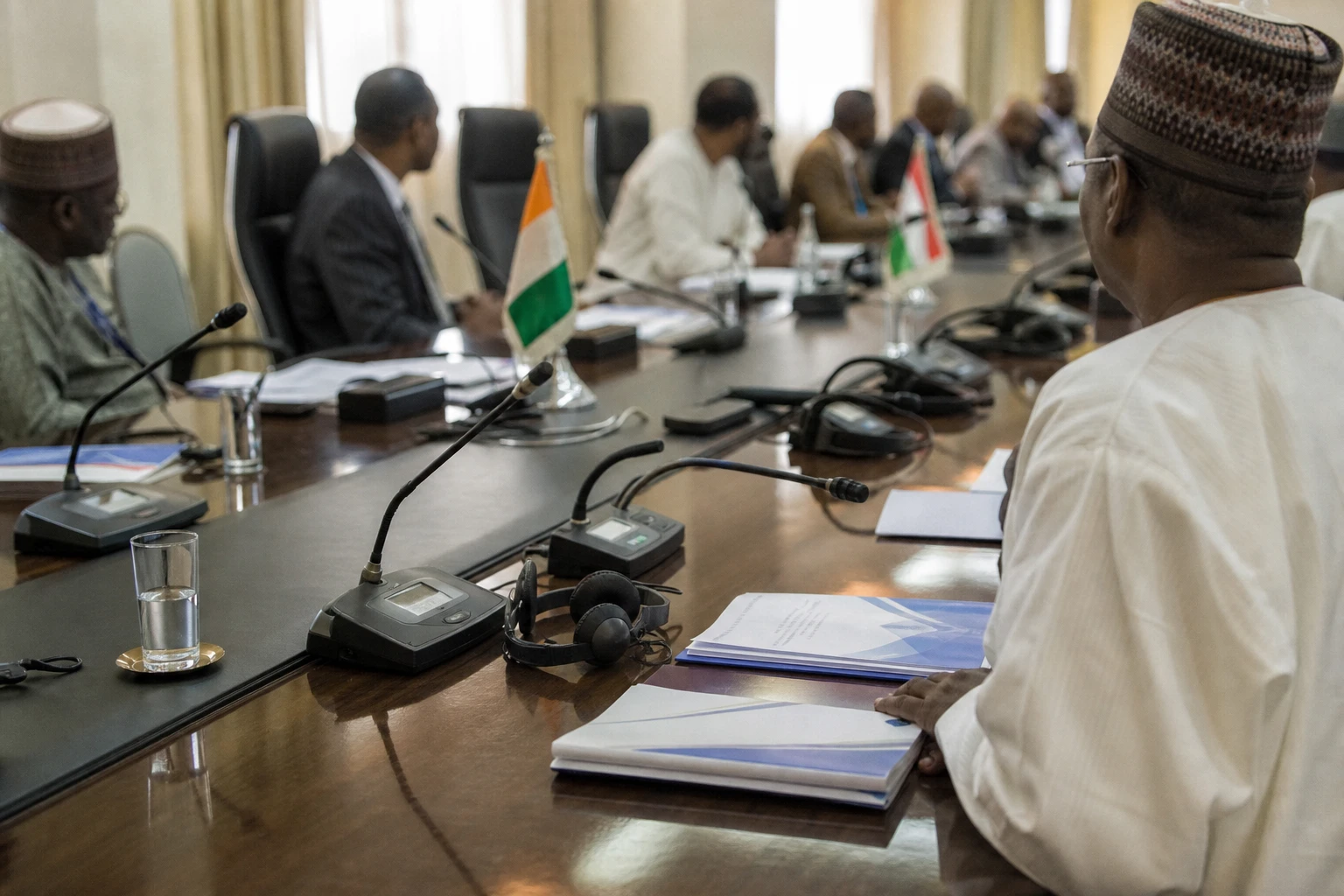
Meeting in Niamey on 4 September 2026, Niger’s cabinet devoted its session to the attempted destabilisation of 28 and 29 August. The government again accused France, describing it as the centre of a “vast network of collusion”, while also referring to local accomplices and African intermediaries without naming any state in the latter case. Niger also says it has assembled what it considers sufficient documentation to consider bringing a case before international justice.
For the first time, the official account also acknowledged civilian deaths during the events, offering condolences and wishing those injured a speedy recovery. This detail matters because it introduces a human and legal dimension into a matter that until now has largely been framed in security and diplomatic terms. The African Union, for its part, said it was following the situation with concern and referred to “armed clashes” and attacks on several sensitive sites in the capital, without repeating the accusations of responsibility made in Niamey.
At the same time, the junta explicitly thanked Mali and Burkina Faso, its AES allies, as well as Algeria and Russia. In Niger’s official account, the episode confirms that the authorities are now seeking closer support within the Sahel and from partners considered more sympathetic to their break with the past.
The French response was immediate and forceful. Paris rejected the accusations, with Jean-Noël Barrot calling them “pure fantasy” in comments reported by the press. The French state has also maintained on its Niger page that the embassy in Niamey remains closed until further notice and that all travel to the country is formally discouraged, underscoring the depth of the deterioration in bilateral relations.
What the affair says about Niger today
At its heart, the issue goes beyond the mutiny itself. Niger is going through a period in which internal security, political legitimacy and diplomatic sovereignty are now intertwined. Every crisis within the armed forces becomes a test of the government’s cohesion. And every accusation against an external actor also serves to rally support around a national interpretation of events.
This logic speaks first to the authorities, who are seeking to show that they still control the narrative, the institutions and the instruments of coercion. But it also concerns ordinary Nigeriens, for whom the question is not only one of responsibility, but of tangible consequences: security in Niamey, movement around the capital, confidence in the army, and the overall climate for formal and informal economic activity. When a mutiny shakes the capital, small businesses, urban transport and families living near sensitive areas are often the first to bear the shock.
The affair also reveals a shift in the regional framework. Since withdrawing from ECOWAS, Mali, Burkina Faso and Niger have presented the AES as a space for political and security solidarity. But that solidarity does not resolve everything. Tensions with Côte d’Ivoire, Benin, Chad and France show that divisions remain, including over intelligence sharing, military cooperation and assessments of cross-border threats.
This episode must also be read in light of recent precedents. In 2026, the AU has already condemned several attacks in the Sahel, including deadly operations against the forces of Niger and Mali. Security therefore remains the central concern, but with an increasingly clear complication: Sahelian authorities want to regain control of their strategic sovereignty, while armed threats, rivalries for influence and suspicions of interference continue to converge.
The continental significance is clear. What is unfolding in Niamey matters to the African Union, ECOWAS and, more broadly, to states watching the reshaping of the Sahel. If Niger turns the affair into an international legal dispute, it could further intensify the standoff with its former European partners and West African neighbours. If it opts instead for a strictly political and legal resolution, it will seek to bolster the image of a state determined to respond through institutions, even amid a military transition. Either way, what happens next will show whether the crisis of 28 and 29 August remains a contained mutiny or becomes another chapter in the Sahel’s strategic realignment.