Algeria
 Egypt
 Libya
 Morocco
 Sudan
 Tunisia
 Benin
 Burkina Faso
 Cabo Verde
 Côte d'Ivoire
 Ghana
 Guinea-Bissau
 Liberia
 Mali
 Mauritania
 Niger
 Nigeria
 Senegal
 Sierra Leone
 The Gambia
 Togo
 Cameroon
 Central African Republic
 Chad
 DR Congo
 Equatorial Guinea
 Gabon
 Republic of the Congo
 São Tomé and Príncipe
 Burundi
 Comoros
 Djibouti
 Eritrea
 Ethiopia
 Kenya
 Madagascar
 Malawi
 Mauritius
 Mozambique
 Rwanda
 Seychelles
 Somalia
 South Sudan
 Tanzania
 Uganda
 Angola
 Botswana
 Eswatini
 Lesotho
 Namibia
 South Africa
 Zambia
 Zimbabwe
A transition that promised to rebuild the state, followed by a leader settling in
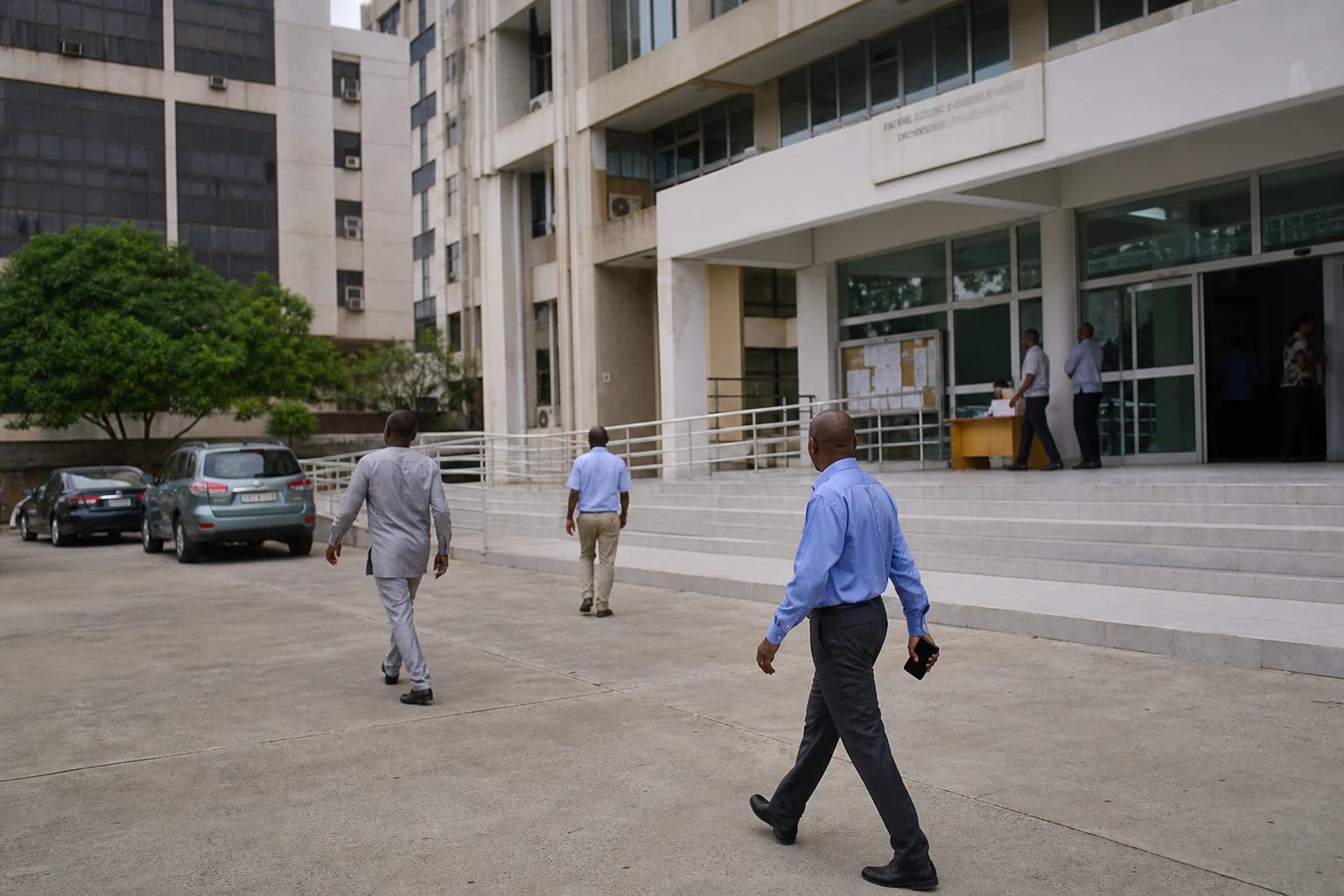
In Guinea, 5 September remains a date laden with meaning. It recalls the fall of Alpha Condé, overthrown in 2021 by soldiers led by Mamadi Doumbouya. Five years later, the country’s institutional landscape has changed, but the central question remains the same: has the transition truly opened the way to civilian rule, or has it mainly consolidated a new concentration of power in Conakry?
The regional context matters. Guinea is part of West Africa, where ECOWAS closely monitors political transitions, coups and returns to constitutional order. The Guinean question is therefore not just a domestic one in Conakry. It also weighs on the credibility of the sub-region, already tested by successive political ruptures and prolonged transitions.
From the ballot box to the consolidation of power
The most visible shift came in early 2026. On 17 January, Mamadi Doumbouya was sworn in as president after winning the December 2025 presidential election with 86.72% of the vote, according to the provisional results, later proclaimed. The AP reported the inauguration as confirming the transition from junta leader to elected president within a reshaped institutional framework.
The election took place in a tightly controlled political environment. The major opposition parties were absent, and the campaign left little room for open competition, fuelling criticism of the true quality of the contest. The new Constitution also changed the rules of the game, lifting the ban on military leaders standing for office and extending the presidential term.
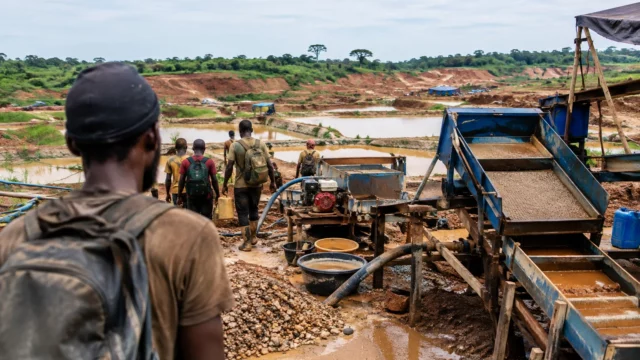
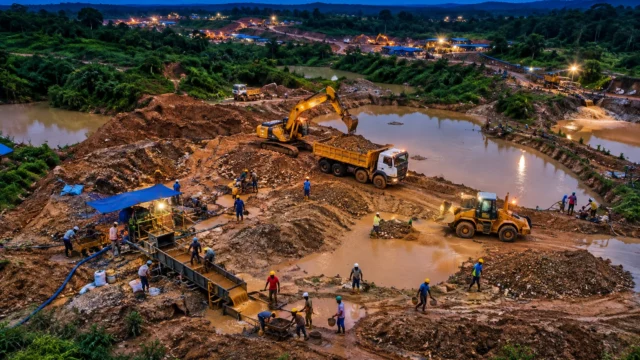
On the economic front, the government is highlighting mining investments and the Simandou 2040 programme. In January 2026 in Conakry, the African Development Bank reaffirmed its support for the programme, presented as strategic for the country. The World Bank, too, emphasised in June 2026 the importance of the Simandou corridor as a development platform, linking it to commercial agriculture, transport and private-sector activity in the areas it crosses.
For the authorities, the project symbolises a Guinea capable of turning its resources into growth. For some African observers, it mainly exposes a longstanding challenge: how to prevent mining revenues from remaining concentrated at the top, when the expected benefits for jobs, roads, energy and public services require time and strong institutions. In August 2026, the IMF was still noting that Guinean growth was expected to accelerate as mining activity ramped up, while stressing the need for prudent revenue management and sustainable investment in human capital.
The other side of the record: civil rights under pressure and justice awaited
The contrast is stark when it comes to civil liberties. Human Rights Watch describes a Guinea where political and social rights remain under pressure, with persistent restrictions on demonstrations, alleged enforced disappearances and a climate of intimidation that undermines civic space. In July 2026, the organisation said that Oumar Sylla, known as Foniké Menguè, and Mamadou Billo Bah were still missing two years after their alleged abduction.
These cases weigh heavily on perceptions of the government. In Conakry, the presidential pledge that “justice will be our compass” remains, in the eyes of critics, unconvincingly translated into action. Announced investigations are moving slowly, and no clear answer has been given on several sensitive cases, including the discovery of bodies in the Forécariah region, cited by human rights organisations. These reports should be treated with caution, as several details remain attributed or disputed at this stage.
The case of judge Algassimou Diallo also illustrates the tensions surrounding the judiciary. A prominent figure in the 28 September trial, he faced charges of incitement to discrimination and hatred, then was struck off and placed in detention, according to information reported by the press and organisations monitored by rights defenders. Here, too, the issue goes beyond the individual case: it raises questions about judicial independence in a system where the executive retains control.
The National Front for the Defence of the Constitution, which is highly critical of the government, says the initial commitments have not been met. Its message reflects broader frustration among some members of civil society, who see the promised return to a pluralist civilian order receding. But the analysis must go beyond denunciation. In Guinea, institutional stability, access to justice and electoral credibility are interconnected. When one falters, the other three weaken at the same time.
What Guinea tells West Africa
The Guinean case resonates far beyond Conakry. In West Africa, prolonged military transitions are testing ECOWAS’s ability to enforce credible timetables for a return to constitutional order. Guinea is no longer in the coup phase. It is in the more delicate phase of normalisation through institutions and the ballot box. That is often where the line is drawn between a promise of renewal and the lasting concentration of power.
The continental significance is clear. In an Africa where critical minerals, logistics corridors and major infrastructure projects are becoming central, Guinea is being watched as a test case. If Simandou attracts capital, it must also deliver tangible benefits for the population, in Conakry and across the country. Otherwise, growth risks remaining spectacular in the figures but invisible in people’s daily lives.
Five years after the coup, Mamadi Doumbouya’s record cannot be reduced either to security alone or to mining investments alone. It must be judged by the balance between political order, justice, freedoms and redistribution. For Guinea, that is where the difference lies between a transition centred on one man and a renewal capable of lasting.