Algeria
 Egypt
 Libya
 Morocco
 Sudan
 Tunisia
 Benin
 Burkina Faso
 Cabo Verde
 Côte d'Ivoire
 Ghana
 Guinea
 Guinea-Bissau
 Liberia
 Mali
 Mauritania
 Niger
 Nigeria
 Sierra Leone
 The Gambia
 Togo
 Cameroon
 Central African Republic
 Chad
 DR Congo
 Equatorial Guinea
 Gabon
 Republic of the Congo
 São Tomé and Príncipe
 Burundi
 Comoros
 Djibouti
 Eritrea
 Ethiopia
 Kenya
 Madagascar
 Malawi
 Mauritius
 Mozambique
 Rwanda
 Seychelles
 Somalia
 South Sudan
 Tanzania
 Uganda
 Angola
 Botswana
 Eswatini
 Lesotho
 Namibia
 South Africa
 Zambia
 Zimbabwe
In Senegal, the budget battle shifts into the shadows
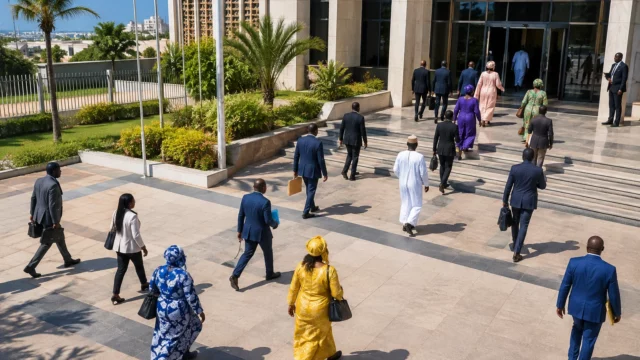
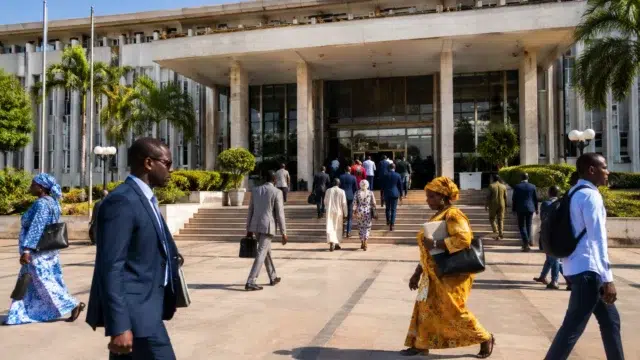
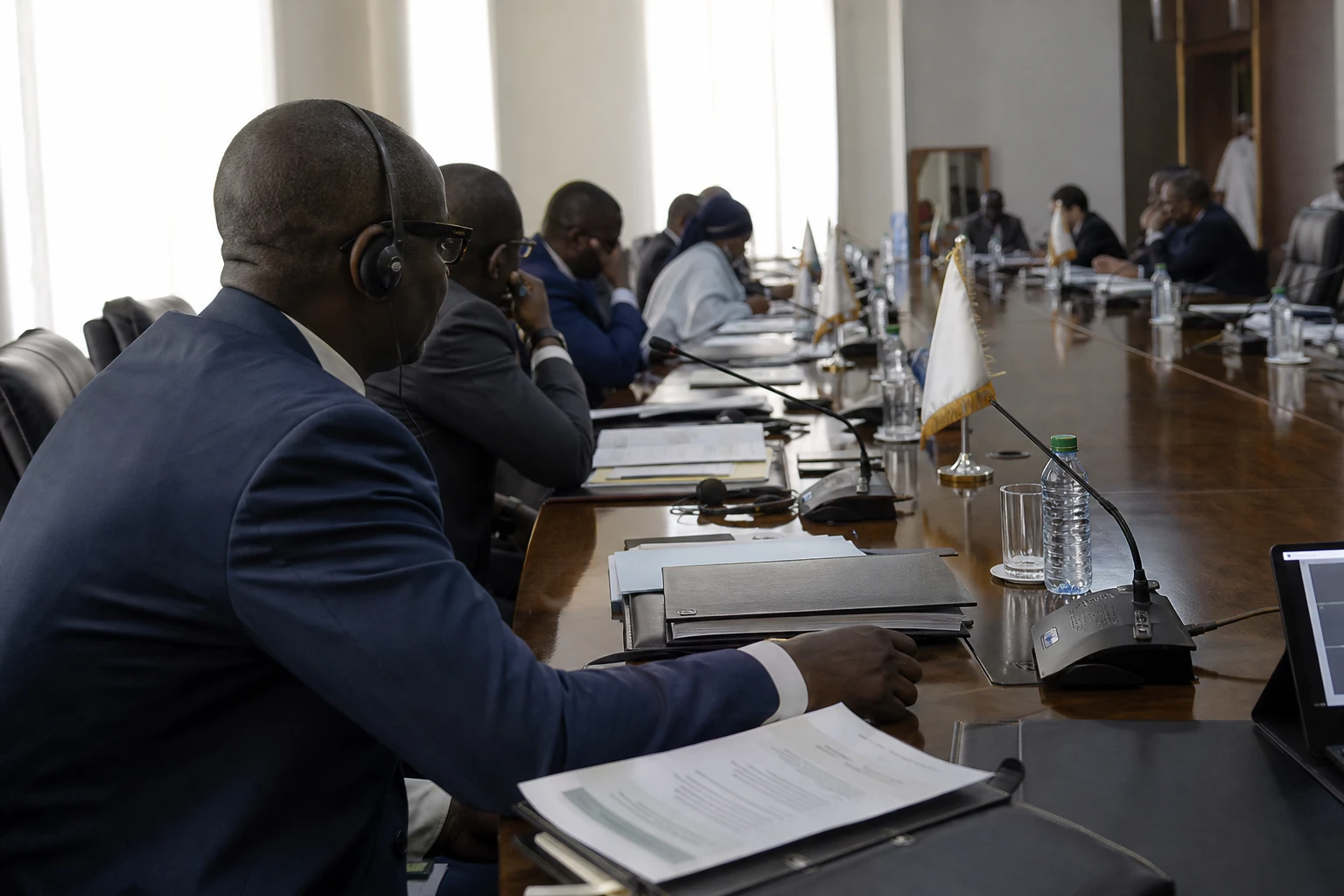
In a democracy, debate over public money rarely remains technical for long. It quickly touches on trust, the balance of power and the scope for parliamentary oversight. In Senegal, the question of special funds has taken on this dimension: a test of transparency, but also of institutional method. On 2 September 2026, in Dakar, the National Assembly deemed admissible a new proposal for an organic law intended to regulate these credits reserved for a handful of institutions of the Republic.
The issue is part of a wider sequence. Since the public finance reform introduced by Organic Law No. 2020-07 of 26 February 2020, Senegal has strengthened the framework for preparing, executing and overseeing the budget, with a view to making budgeting more transparent. This architecture also reflects the regional harmonisation sought by WAEMU, the West African Economic and Monetary Union, which sets common rules for member states on public finances. In other words, the issue concerns not only an internal mechanism; it also affects the country’s budgetary credibility in its regional environment.
A fresh start after the Constitutional Council’s block
The new parliamentary initiative did not come out of nowhere. An initial bill to regulate the legal framework for special credits was declared inadmissible on 25 August 2026 by the Constitutional Council. The highest court ruled that several procedures for commitment, verification, authorisation, payment, justification and oversight fell within the scope of regulations, rather than legislation. It therefore closed the door on a bill that had already made progress in committee.
The government itself had referred the matter to the Constitutional Council on 18 August, on the eve of a parliamentary plenary session. In its submission, the executive argued that certain provisions encroached on the field reserved for regulatory powers by the Constitution. The stand-off was therefore direct, but institutional. The National Assembly, for its part, maintained its aim of ensuring transparency in the management of public funds. The new move on 2 September precisely reflects the intention to start again within a framework considered safer, this time by amending the organic budget law rather than putting forward a standalone bill.
According to its statement, the National Assembly’s bureau approved the admissibility of two bills, including the one on special funds. Under Article 69 of the rules of procedure, the president of the Republic must now be consulted for an opinion before consideration can proceed. The specific text has not yet been published, but the intention is clear: to return to Organic Law No. 2020-07 of 26 February 2020, which forms the backbone of Senegalese public finances.
What tighter regulation would change
Special funds raise a simple but sensitive question: how can the state finance specific missions without abandoning the principle of accountability? In any budget system, some appropriations require greater confidentiality than others. But confidentiality must not become a lasting zone of opacity. This is where the Senegalese debate takes on greater significance. The question is not only who receives these funds. It is also who oversees them, under what rules, and with what documentary records.
This has practical consequences. For the executive, the challenge is to preserve room for manoeuvre in sovereign functions. For parliament, the challenge is the reverse: to demonstrate that it can exercise effective oversight of budget lines that have historically been sensitive. For citizens, finally, the issue speaks to an expectation that has grown strong in Senegal in 2026: to understand where public resources go and for what purpose. That expectation is all the stronger because the state budget remains under pressure, with revenue forecast at CFAF 6,188.8bn and spending at CFAF 7,433.9bn for 2026, according to official data from the finance ministry. The announced budget deficit is CFAF 1,245.1bn.
The economic context lends weight to this discussion. On 2 September 2026, the Council of Ministers also asked the minister responsible for finance to submit a 2026 supplementary finance bill swiftly, taking into account the technical agreement reached with the IMF. At the same time, the executive referred to a debt treatment plan, targeted subsidies and the payment of domestic arrears, with priority given to micro, small and medium-sized enterprises. In this context, every item of spending that is difficult to justify becomes more politically visible.
Senegal is therefore entering a phase in which the quality of the rules will matter as much as the stated intention. If parliament succeeds in regulating special funds while respecting the division of powers, it will send a strong signal about the maturity of its budget oversight. If, by contrast, the bill again runs up against the constitutional barrier, debate will shift towards a broader reform of the organic and regulatory framework. Either way, the question will remain the same: how can the state reconcile effectiveness with the demand for transparency?
Implications beyond Dakar
This Senegalese episode resonates beyond Dakar. Across WAEMU, transparency in public finances is a structural issue, since it underpins budget discipline, the comparability of accounts and the confidence of partners. At the African level, it forms part of a wider debate on institutional accountability and the clarity of national budgets. Senegal, often presented as a country of institutional stability, shows here that budget modernisation is not a fixed achievement but an ongoing undertaking.
The political timetable adds a second layer. The government has already announced a tight schedule for the end of 2026 and for preparing the 2027 initial finance bill, with the draft due to be considered by the Council of Ministers before 30 September 2026. This means the issue of special funds will not remain isolated. It will be woven into forthcoming budget trade-offs, debate over social priorities and the way the Senegalese state intends to finance its commitments without obscuring its accounts.
At this stage, what matters most is not only the fate of the bill. It is the method taking shape. Senegal’s parliament is trying to regain control of an area long shielded from public scrutiny. The executive, for its part, is seeking to preserve the coherence of the constitutional and financial framework. Between them, the central question remains one of trust. And in a period of tightening budgets and strong social expectations, that trust is a political asset as valuable as the figures themselves.