Algeria
 Egypt
 Libya
 Morocco
 Sudan
 Tunisia
 Benin
 Burkina Faso
 Cabo Verde
 Côte d'Ivoire
 Ghana
 Guinea
 Guinea-Bissau
 Liberia
 Mali
 Mauritania
 Niger
 Nigeria
 Senegal
 Sierra Leone
 The Gambia
 Togo
 Cameroon
 Central African Republic
 Chad
 DR Congo
 Equatorial Guinea
 Gabon
 Republic of the Congo
 São Tomé and Príncipe
 Burundi
 Comoros
 Djibouti
 Eritrea
 Ethiopia
 Kenya
 Madagascar
 Malawi
 Mauritius
 Mozambique
 Rwanda
 Seychelles
 Somalia
 South Sudan
 Tanzania
 Angola
 Botswana
 Eswatini
 Lesotho
 Namibia
 South Africa
 Zambia
 Zimbabwe
In Hoima, Uganda prepares to move from symbol to market
In western Uganda, a simple name already says much about the political and economic moment the country is experiencing. By naming its crude “Pearl Sweet”, Kampala is seeking to take its oil into a new phase: one in which the resource is no longer merely a promise, but becomes a commercial product identifiable on the international market. The move is symbolic, but it is also practical. A grade of crude must be named and described before it can be offered to buyers.
The milestone is part of a longer trajectory, at the heart of the Great Lakes region and the East African Community, of which Uganda is a member. For years, the country has been banking on its reserves in the Lake Albert basin to move beyond its status as an importer of hydrocarbons and capture more value locally. The government links this undertaking to broader ambitions: infrastructure, refining, local jobs and budget revenues.
“Sweet” crude, two major projects and a very close deadline
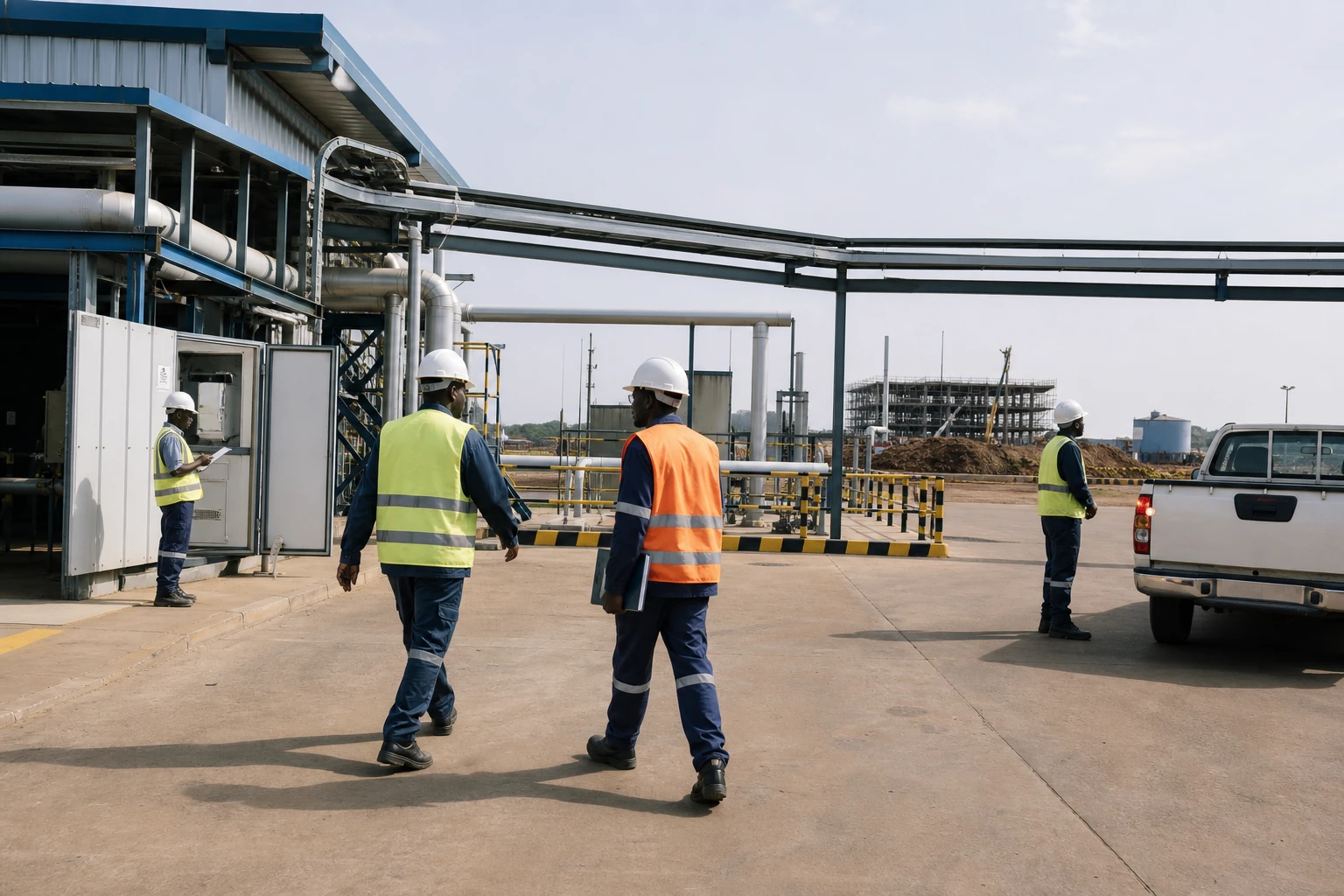
The announcement was made at a ceremony in Hoima, a strategic town in the west of the country, as the authorities say they want to launch commercial production before the end of 2026. President Yoweri Museveni presented oil as a lever for sustainable transformation. State Minister for Energy Irene Batebe said that Kingfisher was due to begin production by the end of the year, with an initial output of 28,000 barrels a day. She also said that Tilenga was 74% complete. The two projects are operated by TotalEnergies and CNOOC, with the participation of Uganda’s national oil company.
In the longer term, the authorities and operators are targeting maximum capacity of about 230,000 barrels a day. This remains a projection, but it gives a sense of the stakes for a landlocked country in the Great Lakes region. The Kingfisher project, in the Kikuube area, and Tilenga, in the Buliisa and Nwoya region, are to supply crude for export. The government also wants to develop a 60,000-barrel-a-day refinery in Hoima to retain some of the added value in the country.
The name “Pearl Sweet” works on two levels. First, it refers to Uganda’s historic nickname, the “Pearl of Africa”. Second, it highlights the crude’s low sulphur content, an important factor for industrial processing and commercial value. This dual logic neatly captures Kampala’s strategy: linking national identity with the language of the market.
EACOP, the backbone of future exports
The main export route is the East African Crude Oil Pipeline, or EACOP, a 1,443-kilometre heated pipeline that is to link Hoima, in Uganda, with the Tanzanian port of Tanga. Heating is necessary because Ugandan crude is viscous and must be kept at temperature during transport. The pipeline is central to the export strategy, as the country cannot ship its oil directly by sea.
Construction has progressed well, but not enough to dispel doubts. EACOP and the project stakeholders say the work is entering its final phase, while Ugandan parliamentary officials confirmed in spring 2026 that the project was progressing towards first oil. In March 2026, parliament said compensation related to the pipeline had reached 98%, and that the Tilenga, Kingfisher and EACOP projects were advancing with high levels of completion.
The timetable itself has shifted several times. Ugandan institutional and parliamentary sources have spoken of first oil in 2026, at times as early as July, and later of a launch expected in the second half of the year. At this stage, the question is not only whether the oil will flow, but under what technical, financial and logistical conditions it will actually reach the market.
Expected benefits, disputed costs
For the Ugandan government, the calculation is clear. Oil is meant to boost public revenues, support infrastructure and reduce dependence on fuel imports. The finance ministry has already highlighted the sector’s future contribution to growth and the budget. President Museveni has linked the potential revenues to investments deemed priorities, such as rail and other public facilities.
On the ground, the effects will vary between stakeholders. For the central government, oil revenues could increase its budgetary room for manoeuvre. For local businesses, they offer subcontracting opportunities, but within an ecosystem dominated by major operators. For residents of the oil-producing areas, the questions remain compensation, land and livelihoods. TotalEnergies says it has compensated 99% of displaced households and says it applies high environmental and social standards. NGOs, for their part, dispute the speed and transparency of the process, and sometimes its very approach.
The issue has also become a test of governance. The authorities want to show that a landlocked African country can build a complete oil industry, from drilling to export. Critics, meanwhile, point to the risks: population displacement, pressure on the Lake Albert basin’s ecosystems, passage through sensitive areas and lasting dependence on fossil fuels amid the climate transition. An analysis cited by NGOs estimated project-related emissions over its lifetime at nearly 379 million tonnes, while the developers stress their mitigation and compensation measures.
In Murchison Falls National Park, one of the country’s major natural sites, the debate is particularly sensitive. The developers say drilling there is conducted to high safety standards. Opponents see a risk of undermining a major ecological and tourism asset. This tension sums up Uganda’s dilemma: turning underground wealth into visible revenues without damaging other pillars of the local economy.
A Ugandan milestone, but a signal for all of East Africa
The issue extends beyond Uganda. With EACOP, Tanzania becomes the other indispensable logistical component of the system. Involving TotalEnergies, CNOOC and the national oil company, the project also illustrates the growing role of partnerships between African, French and Chinese capital in the continent’s extractive infrastructure. For East Africa, the success or failure of Uganda’s first exports will say much about the region’s states’ ability to set their industrial priorities while managing social and environmental costs.
The next steps will now play out on three fronts. First, the actual commissioning of the Kingfisher and Tilenga sites. Then, the ramp-up of the pipeline towards the Tanzanian coast. Finally, Kampala’s ability to turn oil into lasting revenues rather than a simple rent. If these three stages converge, Uganda will not merely join the ranks of producers. It will seek to establish itself within them with its own vision of development: producing, exporting, but also retaining more value on the continent.