Algeria
 Egypt
 Libya
 Morocco
 Sudan
 Tunisia
 Benin
 Burkina Faso
 Cabo Verde
 Côte d'Ivoire
 Ghana
 Guinea
 Guinea-Bissau
 Liberia
 Mali
 Mauritania
 Nigeria
 Senegal
 Sierra Leone
 The Gambia
 Togo
 Cameroon
 Central African Republic
 Chad
 DR Congo
 Equatorial Guinea
 Gabon
 Republic of the Congo
 São Tomé and Príncipe
 Burundi
 Comoros
 Djibouti
 Eritrea
 Ethiopia
 Kenya
 Madagascar
 Malawi
 Mauritius
 Mozambique
 Rwanda
 Seychelles
 Somalia
 South Sudan
 Tanzania
 Uganda
 Angola
 Botswana
 Eswatini
 Lesotho
 Namibia
 South Africa
 Zambia
 Zimbabwe
A disappearance that points to something broader
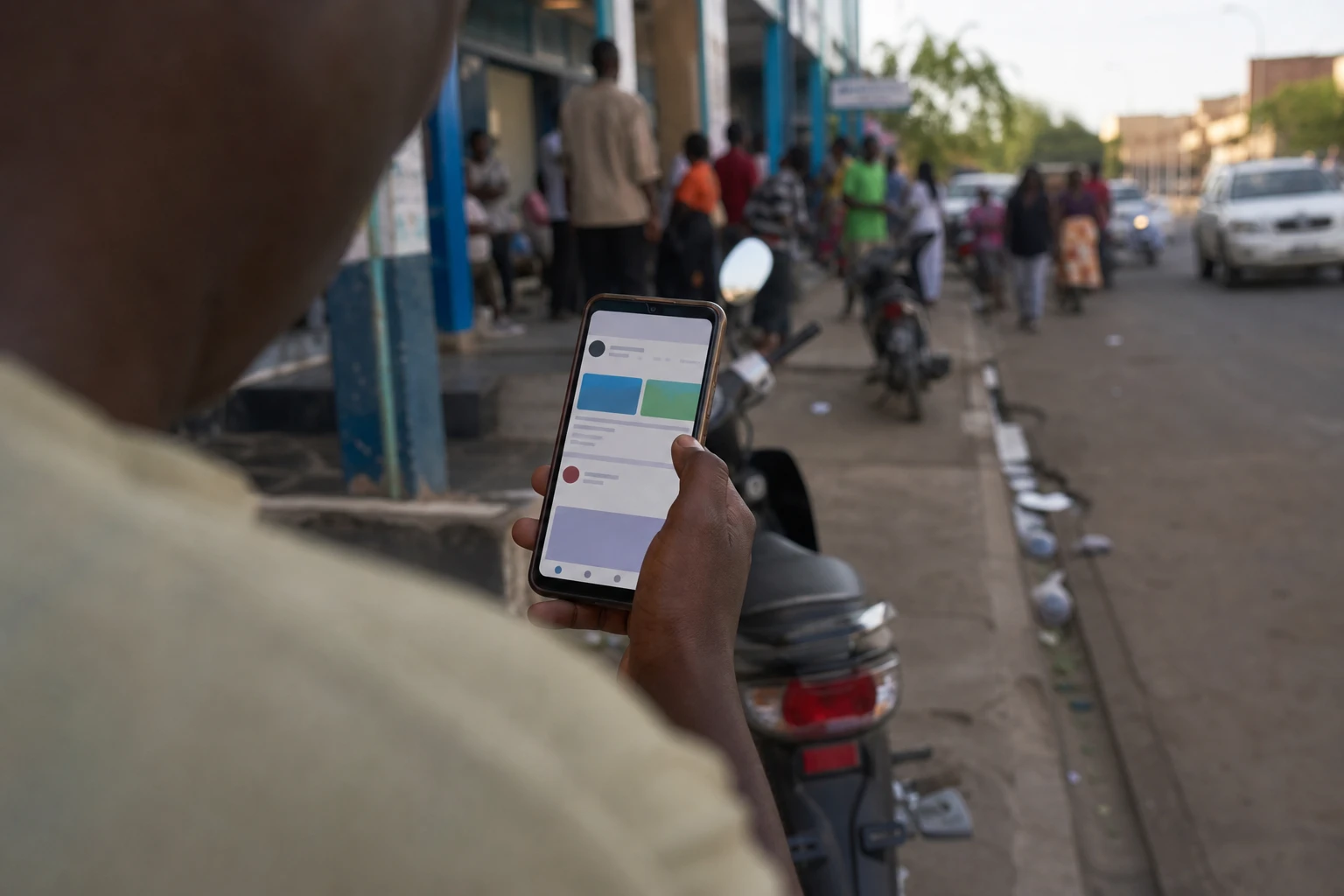
In Niamey, a disappearance is never just a minor news story. It touches on security, the flow of information and the climate of fear that can take hold when institutions falter. In Niger after the coup, every alert involving a journalist therefore carries immediate political weight.
It is in this context that concern is growing over Moussa Kaka’s fate. The journalist and director of Radio Télévision Saraounia, a familiar figure in Niger’s media landscape for years, has not been heard from since 31 August 2026, after leaving his office in Niamey at around 7pm to go home. His relatives say they have been unable to reach him since.
The alarm goes beyond the professional sphere. It raises a simple but weighty question: what becomes of public space when a journalist can disappear without explanation in a capital already shaken by military and political tensions?
Niger in a period of heightened tensions
Since the July 2023 coup, Niger has been governed by General Abdourahamane Tiani. The country has distanced itself from ECOWAS, the Economic Community of West African States, and drawn closer to Burkina Faso and Mali within the Confederation of Sahel States, announced in Niamey in 2024. This new regional framework is accompanied by rhetoric about sovereignty, but also by tighter political controls.
The security situation has weighed heavily in recent days. In late August 2026, a mutiny shook Niamey for nearly 24 hours before being contained by loyalist forces, with support attributed by several media outlets to Russian partners present in the country. African and international newspapers described a capital that had returned to calm but remained highly tense.
At the same time, Niger remains under scrutiny over press freedom. RSF says the country suffered a sharp fall in its 2026 ranking, placing 120th out of 180, the steepest decline recorded by the organisation that year. The NGO cites a rise in arrests and prosecutions of journalists since the junta came to power.
What is known so far
On 2 September 2026, RSF voiced its concern and called on the Nigerien authorities to open an immediate investigation. According to the organisation, Moussa Kaka disappeared after leaving his office on 31 August. No independent information has so far publicly confirmed what happened to him.
The disappearance comes after a series of incidents already documented. In November 2025, Moussa Kaka was arrested along with other journalists in a case involving the dissemination of a document deemed likely to disturb public order. Later, several of his colleagues were provisionally released, while another remained in detention for several months before being freed in July 2026.
Moussa Kaka’s name is also associated with a long career in journalism in Niger. He runs RTS, a private media outlet, and for years was a correspondent for Radio France Internationale, a media outlet suspended by the transitional authorities. In the current climate, this background matters: it is a reminder that local media in Niger often bear the burden of providing local news, even as the environment becomes more restrictive.
A matter of public safety, but also of power
A journalist’s disappearance is not just an individual case. It tests the state’s ability to protect citizens, investigate swiftly and account for its actions. It also tests the place given to private media in a country where the line between criticism, suspicion and repression has narrowed.
For the authorities, the challenge is twofold. They must reassure a population still shaken by the recent unrest in Niamey, while avoiding the impression that the case is another sign of political closure. For journalists, however, the message is harsher: leaving the office, covering a sensitive subject or maintaining a critical tone can expose them to risks that are difficult to assess.
This tension also weighs on Nigerien society. In Niamey, urban communities closely follow statements, arrests and rumours. In the regions, where access to information is already more fragile, each restriction widens the gap between the political centre and the country as it is lived. That is where press freedom ceases to be an abstract principle: it becomes a condition for facts to circulate.
A signal for the Sahel
The Moussa Kaka case is part of a broader trend in the Sahel: military regimes invoking sovereignty, strengthened security apparatuses and growing pressure on the media. Niger, Mali and Burkina Faso are now moving within shared political and security frameworks, but the information environment is becoming more restricted.
For West Africa, the stakes are clear. If the disappearance of a journalist in the Nigerien capital is not swiftly resolved, the episode will add to a long list of warnings about the fragility of checks and balances during military transitions. Conversely, a credible investigation would be a rare test of transparency in an environment dominated by security concerns and mistrust.
The case remains open. But it already says something essential about Niger in 2026: the struggle for public order is also being fought through the struggle for information. And until Moussa Kaka’s fate is clarified, that struggle remains unresolved in Niamey.