Algeria
 Egypt
 Libya
 Morocco
 Sudan
 Tunisia
 Benin
 Burkina Faso
 Cabo Verde
 Côte d'Ivoire
 Ghana
 Guinea
 Guinea-Bissau
 Liberia
 Mali
 Mauritania
 Nigeria
 Senegal
 Sierra Leone
 The Gambia
 Togo
 Cameroon
 Central African Republic
 Chad
 DR Congo
 Equatorial Guinea
 Gabon
 Republic of the Congo
 São Tomé and Príncipe
 Burundi
 Comoros
 Djibouti
 Eritrea
 Ethiopia
 Kenya
 Madagascar
 Malawi
 Mauritius
 Mozambique
 Rwanda
 Seychelles
 Somalia
 South Sudan
 Tanzania
 Uganda
 Angola
 Botswana
 Eswatini
 Lesotho
 Namibia
 South Africa
 Zambia
 Zimbabwe
A tense capital, then a show of political force
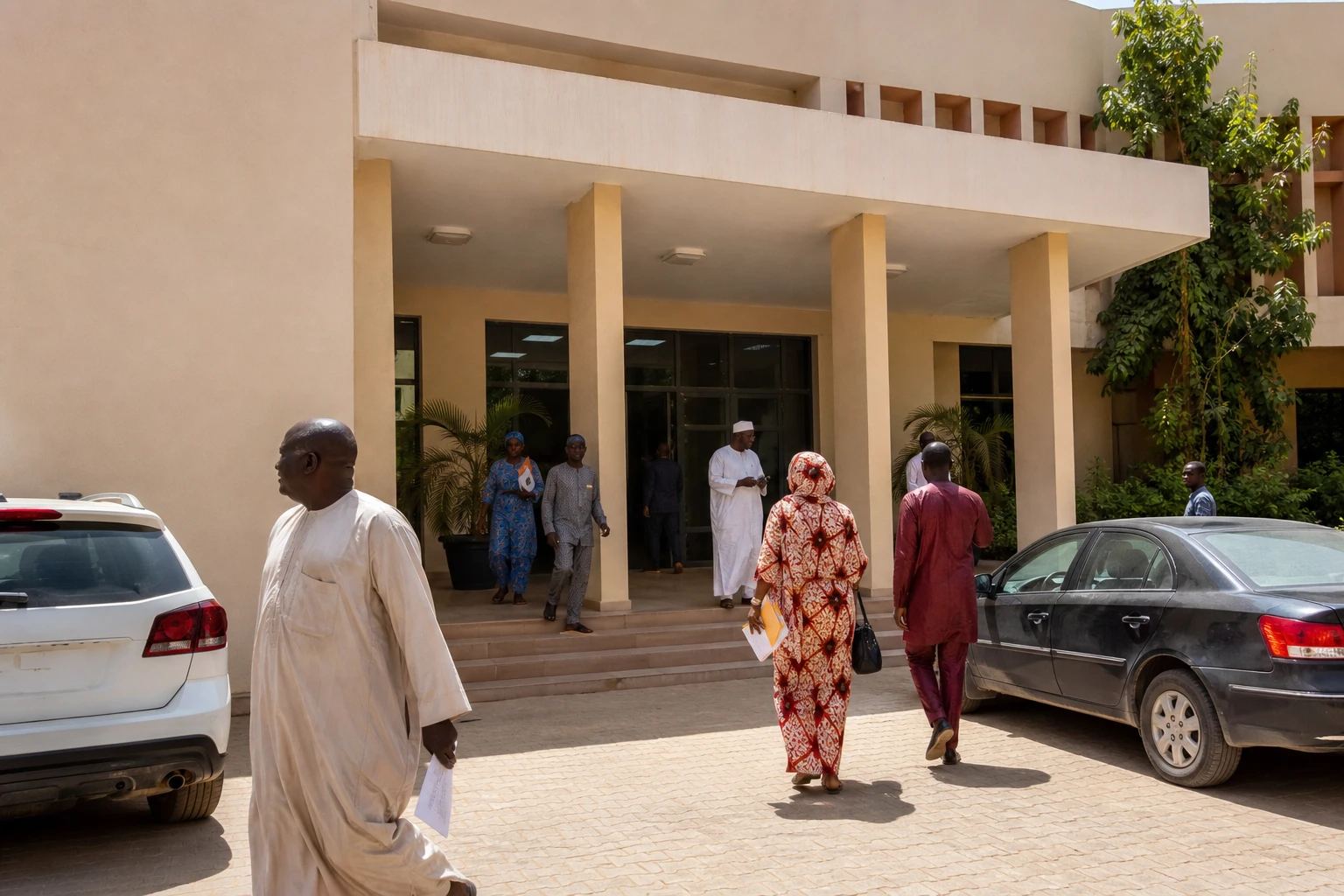
In Niamey, crowds are no longer merely accompanying the authorities; they are also helping to protect them. A few days after a military mutiny in the Nigerien capital, thousands gathered to show their support for General Abdourahamane Tiani, as the loyalist military command said it had regained control of the targeted sites.
This moment says something about the period that began with the coup of 26 July 2023, in a Niger undergoing a military transition that has broken with ECOWAS, tightened its ties with the Alliance of Sahel States (AES, the alliance formed by Niger, Mali and Burkina Faso) and asserted greater sovereignty in its dealings with former partner powers.
What is known about the mutiny and the response
The most firmly established facts point in the same direction: during the night of 28 to 29 August 2026, gunfire and explosions hit several sensitive locations in Niamey, including Diori Hamani International Airport, an air base and areas around the presidential palace. State media and international news agencies later reported that mutinous soldiers had been arrested or killed, and that the situation in the capital had returned to calm after about 24 hours.
The Nigerien authorities also issued a statement saying that the AES supported Niger and praised the response of the Defence and Security Forces. The government, for its part, echoed claims of an attempted destabilisation from abroad, while officials close to the authorities maintained that those behind it were outside the country. At this stage, these accusations remain official claims that have not been corroborated by independent public evidence.
At the time of the first reports, General Tiani had not yet appeared in public, fuelling speculation in the capital. But the presidency continues to present him as head of state and publish details of his official activities, a sign that the institutional apparatus wants to project continuity of power despite the internal shock.
Why this mobilisation matters for Niger
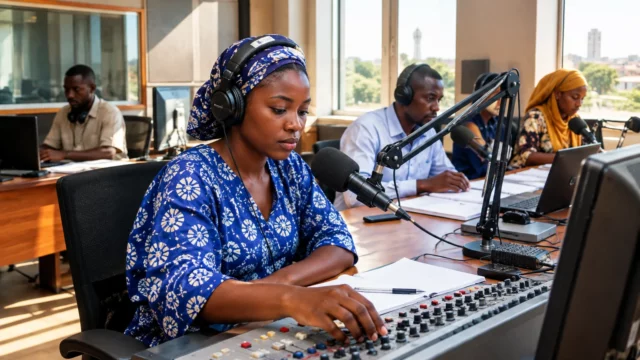
The demonstration held after the mutiny has significance beyond street-level expressions of loyalty. Its immediate aim is to close a political breach within the security apparatus itself. In a country facing repeated jihadist attacks, particularly in the west and south-west, a soldiers’ uprising strikes at the heart of the state: the airport, the air base, the symbols of the presidency and the public radio station.
For Niamey residents, the stakes are immediate: reopen businesses, resume journeys and prevent political uncertainty from turning into an economic shock. For the authorities, the aim is to show that the military government still enjoys visible support from part of the population, while also demonstrating that it retains control of the chain of command. For soldiers, finally, the episode is a reminder that army unity remains fragile in a context where loyalties are tested by war, the movement of weapons and internal rivalries.
The public recourse to Russian support, cited by several international sources and echoed in Nigerien official media, confirms a shift already visible since 2023: Niger is now seeking security partners outside the traditional Western framework. This policy brings Niamey closer to Bamako and Ouagadougou, but also increases its dependence on external support operating in an ever-unstable Sahelian region.
A Sahelian episode to watch closely
This affair extends beyond Niger. It tests the strength of the AES, which aims to present itself as a pillar of stability and sovereignty in the Sahel. It also raises questions about the ability of the region’s military regimes to balance three difficult demands: security, legitimacy and internal discipline.
Across the continent, the signal is clear: in several African capitals, the issue is no longer just the seizure of power, but its consolidation in states under security pressure. Niger, with Niamey as its nerve centre, shows that a military government can remain standing while still being vulnerable from within. It is this fragile balance, more than the street scene itself, that will command attention in the weeks ahead.