Algeria
 Libya
 Morocco
 Sudan
 Tunisia
 Benin
 Burkina Faso
 Cabo Verde
 Côte d'Ivoire
 Ghana
 Guinea
 Guinea-Bissau
 Liberia
 Mali
 Mauritania
 Niger
 Nigeria
 Senegal
 Sierra Leone
 The Gambia
 Togo
 Cameroon
 Central African Republic
 Chad
 DR Congo
 Equatorial Guinea
 Gabon
 Republic of the Congo
 São Tomé and Príncipe
 Burundi
 Comoros
 Djibouti
 Eritrea
 Ethiopia
 Kenya
 Madagascar
 Malawi
 Mauritius
 Mozambique
 Rwanda
 Seychelles
 Somalia
 South Sudan
 Tanzania
 Uganda
 Angola
 Botswana
 Eswatini
 Lesotho
 Namibia
 South Africa
 Zambia
 Zimbabwe
A new entrant in a sector Egypt wants to secure
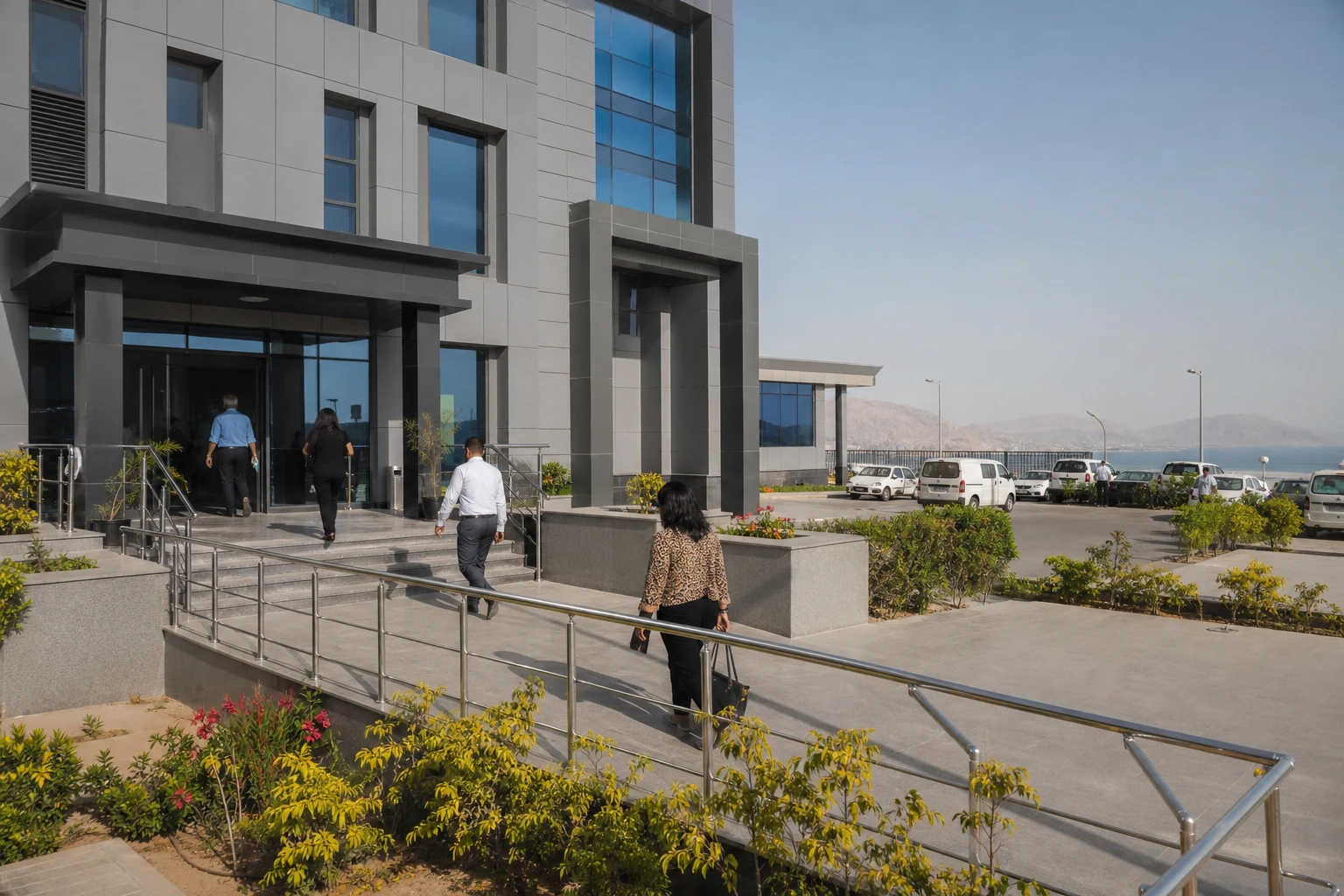
In the Sokhna area on the Red Sea coast, Egypt’s tyre industry continues to expand. The country is no longer looking only for factories. It wants a complete supply chain, from manufacturing to exports, with partners able to bring capital, technology and production volumes. Chinese group ZC Rubber’s project under consideration fits into this approach.
The signal is significant for Cairo. For several months, the authorities have been making a series of announcements in high-value-added sectors, particularly automotive, batteries and industrial components. The objective is clear: to produce more locally, reduce the import bill and capture a larger share of regional markets.
What ZC Rubber plans for Sokhna
On Wednesday 2 September 2026, the Suez Canal Economic Zone Authority, known by the acronym SCZone, and Zhongce Rubber Group Co. Ltd., better known as ZC Rubber, signed a letter of intent to study the creation of an integrated industrial tyre complex in the Sokhna industrial zone in Egypt. The project is presented as an investment of around $500 million. The initial area under consideration is 600,000 square metres.
The first available information indicates that the complex would include production lines as well as industrial, logistics and service activities. It would be developed in three phases. The stated aim is to serve foreign markets first, with nearly 95% of production destined for export. This is important. It shows that the project is not designed for a single local market, but as a platform geared towards Africa, the Middle East and beyond.
Egyptian authorities present the project as a way to transfer technology, train local workers and move the sector upmarket. This reading is consistent with the country’s current economic direction, which favours investment that can embed lasting industrial expertise rather than simple assembly operations.
Why Egypt is attracting tyre manufacturers
ZC Rubber’s interest has not come out of nowhere. Egypt has a large domestic market, a developing automotive base and a major logistical advantage: Sokhna is connected to the Suez Canal, at the crossroads of routes between Africa, Asia and Europe. For an industrial company, it is a useful location from which to produce, store and then ship goods quickly. SCZone also highlights direct access to several ports and airports, strengthening its role as an industrial hub.
The project is also part of a broader sequence of developments. In June 2026, Egyptian authorities had already discussed an expansion project in Alexandria with China National Tire & Rubber. In April 2026, they also examined another manufacturing project with Shandong Linglong Tyre. A few months earlier, Sailun had begun work on a tyre plant in the Sokhna area, with an announced investment of $1 billion. Egypt is therefore seeking to build a genuine ecosystem, rather than a series of isolated projects.
This build-up is no accident. It reflects an explicit industrial strategy backed by the Egyptian public sector. The country has a dual objective: to attract more foreign direct investment and develop an export base capable of serving several neighbouring markets. For manufacturers, the advantages are also political and commercial: Egypt has trade agreements, solid port infrastructure and an environment in which regional demand remains strong.
The practical stakes for jobs, exports and industrial sovereignty
The first issue is employment. In a project of this kind, the jobs created are not limited to the assembly line. Technicians, logistics workers, engineers, maintenance staff and subcontractors are all needed. Some of the benefits will therefore extend to nearby industrial zones, transport companies, energy suppliers and service providers. The effects may be more visible around Sokhna and Ain Sokhna than in inland regions.
The second issue is reducing dependence on imports. Egypt continues to face the need to secure its trade balance and strengthen local production. A tyre complex could help, provided that value is genuinely added locally and inputs are not all imported. This is where the question of skills transfer becomes central. Without training and local suppliers, the impact on the national economy will remain limited.
The third issue concerns Egypt’s position in North Africa. Cairo wants to present itself as an industrial base for reaching the continent, as competition intensifies between free zones, ports and logistics corridors. In this contest, SCZone is banking on its proximity to the Suez Canal and its ability to bring together Chinese, Egyptian and joint investment. This is a regional outreach strategy, not merely a sector-specific project.
A continental trend to watch
Across Africa, this project illustrates a clear trend: industrial value chains are moving towards countries that combine ports, energy, a domestic market and an investment framework. Egypt is positioning itself among these platforms. It wants to produce for itself, but also for the region. This approach is of interest to the African Union because it aligns with the broader ambition of the African Continental Free Trade Area, AfCFTA, which aims to facilitate trade between African countries.
The next step will depend on turning this letter of intent into a firm industrial commitment and then a construction timetable. The Egyptian authorities have an interest in quickly converting the announcement into measurable value creation. ZC Rubber, for its part, will need to specify the phases, equipment, energy requirements and commercial outlets. This is what will determine whether Sokhna becomes merely another entry point for Chinese capital, or a genuine centre of gravity for North Africa’s tyre industry.