
 Algeria
 Egypt
 Libya
 Sudan
 Tunisia
 Benin
 Burkina Faso
 Cabo Verde
 Côte d'Ivoire
 Ghana
 Guinea
 Guinea-Bissau
 Liberia
 Mali
 Mauritania
 Niger
 Nigeria
 Senegal
 Sierra Leone
 The Gambia
 Togo
 Cameroon
 Central African Republic
 Chad
 DR Congo
 Equatorial Guinea
 Gabon
 Republic of the Congo
 São Tomé and Príncipe
 Burundi
 Comoros
 Djibouti
 Eritrea
 Ethiopia
 Kenya
 Madagascar
 Malawi
 Mauritius
 Mozambique
 Rwanda
 Seychelles
 Somalia
 South Sudan
 Tanzania
 Uganda
 Angola
 Botswana
 Eswatini
 Lesotho
 Namibia
 South Africa
 Zambia
 Zimbabwe
A training tool, not a political symbol
A modern fighter is more than its airframe, radar or missiles. Its value also depends on pilots’ ability to practise the most complex scenarios without tying up a real aircraft. That is precisely what Morocco is seeking with a new US contract focused on F-16 Block 72 training.
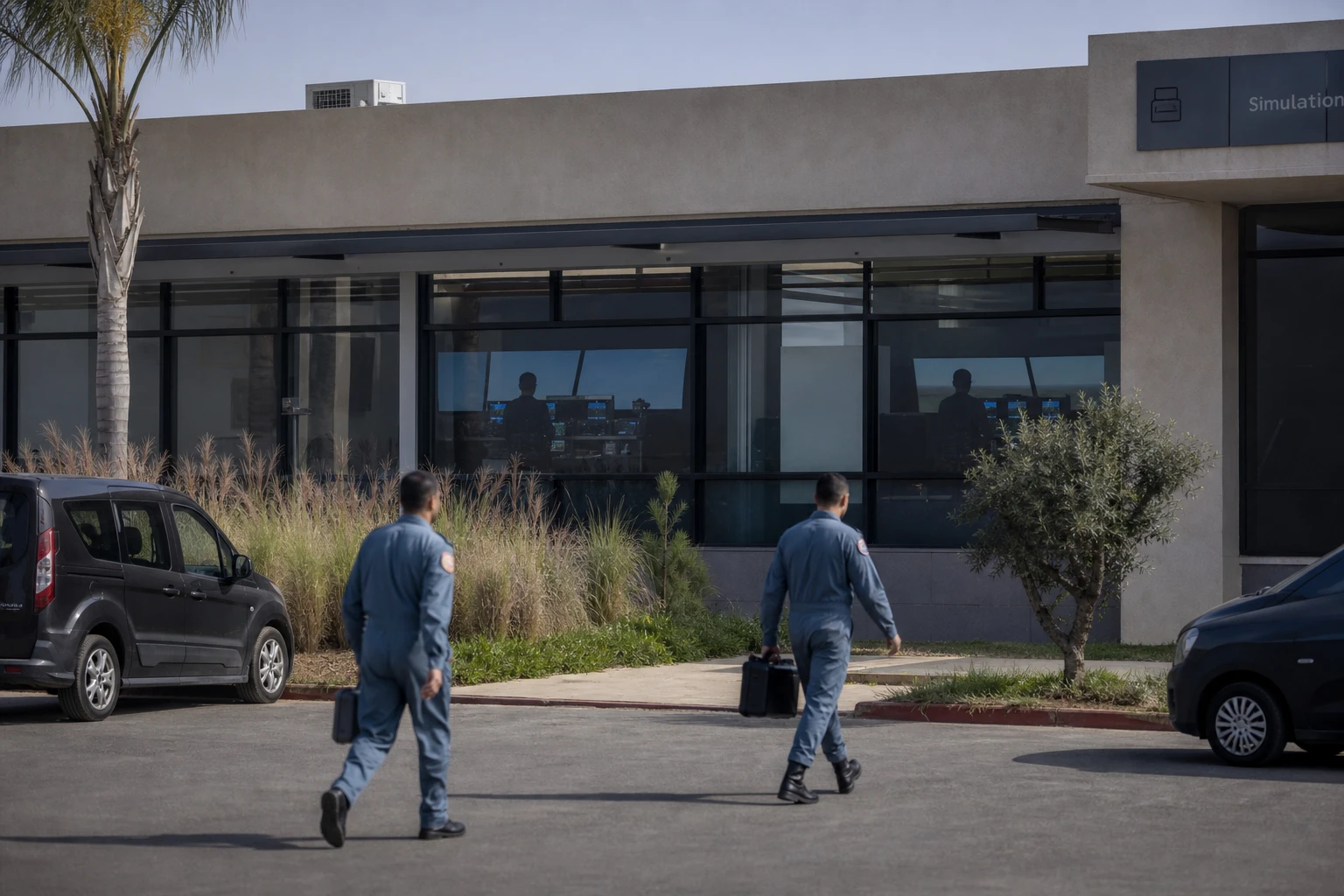
The contract covers two full-mission simulators, together with instructor stations, cockpits replicating the F-16 Block 72 configuration, a visual display system, computer equipment, a secure power supply, spare parts and logistical support. The maximum announced value is $42,103,873.
One point needs clarifying: despite confusion sometimes spread online, this is not a personal payment by Mohammed VI to a foreign leader, but a US public contract linked to a Foreign Military Sales programme — military sales abroad overseen by Washington. Morocco remains the end customer for the system, while the US administration publishes the contract and oversees its implementation.
The F-16 programme, piece by piece
Morocco’s F-16 programme is not new. On 25 March 2019, the US Defense Security Cooperation Agency notified Congress of a possible sale of 25 F-16C/D Block 72 aircraft to Morocco, with an estimated value of $3.787bn. On the same day, it also announced a proposed upgrade of 23 existing F-16s to the F-16V configuration, valued at $985.2m.
The new contract is therefore part of a programme already under way. The new and upgraded aircraft are not simply creating a more uniform fleet; they also require training, maintenance and simulation infrastructure capable of keeping pace. That is where the simulators become particularly important.
The deadline announced for the contract is 30 April 2029. Work is to be carried out in the United States and at Sidi Slimane Air Base in Morocco. The base is more than just a name on an administrative document: it has a long aviation history and was also used by the US military during the Cold War.
What this means for Rabat
For the Royal Air Force, the priority is operational. Full-mission simulators make it possible to train pilots more often, at lower cost and with less wear on airframes. They are also used to practise emergency procedures, weapons firing, air-to-air combat, navigation and the integration of helmet-mounted systems, without needlessly putting crews or aircraft at risk.
The choice of this equipment also says something about Morocco’s military trajectory. Rabat is not simply buying aircraft; it is building an ecosystem. That includes aircraft, weapons, radar, electronic warfare modules, training and technical availability. For an air force, this coherence matters as much as the fleet itself.
The programme also remains closely tied to US suppliers and their subcontractors. Canadian company CAE, a major player in military simulation, says it is now a leading F-16 training provider following its acquisition of L3Harris Technologies’ Military Training division, which included Link Simulation & Training. The Moroccan contract underscores this specialisation.
At $42.1m, the contract is modest compared with major arms deals. But it is strategic. A fighter aircraft without regular training loses availability, credibility and effectiveness. A network of simulators, by contrast, reduces lifecycle costs and strengthens crew readiness.
Regional context and African significance
In the African context, this programme goes beyond the bilateral relationship between Rabat and Washington. It illustrates how several of the continent’s armed forces are moving upmarket, seeking less to multiply platforms than to strengthen training, maintenance and interoperability. This trend is visible in North Africa, the Sahel, the Horn of Africa and several coastal capitals.
For Morocco, the logic is also regional. The Kingdom is in North Africa and on the edge of the Arab Maghreb Union, a regional organisation that is now relatively inactive but remains a prominent feature of strategic discourse. In this neighbourhood, control of the skies remains a signal of sovereignty, deterrence and power projection.
Finally, the continental significance of these investments deserves attention. Across the African Union, the security debate is no longer limited to equipment purchases. It also concerns sustainability, training autonomy and states’ ability to maintain forces that are genuinely operational. Morocco’s case shows that an effective air force depends as much on simulators, technicians and support chains as on the aircraft themselves.
The next point to watch is how the contract is implemented through 2029. The timeline, integration at Sidi Slimane and coordination with the other parts of the F-16 programme will show whether Rabat can turn this expenditure into a lasting operational advantage. That is where the programme’s real significance will be determined, far beyond the financial announcement.



