
 Algeria
 Egypt
 Libya
 Morocco
 Sudan
 Tunisia
 Benin
 Burkina Faso
 Cabo Verde
 Côte d'Ivoire
 Ghana
 Guinea
 Guinea-Bissau
 Liberia
 Mali
 Mauritania
 Niger
 Nigeria
 Senegal
 Sierra Leone
 The Gambia
 Togo
 Cameroon
 Central African Republic
 Chad
 Equatorial Guinea
 Gabon
 Republic of the Congo
 São Tomé and Príncipe
 Burundi
 Comoros
 Djibouti
 Eritrea
 Ethiopia
 Kenya
 Madagascar
 Malawi
 Mauritius
 Mozambique
 Rwanda
 Seychelles
 Somalia
 South Sudan
 Tanzania
 Uganda
 Angola
 Botswana
 Eswatini
 Lesotho
 Namibia
 South Africa
 Zambia
 Zimbabwe
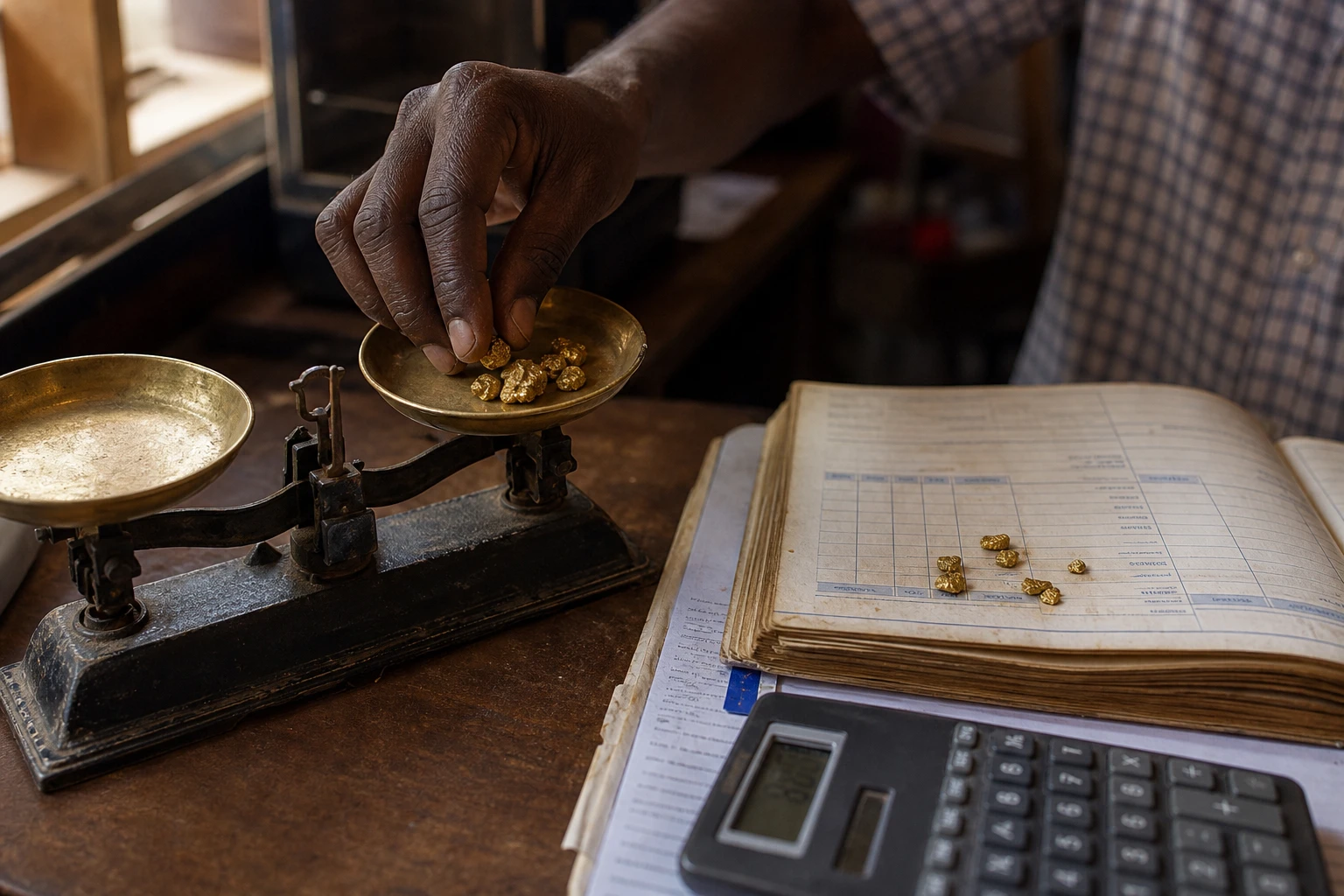
As gold rises, mining rents become a political test
At Kibali, in the north-east of the Democratic Republic of the Congo, rising gold prices are doing more than changing companies’ accounts. They are also bringing a broader question back to the table: who, in practice, captures the value created by a mineral whose prices reached exceptional levels in 2026? Major groups are talking about stronger margins. Governments, meanwhile, are seeking to turn this boom into lasting public revenue.
The issue goes beyond Kibali. In several African gold-producing countries, rising prices are prompting governments to review tax mechanisms, from fixed royalties and profit-linked levies to mining sovereignty measures. The DRC is taking a different legal approach, with rates that are more stable but with more sophisticated mechanisms for capturing some windfall profits.
At Kibali, royalties rise but remain limited as a share of sales
Results published by Barrick and AngloGold Ashanti show a clear increase in royalties booked on each company’s 45 per cent stake in Kibali. In the first half of 2026, these amounts reached about $66.7mn, up from $55.2mn a year earlier, an increase of about 21 per cent. For the second quarter, Barrick reported $43mn in royalties linked to Kibali in its operating tables, compared with $25mn a year earlier. AngloGold, for its part, reported charges of $206 per ounce produced, up from $151 a year earlier.
The higher price of the metal explains much of this change. Barrick said it received $313mn in sales in the second quarter of 2026 for its attributable share of Kibali, compared with $226mn a year earlier. AngloGold reported an average price received of $4,430 per ounce for its share in the second quarter of 2026, compared with $3,283 over the same period in 2025. In other words, royalties are increasing in absolute terms, but they are not eating into a larger share of the mine’s revenue.
Measured against sales, these charges remain close to 5 per cent at Kibali. That is a limited level compared with other African assets owned by the same groups. In Mali, Loulo-Gounkoto has higher ratios. In Ghana, Iduapriem also faces a higher charge, under a tax regime that has become more sensitive to prices.
| Asset | Country | Levy mechanism | Effect in Q2 2026 |
|---|---|---|---|
| Kibali | DRC | Royalties booked by operators, with no automatic change in line with the price | About 5% of attributable sales |
| Iduapriem | Ghana | Progressive royalty linked to the gold price | Higher charge when the price rises |
| Loulo-Gounkoto | Mali | Heavier tax burden on mining flows | Higher royalty ratio than at Kibali |
The DRC takes a different tax path from Ghana
The comparison with Ghana is instructive. In March 2026, Accra brought gold under a progressive royalty regime: 5 per cent when the price is below $1,900 per ounce, rising to 12 per cent when the metal exceeds $4,500. The aim is simple: increase the state’s share when mining rents grow.
In the DRC, the principle is different. The Mining Code, revised in 2018, sets a 3.5 per cent royalty on precious metals, including gold, and a 10 per cent royalty on substances classified as strategic. Article 251 bis also provides for a special 50 per cent tax on excess profits when market prices rise by more than 25 per cent compared with feasibility assumptions. This is therefore a less automatic approach than Ghana’s, but potentially more powerful if it is actually triggered.
That is the key point: the groups’ quarterly accounts show the increase in mining rents, but they do not say whether the Congolese state is already capturing at Kibali the additional value linked to windfall profits. In practice, the question is not only a legal one. It also depends on the tax administration, the transparency of agreements and the state’s ability to monitor often complex accounting structures.
A wider issue for Kinshasa, Ituri and Central Africa
For Kinshasa, the stakes are twofold. On the one hand, a mine such as Kibali supports revenue, indirect employment and foreign currency earnings. On the other, the Democratic Republic of the Congo remains burdened by a long history of capturing little of its mining value, despite successive reforms. The 2018 revision of the Mining Code was specifically intended to correct this imbalance. The addition, in May 2026, of tantalum, niobium, tungsten, lithium, uranium and rare earths to the list of strategic substances shows that the executive is still seeking to refine its tax and industrial policy.
On the ground, the effects are not the same for everyone. For mining companies, the surge in gold prices improves margins, even as royalties rise. For the state, it opens up a budgetary opportunity. For producing provinces, it fuels expectations of infrastructure, public services and more visible local benefits. But that promise remains fragile if levies are not properly tracked, or if revenue leaves the productive economy without having a lasting impact on roads, energy or services.
Across the continent, the Congolese case is part of a debate that has become central in several African capitals: how to turn the boom in critical commodities into real public gains without undermining investment. The DRC, Ghana and Mali offer different answers. That diversity is precisely what matters. It shows that the battle is no longer only about extraction, but about how to distribute rents that have become more strategic than ever.



