Algeria
 Egypt
 Libya
 Morocco
 Sudan
 Benin
 Burkina Faso
 Cabo Verde
 Côte d'Ivoire
 Ghana
 Guinea
 Guinea-Bissau
 Liberia
 Mali
 Mauritania
 Niger
 Nigeria
 Senegal
 Sierra Leone
 The Gambia
 Togo
 Cameroon
 Central African Republic
 Chad
 DR Congo
 Equatorial Guinea
 Gabon
 Republic of the Congo
 São Tomé and Príncipe
 Burundi
 Comoros
 Djibouti
 Eritrea
 Ethiopia
 Kenya
 Madagascar
 Malawi
 Mauritius
 Mozambique
 Rwanda
 Seychelles
 Somalia
 South Sudan
 Tanzania
 Uganda
 Angola
 Botswana
 Eswatini
 Lesotho
 Namibia
 South Africa
 Zambia
 Zimbabwe

Civic space has visibly shrunk
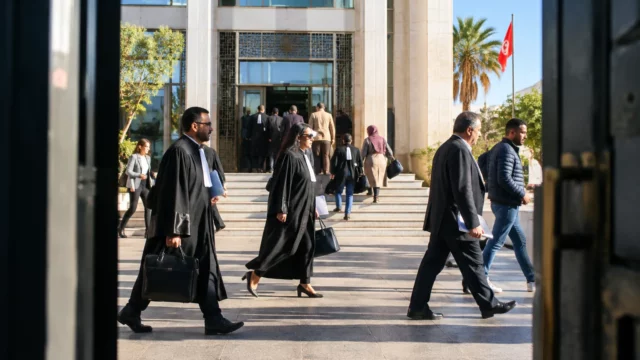
In Tunis, public debate takes place not only at the ballot box or in Parliament. It also takes place in associations, trade unions, aid groups and human rights organisations. This is where a country’s democratic health is measured in very concrete terms. In Tunisia, this space has narrowed markedly since 2024, prompting concern among many local and international actors. Human Rights Watch describes a series of pressures involving prosecutions, suspensions, financial checks and arrests targeting critical voices.
This comes in a country that was long presented as one of the political laboratories of post-2011 North Africa. A dense network of associations emerged in Tunisia after the revolution, followed by a gradual weakening of checks and balances since power became concentrated around President Kaïs Saïed from 2021. At the same time, the country remains tied to its regional environment, between the Arab Maghreb Union, its Mediterranean neighbourhood and African human rights frameworks. This context makes every institutional setback more visible, because it affects a country watched well beyond its borders.
A wave of suspensions, investigations and arrests
The report published by Human Rights Watch on Wednesday 2 September says the Tunisian authorities have stepped up measures against civil society since May 2024. The organisation cites arbitrary arrests, detentions, criminal and financial investigations, banking restrictions, and administrative or judicial suspensions. It also lists at least 20 associations suspended since July 2025, and at least 25 organisations targeted by suspension orders between July 2025 and April 2026.
Among the cases highlighted is the Tunisian Human Rights League, one of the continent’s oldest human rights organisations. International agencies and media have confirmed its one-month suspension in spring 2026, while Tunis Afrique Presse reported on appeals filed with the courts. Other groups have also been affected, including the Tunisian Forum for Economic and Social Rights, the Tunisian Association of Democratic Women, OMCT in Tunisia and independent media associated with civil society.
Human Rights Watch and Amnesty International also describe the repeated use of financial and criminal investigations against associations working on migration, anti-discrimination or human rights. The case of Saadia Mosbah, an anti-racism activist and president of Mnemty, is particularly prominent. HRW says she was sentenced in March 2026 to eight years in prison on charges related to her association’s finances. Amnesty, for its part, notes that at the end of 2024 at least six organisations were still under investigation and seven people were in pre-trial detention in this context.
Why this is affecting the whole country
Tunisian civil society is not limited to political protest. It also provides services, documents abuses, raises the alarm over violence and steps in where the state is absent or overwhelmed. When an association is suspended, victims may lose legal support, migrants a humanitarian contact, women a space to be heard, or disadvantaged neighbourhoods a mediator. The harm is therefore not merely symbolic. It is social and administrative, and often immediate. HRW also emphasises this role as a check on power, essential to accountability.
The use of foreign funding as grounds for suspicion has become a recurring political tool. The Tunisian authorities say they are defending national sovereignty and ensuring associations comply with the law. But the organisations targeted counter that checks are turning into a tool of suppression. This debate is not unique to Tunisia: it runs through many African countries where NGO registration, access to bank accounts and funding rules can become levers of political pressure. The question here is how to balance transparency with freedom of association, a principle protected by the African Charter on Human and Peoples’ Rights.
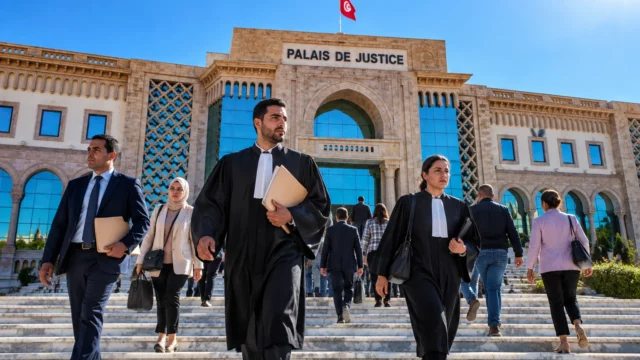
The implications are also judicial. In March 2025, Tunis notified its withdrawal from the declaration provided for under Article 34(6) of the Protocol to the African Court on Human and Peoples’ Rights, limiting direct access to the court for individuals and NGOs. Amnesty and several specialist networks warned that once the withdrawal takes effect, Tunisian citizens and associations would lose an important avenue of recourse at African level. The decision therefore has implications beyond the battle over associations alone. It affects the continent’s human rights protection framework.
What this says about Tunisia and North Africa
Tunisia remains under scrutiny because it long embodied a distinctive political transition in the region. The current crisis of freedoms is therefore seen as a powerful signal, not only for Tunis but also for neighbouring capitals. In North Africa, where spaces for dissent are often closely monitored, the weakening of checks and balances in Tunisia could serve as a precedent or a cautionary example, depending on the actors involved. Above all, it is a reminder that a robust civic fabric can never be taken for granted.
At continental level, the issue goes beyond the defence of NGOs alone. It concerns the role of African courts, the credibility of commitments made within the African Union and the ability of regional institutions to protect civil liberties. Tunisia remains an AU member, but its withdrawal from direct access to the African Court and the increase in measures against associations raise a broader question: who can still challenge power without risking suspension, investigation or prison? The next proceedings before African human rights bodies, as well as the response of international partners, will show whether the country is moving towards a lasting crackdown or still leaving room for civil society.