Algeria
 Egypt
 Libya
 Morocco
 Sudan
 Tunisia
 Benin
 Burkina Faso
 Cabo Verde
 Côte d'Ivoire
 Ghana
 Guinea
 Guinea-Bissau
 Liberia
 Mali
 Mauritania
 Niger
 Nigeria
 Sierra Leone
 The Gambia
 Togo
 Cameroon
 Central African Republic
 Chad
 DR Congo
 Equatorial Guinea
 Gabon
 Republic of the Congo
 São Tomé and Príncipe
 Burundi
 Comoros
 Djibouti
 Eritrea
 Ethiopia
 Kenya
 Madagascar
 Malawi
 Mauritius
 Mozambique
 Rwanda
 Seychelles
 Somalia
 South Sudan
 Tanzania
 Uganda
 Angola
 Botswana
 Eswatini
 Lesotho
 Namibia
 South Africa
 Zambia
 Zimbabwe
Much-needed funding, but no blank cheque
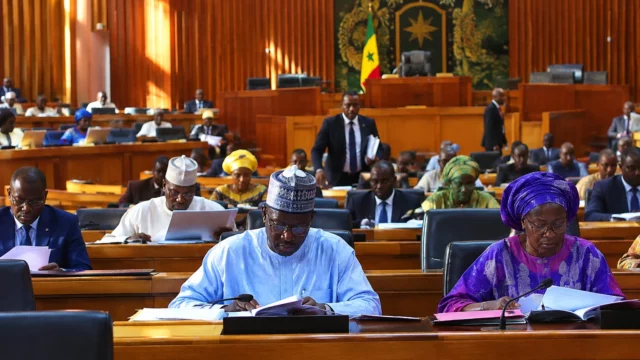
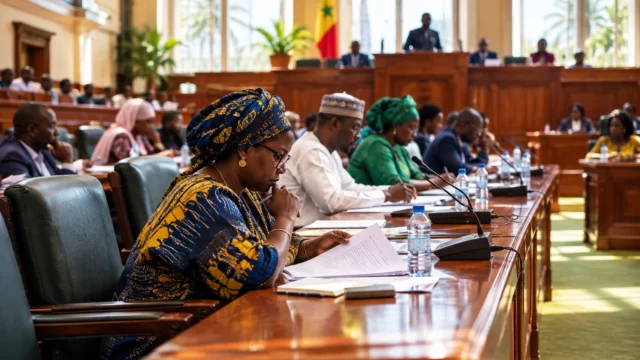
In Dakar, the debt issue is not played out solely in meeting rooms. It weighs on the budget, the state’s room for manoeuvre and, ultimately, Senegalese people’s ability to rely on public services over the long term. The staff-level agreement announced on 1 September between Senegal and the International Monetary Fund opens a window. But on its own, it does not bring to a close the period of financial tension that followed the revelation of undeclared liabilities in the public accounts.
The agreement in principle covers a 36-month programme under the Extended Credit Facility, worth around $2.2 billion. But it remains subject to approval by the IMF’s Executive Board. Before then, the country must still deliver corrective measures deemed decisive and secure financing assurances from its partners. In short, the door is opening, but the final key has yet to be handed over.
Senegal in a broader West African equation
The timing is significant for a country that belongs to the West African Economic and Monetary Union (WAEMU), whose central bank is the BCEAO, and to ECOWAS — two blocs where the budgetary stability of a member state has effects that extend beyond its borders. When public finances come under pressure in Dakar, this is also reflected in financing conditions across the sub-region, regional markets and creditors’ confidence. The BCEAO is headquartered in Dakar, which also gives the Senegalese capital a central role in the West African monetary architecture.
The continental context adds another layer. In 2026, the African Union held a series of discussions on sovereign debt, with a Common African Position adopted in February, followed by a dialogue in July to better coordinate restructuring, sustainable financing and Africa’s voice in dealings with creditors. The Senegalese case is therefore part of an issue that goes beyond the country itself: how to finance development without trapping states in debt-service costs that swallow up their fiscal room for manoeuvre.
What the agreement with the IMF says
According to the IMF’s statement, discussions held in Dakar between 19 August and 1 September resulted in an agreement in principle on economic policies that could support a new programme. The institution said Senegal’s public debt stood at 132% of GDP at the end of 2024, a level that remains very high despite the economy’s demonstrated resilience. The IMF also said growth was driven in 2025 by the first full year of oil production, while growth excluding hydrocarbons remained weaker.
The most sensitive issue remains the so-called “hidden” debt, revealed after the change of government and initially estimated at more than $9 billion, then described in several reports as now exceeding $11 billion. The IMF suspended its previous $1.8 billion programme after these revelations, which were linked to reporting errors over the 2019-2023 period. The agreement announced today therefore does not mean an automatic return to normal: it is part of a process of correction, clarification of the accounts and restoration of the state’s statistical credibility.
The Fund insists on two requirements: first, “decisive corrective actions” to support a request for a waiver related to misreporting of data; second, financing assurances from other partners. In other words, Senegal is not negotiating only a loan. It is also negotiating a framework of trust, with commitments on public financial governance, transparency around debt stocks and the ability to return to a path considered sustainable.
What this means for Dakar, and what to watch next
For the authorities, the stakes are twofold. In the short term, an IMF programme can facilitate access to other lenders, reassure investors and provide a clearer framework for budget management. In the medium term, it requires adjustments. That means greater spending discipline, increased revenue mobilisation and tighter oversight of commitments made by central government and public entities. This is often where the difference lies between a simple financial agreement and a credible return to an economic growth path.
For households, the impact is measured differently. Fiscal consolidation can protect macroeconomic stability, but it also forces the state to make tougher choices between investment, subsidies, day-to-day operations and debt repayments. In a country where recent growth has been underpinned by energy, services and hydrocarbon-related revenues, the question is not simply how to produce more. It is how to allocate this new breathing space between debt, infrastructure, jobs and social spending.
What happens next will depend on three specific milestones. First, the case going before the IMF’s Executive Board. Next, the precise form of the corrective measures Dakar will present. Finally, Senegal’s ability to secure financing guarantees that are compatible with its cash-flow needs and the restoration of debt sustainability. Across West Africa, the case will be closely watched: it says something about the new conditions for access to financing for WAEMU states, as well as how Africa now wants to speak about debt, transparency and budgetary sovereignty in the same breath.