Algeria
 Egypt
 Libya
 Morocco
 Sudan
 Benin
 Burkina Faso
 Cabo Verde
 Côte d'Ivoire
 Ghana
 Guinea
 Guinea-Bissau
 Liberia
 Mali
 Mauritania
 Niger
 Nigeria
 Senegal
 Sierra Leone
 The Gambia
 Togo
 Cameroon
 Central African Republic
 Chad
 DR Congo
 Equatorial Guinea
 Gabon
 Republic of the Congo
 São Tomé and Príncipe
 Burundi
 Comoros
 Djibouti
 Eritrea
 Ethiopia
 Kenya
 Madagascar
 Malawi
 Mauritius
 Mozambique
 Rwanda
 Seychelles
 Somalia
 South Sudan
 Tanzania
 Uganda
 Angola
 Botswana
 Eswatini
 Lesotho
 Namibia
 South Africa
 Zambia
 Zimbabwe
A visit that says much more than protocol
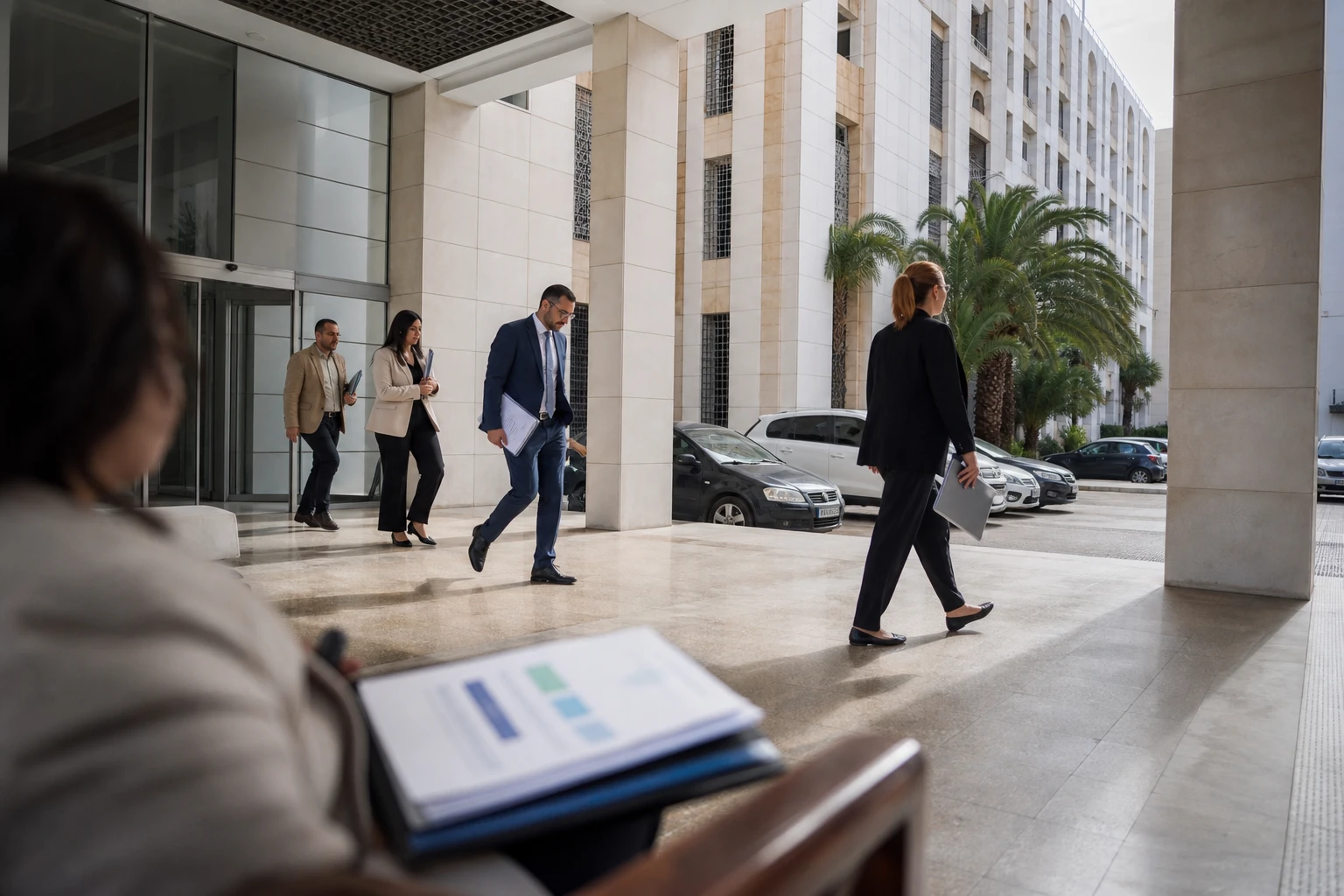
In Tunis, a diplomatic meeting can quickly look like a routine gesture. Yet in Tunisia’s case, every European visit is also viewed through the lenses of energy, water, investment and employment. The German foreign minister’s trip reflects this practical reality: Tunisia is seeking partners able to support its economic transition without exacerbating its vulnerabilities, while Berlin wants to strengthen a stable Mediterranean neighbourhood at a time when regional tensions remain high.
The visit also comes amid an active bilateral relationship. Germany and Tunisia established diplomatic relations in 1956. In 2026, the two countries mark their 70th diplomatic anniversary. According to official German data, Germany is Tunisia’s third-largest trading partner, behind France and Italy, and its second-largest foreign investor.
What Tunis and Berlin put on the table
President Kaïs Saïed received Johann Wadephul at the Carthage Palace on Monday 31 August 2026. According to the Tunisian presidency and the TAP news agency, the meeting covered bilateral relations, the regional situation and major areas of cooperation. The Tunisian head of state also stressed the need to revise several agreements, including the association agreement between Tunisia and the European Union, to make it, in his words, more balanced and fairer.
The German minister, for his part, highlighted cooperation set to deepen in specific sectors: the energy transition, water management and digitalisation. He described his visit as an opportunity to consolidate a long-standing relationship and said Germany and the European Union would remain reliable partners for Tunisia.
The visit also has an explicit economic dimension. Germany’s Federal Foreign Office said a delegation of business representatives was accompanying the foreign minister to explore further opportunities for trade and investment in the Mediterranean. The stated aim is therefore not only political: it is also to link diplomacy, business and development cooperation.
Why energy, water and digitalisation keep coming up
These three issues are no coincidence. Tunisia’s external imbalance remains pronounced, with the energy bill weighing on the trade balance. The National Institute of Statistics said that in 2025 the trade deficit reached 21.8 billion dinars, of which more than 11.1 billion was linked to energy products. At the same time, trade with Germany is growing: Tunisian exports to the country rose by 10.7% in 2025, while imports from Germany increased by 11%.
The economic picture helps explain the logic of the partnership. Germany buys Tunisian products, but Tunisia also imports high-value-added German goods. The relationship therefore matters to Tunisian exporting businesses, particularly in the automotive, textile and IT services sectors, where German groups are already present. According to Berlin, about 100,000 jobs in Tunisia are linked to German companies.
| Indicator | Key figure |
|---|---|
| Tunisia’s trade deficit in 2025 | 21.8 billion dinars |
| Share of deficit linked to energy | 11.1 billion dinars |
| Tunisian exports to Germany in 2025 | +10.7% |
| Tunisian imports from Germany in 2025 | +11% |
| Jobs in Tunisia linked to German companies | About 100,000 |
In this context, German support for water management and renewable energy has very practical significance. German cooperation in Tunisia already focuses on protecting natural resources, the energy transition, education and training. This is a social as well as an industrial issue: water availability, electricity stability and access to skills determine the ability of Tunisian regions to attract investment beyond the capital.
What this means for Tunisia and beyond
For the Tunisian state, this kind of visit is a test of credibility. It must reassure an important European partner while reminding it of Tunis’s room for negotiation. For businesses, it offers an opportunity to secure financing, technology transfers and new markets. For households, the stakes are more immediate: water, electricity, jobs, training and the quality of public services. In other words, diplomacy does not stay at the Carthage Palace; it affects the cost of everyday life.
The regional significance is clear. Tunisia does not exist in a vacuum: it is in North Africa, at the crossroads of the Mediterranean, the European Union and its Maghreb neighbours. In a region facing migration pressures, energy shocks and security uncertainties, every expansion of economic cooperation also becomes a political signal. By presenting itself as a long-term partner, Germany is seeking to anchor its influence in a neighbourhood where the balance of power is shifting rapidly.
A fundamental question remains: can Tunisia turn this diplomatic capital into tangible results, particularly in water, energy and digitalisation, rather than limiting itself to announcements during visits? That is where the next chapter will be decided: through the signing and subsequent implementation of the agreements discussed in Tunis, and through the way Tunisian authorities balance economic openness, regulatory sovereignty and the need for investment.