Algeria
 Egypt
 Libya
 Morocco
 Sudan
 Tunisia
 Benin
 Burkina Faso
 Cabo Verde
 Côte d'Ivoire
 Ghana
 Guinea-Bissau
 Liberia
 Mali
 Mauritania
 Niger
 Nigeria
 Senegal
 Sierra Leone
 The Gambia
 Togo
 Cameroon
 Central African Republic
 Chad
 DR Congo
 Equatorial Guinea
 Gabon
 Republic of the Congo
 São Tomé and Príncipe
 Burundi
 Comoros
 Djibouti
 Eritrea
 Ethiopia
 Kenya
 Madagascar
 Malawi
 Mauritius
 Mozambique
 Rwanda
 Seychelles
 Somalia
 South Sudan
 Tanzania
 Uganda
 Angola
 Botswana
 Eswatini
 Lesotho
 Namibia
 South Africa
 Zambia
 Zimbabwe
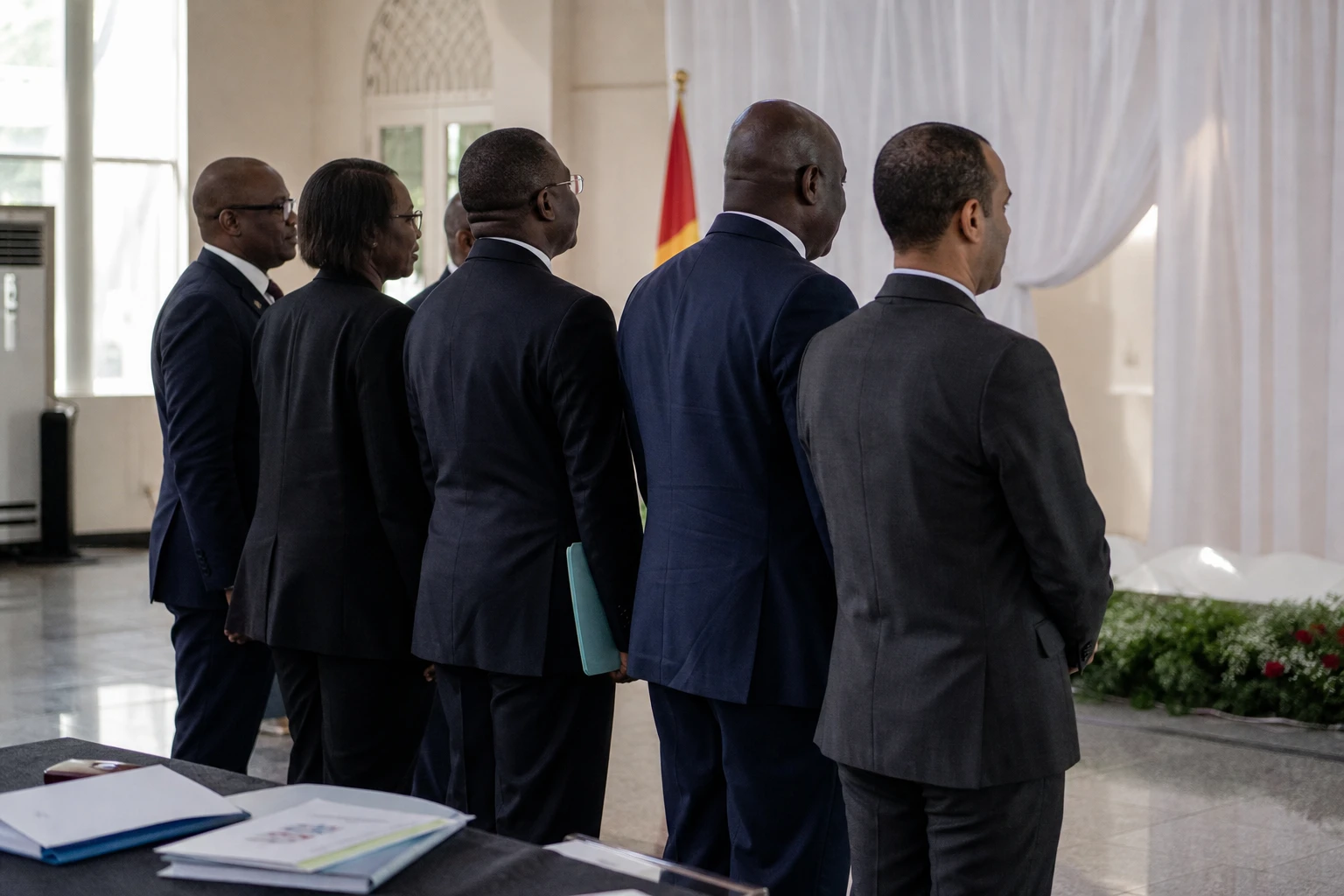
In Conakry, Simandou’s iron ore is no longer just a mining project
In Guinea, a deposit is more than a line in a report. It can shift roads, ports and contracts and, sometimes, the centre of gravity of an entire economy. That is precisely what is at stake with Simandou, in the south-east of the country, as the complex begins to enter the phase that really matters: volumes, markets and tangible benefits for Guineans.
The project forms part of a broader national trajectory, dubbed Simandou 2040 by the authorities in Conakry. The programme aims to link mining operations to investment in infrastructure, agriculture, industry and services. It was formally submitted to the presidency in late October 2025, then adopted by the National Transitional Council in March 2026 for the period 2026-2040.
A vast deposit, but a gradual ramp-up
Simandou reached a major symbolic milestone on 11 November 2025, when initial operations began at Morébayah, in Forécariah prefecture. The event marked the megaproject’s entry into its industrial phase, after years of delays and restructuring. The project partners are ultimately targeting export capacity of up to 120 million tonnes of iron ore a year.
This target does not mean an immediate ramp-up. S&P Global estimated in January 2026 that Guinea’s exports could reach 15 to 20 million tonnes in 2026, then 40 to 50 million tonnes in 2027. Rio Tinto, a key company in the project, had already said in its first-half 2025 results that the first shipment had been brought forward to around November 2025, with initial transport via the WCS port while the SimFer port was being completed.
The timetable is therefore one of a gradual start-up. Rio Tinto also said in the first half of 2025 that advanced mine and port infrastructure work at SimFer was more than three-quarters complete, and that the full rail network was commissioned in the first quarter of 2026. For a project of this scale, the mine alone is not enough: the railway, port and logistics chain make the product exportable.
Why Simandou worries the established giants
The global iron ore market remains dominated by a handful of long-established players. USGS data show that Australia and Brazil continue to hold a central place in global exports, while India and China are also among the leading producers. In other words, Simandou is not entering an empty space. It is arriving in a market shaped by powerful centres, major infrastructure and long-term contracts.
Simandou’s strength lies not only in its tonnage. It also lies in the quality of its ore. Rio Tinto describes the deposit as high-grade ore, at around 65.3% iron, with low levels of impurities. This characteristic makes it particularly attractive to steelmakers seeking to improve process efficiency and reduce emissions associated with steel production. This has fuelled the idea for several years that it could become a serious competitor to the major Australian basins.
But the quality advantage does not remove market constraints. Chinese steel demand remains under pressure, and China is still the world’s leading market for iron ore. S&P Global notes that Simandou’s ramp-up will have to take place in an environment where established producers will also seek to defend their market shares. In short, the challenge will not just be to produce more, but to find a place in a system already shaped by entrenched commercial practices.
For Guinea, the stakes extend far beyond the mine
The significance of the project goes well beyond the extractive sector. The World Bank estimates that Guinea’s economy already accelerated in 2024 and that Simandou’s start of production could drive growth to a higher level in the years ahead. The country is also the world’s largest bauxite producer, according to the USGS, confirming Guinea’s status as a major mining player in West Africa. Simandou adds another dimension: high-grade iron ore, in a country hitherto associated mainly with aluminium.
The decisive question is local transformation. A substantial share of the benefits will depend on how public revenues, taxes and royalties are used, and on the state’s participation in associated projects. Guinea’s presidency presents Simandou 2040 as a lever for economic diversification and job creation. For Conakry, the challenge will be to turn mining revenues into lasting infrastructure, better-funded public services and real opportunities for local businesses, beyond construction jobs.
The social dimension remains decisive. Guinea is still heavily dependent on commodities, while the benefits of a megaproject do not automatically spread beyond major centres. The gap between the capital, where decisions are concentrated, and mining areas, where environmental and land costs are felt, can be significant. The Simandou project will therefore be judged as much in Conakry as in Beyla, Forécariah or along the rail corridors linking the mine to the coast.
A Guinean project, but also a West African one
At regional level, Simandou reinforces a simple idea: West Africa is not limited to exporting raw materials. It can also influence global supply chains, provided it controls its infrastructure, taxation and the pace of its projects. That is where ECOWAS, regional integration and logistics corridors take on their full significance, even when an issue seems purely national.
For Guinea, the next test is no longer the promise, but consistency. If exports rise as forecast, the country could change its standing in the global iron ore market. If infrastructure work slows or demand contracts, the megaproject will remain an expensive showcase. Either way, Simandou will already have proved one thing: a deposit can, on its own, redraw a state’s economic strategy and the way West Africa sees its place in global trade.