
 Algeria
 Egypt
 Libya
 Morocco
 Sudan
 Tunisia
 Benin
 Burkina Faso
 Cabo Verde
 Côte d'Ivoire
 Ghana
 Guinea
 Guinea-Bissau
 Liberia
 Mali
 Mauritania
 Niger
 Nigeria
 Senegal
 Sierra Leone
 The Gambia
 Togo
 Cameroon
 Central African Republic
 Chad
 Equatorial Guinea
 Gabon
 Republic of the Congo
 São Tomé and Príncipe
 Burundi
 Comoros
 Djibouti
 Eritrea
 Ethiopia
 Kenya
 Madagascar
 Malawi
 Mauritius
 Mozambique
 Rwanda
 Seychelles
 Somalia
 South Sudan
 Tanzania
 Uganda
 Angola
 Botswana
 Eswatini
 Lesotho
 Namibia
 South Africa
 Zambia
 Zimbabwe
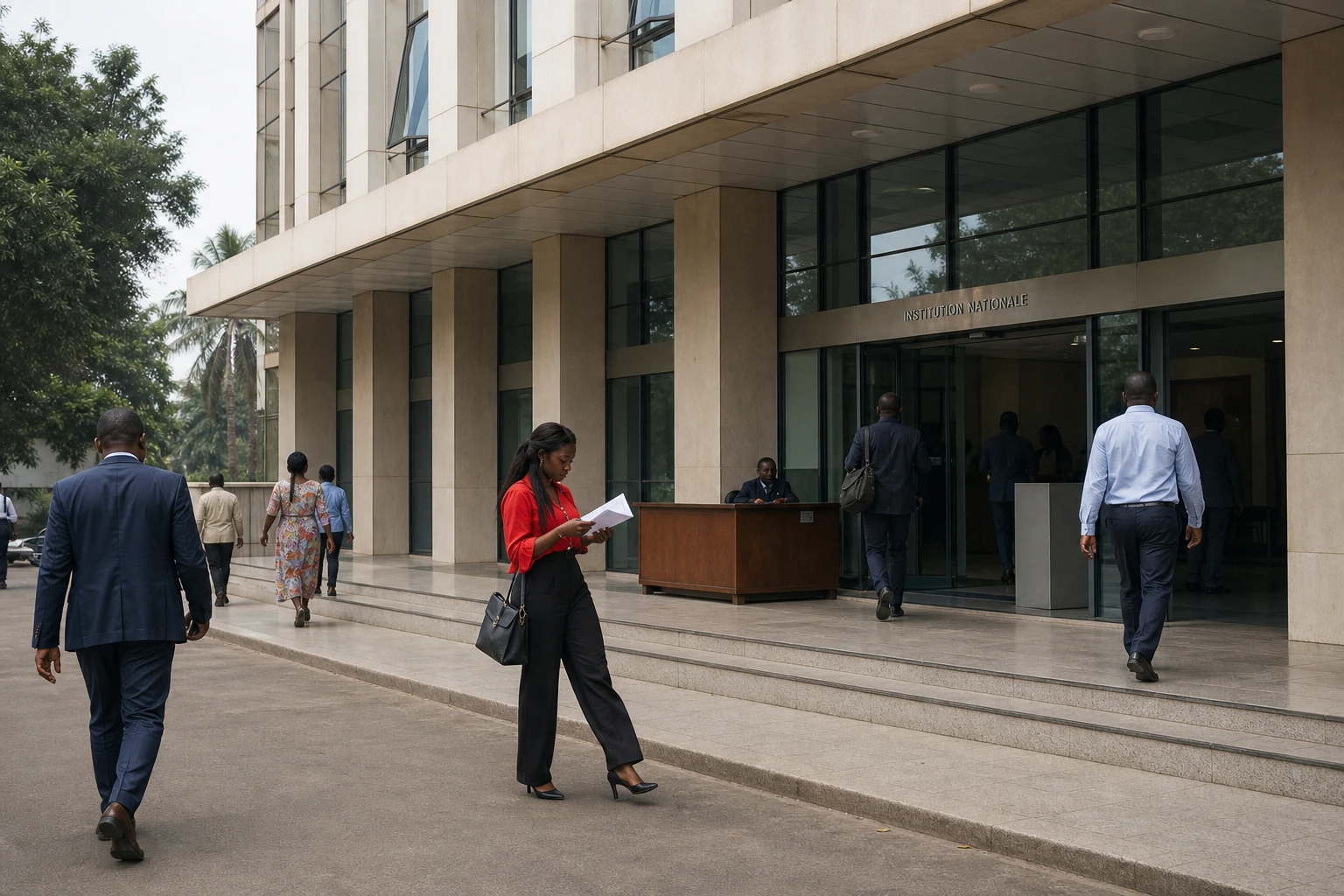
In Kinshasa, a dialogue already under pressure
In the Democratic Republic of the Congo, the political debate is not just about the substance of the national dialogue. It is also about its methods, its boundaries and its authority. Barely announced by Félix-Antoine Tshisekedi Tshilombo, the process has reignited a familiar rift in Kinshasa: should a broad national consultation be opened first, or should the urgent issues of security and institutional legitimacy be dealt with first?
This tension is unfolding in a country where the east remains ravaged by war, mass displacement and the fragility of the state on several fronts. The United Nations estimates that the DRC has around 6.9 million internally displaced people, with more than 5 million concentrated in the provinces of North Kivu, South Kivu and Ituri. The UNHCR also points out that the Congolese crisis has a regional dimension, with more than 990,000 Congolese asylum seekers and refugees hosted elsewhere in Africa.
What Tshisekedi has launched, and why the opposition objects
On 28 August 2026, the Congolese presidency confirmed the launch of a “National Dialogue for Peace, Cohesion and the Refoundation of the State”. The head of state presented it as a process rooted in the 26 provinces, with an initial phase of local consultations before meetings in Kinshasa. The executive promises a framework that is “not monopolised”, representative and secure.
But the opposition sees things differently. The Article 64 Coalition, often referred to by the abbreviation C64, rejected these consultations on 28 August. According to Actualite.cd, the platform includes Martin Fayulu, Jean-Marc Kabund, Moïse Katumbi, Augustin Matata Ponyo and Delly Sesanga. It argues that the government is replacing genuine inclusive dialogue with consultations it considers to have been shaped by the presidency. The coalition has also maintained its call for a march on 15 September 2026.
Joseph Kabila’s camp, cited in several Congolese press reports, has taken the same line of rejection. The main criticism is political: in the view of its opponents, the dialogue cannot be credible if it remains organised under the auspices of the government in power, without guarantees on inclusivity, security and institutional issues. In Kinshasa, the debate has thus shifted from the principle of dialogue to the conditions for its acceptance.
A longstanding disagreement: talk first, or secure first?
The heart of the disagreement lies in the ranking of priorities. For the presidency, national dialogue should help stitch the country back together, ease internal tensions and create a foundation for cohesion ahead of the 2028 political deadline. For some in the opposition, this framework risks sidestepping the real issues: the war in the east, the relationship between institutions and security, and fears of constitutional drift.
This debate is not abstract. In the eastern provinces, people live with the rhythm of clashes, displacement and fragmented public services. The UNHCR and IOM describe a massive displacement crisis, fuelled by armed conflict and persistent insecurity. In this context, many Congolese are waiting for concrete answers on security, access to land, roads, schools and healthcare, rather than political formulas.
The presidential majority, for its part, offers a different interpretation. According to ACP and RTNC, the dialogue sought by Tshisekedi must not be confused with negotiations with armed groups or with institutional horse-trading. The government says it is reserving war-related issues for the negotiation frameworks already under way in Doha and Washington. This separation of issues is intended to preserve the dialogue’s role as an internal political process, rather than a military one.
What is at stake for the DRC, and beyond
Domestically, this episode will test the government’s ability to broaden its support base without giving the impression that it is shutting down debate. It will also test the opposition’s cohesion, as it is divided between outright rejection, conditional participation and strategies of street pressure. The march announced by C64 for 15 September 2026 is thus becoming an important first political test.
For Congolese people, the question is simple: can dialogue still serve as a tool for easing tensions if it comes after months of polarisation over the Constitution, security and the legitimacy of institutions? The government says it can, provided the framework remains sovereign and national. The opposition argues that it cannot if sensitive issues are filtered out in advance and those excluded today become the missing parties to tomorrow’s compromise.
Regionally, the DRC remains a central issue for Central Africa and for the peace mechanisms mobilised around eastern Congo. Joint mediation efforts, backed by partners such as the African Union, Qatar and the United States, show that the Congolese crisis cannot be resolved in Kinshasa alone. The national dialogue announced by Tshisekedi therefore overlaps with other diplomatic efforts without replacing them.
The continental implications are clear. In the DRC, every round of national consultation is watched as a test of governance in a major Central African country, a neighbour of ECCAS members and a pivot in regional balances. If the process gains credibility, it could open up space for de-escalation. If it remains contested, it risks adding another layer of deadlock to an already severe crisis, just as people in the east are waiting above all for visible results.



