
 Algeria
 Egypt
 Libya
 Morocco
 Sudan
 Tunisia
 Benin
 Burkina Faso
 Cabo Verde
 Côte d'Ivoire
 Guinea
 Guinea-Bissau
 Liberia
 Mali
 Mauritania
 Niger
 Nigeria
 Senegal
 Sierra Leone
 The Gambia
 Togo
 Cameroon
 Central African Republic
 Chad
 DR Congo
 Equatorial Guinea
 Gabon
 Republic of the Congo
 São Tomé and Príncipe
 Burundi
 Comoros
 Djibouti
 Eritrea
 Ethiopia
 Kenya
 Madagascar
 Malawi
 Mauritius
 Mozambique
 Rwanda
 Seychelles
 Somalia
 South Sudan
 Tanzania
 Uganda
 Angola
 Botswana
 Eswatini
 Lesotho
 Namibia
 South Africa
 Zambia
 Zimbabwe
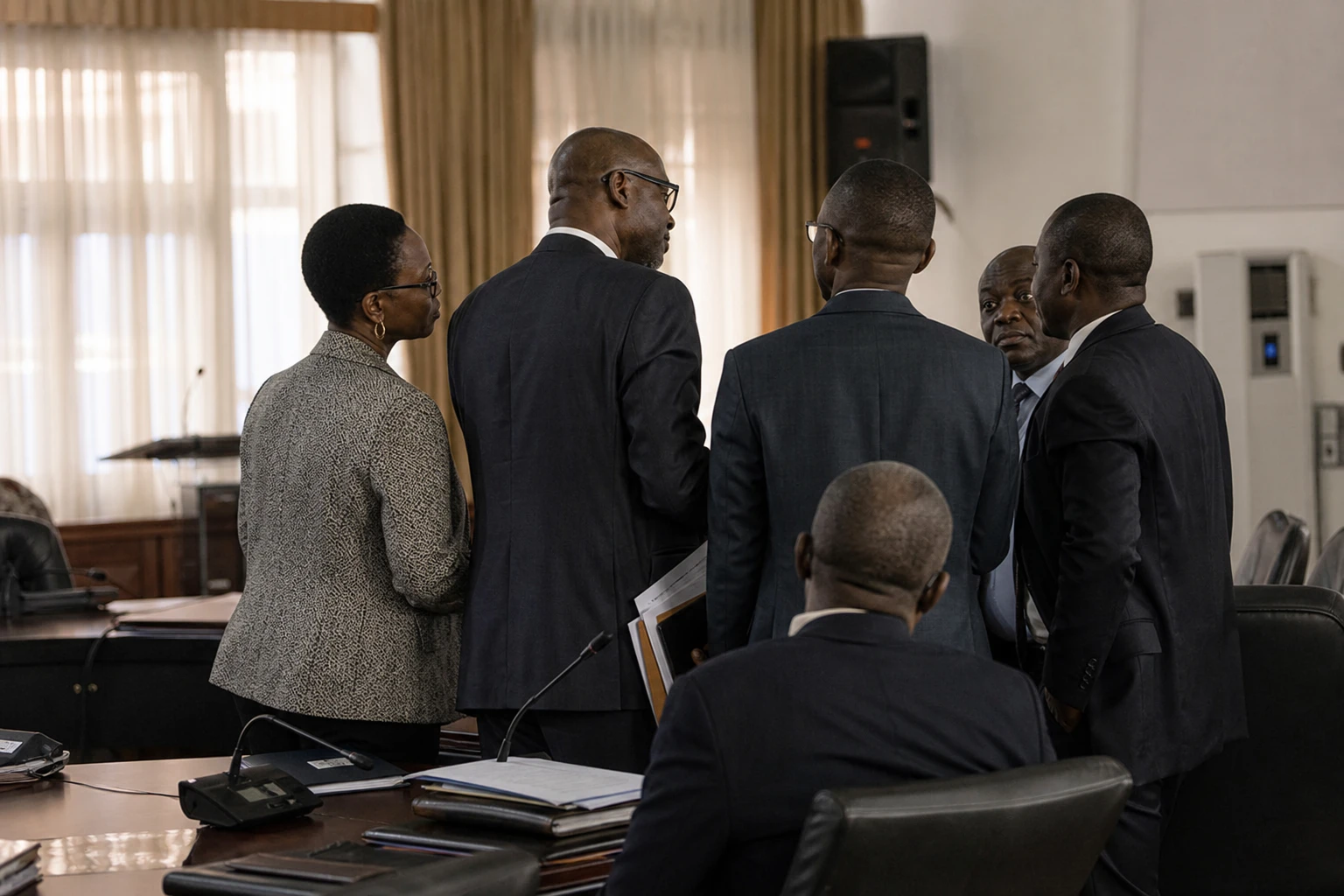
In Ghana, science leaves the laboratory and targets the real economy
In Accra, the debate is no longer just about how much Ghana spends on research. The question has become more concrete: how many laboratory findings can become more resilient seeds, more effective health services, cleaner energy or jobs for young graduates? This is the shift Ghana’s government wants to accelerate, in a country where pressure for growth remains strong and the value of ideas is now measured by their ability to produce useful solutions.
Ghana is moving forward in an increasingly competitive West African environment. A member of ECOWAS, it is seeking to strengthen its position in a regional space where innovation, digital sovereignty and industrial transformation are becoming drivers of economic power. Accra also regularly hosts discussions on regional integration, giving its scientific choices a reach beyond its own borders.
A clearer roadmap for research, innovation and AI
On 29 August 2026 in Accra, President John Dramani Mahama appointed Zanetor Agyeman-Rawlings as Minister of Environment, Science and Technology and asked her to put science at the heart of national development. He asked her to support local inventors and strengthen ties between universities, scientific institutions and businesses. The goal is clear: to ensure that young people’s technological skills serve agriculture, health, energy, industry and the digital economy more effectively.
This directive follows several decisions already taken by the government. On 17 June 2026, the Ghana National Research Fund was launched with an initial allocation of 100 million Ghanaian cedis. Provided for under the 2020 law, the fund is intended to finance research and support doctoral and postdoctoral studies. The same government also unveiled the country’s first national artificial intelligence strategy on 24 April 2026, designed to guide the use of AI in government, education, health and the economy.
The package is coherent. It combines funding, governance and scaling up. The computing centre announced as part of the AI strategy, valued at $250 million, is intended to provide the infrastructure needed for research and the development of local solutions. The government has also earmarked $20 million for the initial stages of implementation. Meanwhile, several public institutions have already launched programmes to build digital and AI skills.
The challenge is not scientific. It is primarily industrial
The main obstacle remains turning ideas into economic activity. According to national data cited by the authorities, Ghana’s research and development spending stood at 0.39% of GDP in 2024. UNESCO puts the figure at about 0.38% of GDP, confirming that research intensity remains well below the national target of 1%. In other words, the country is investing, but still too little to sustainably support a knowledge-based economy.
The second bottleneck is the flow between different worlds. In 2024, 125 research findings were taken up by industry and 32 technologies were commercialised, according to data provided by the authorities. These figures show that some work is reaching the market, but also indicate that much research remains stuck before the industrialisation stage. In a country where agriculture, SMEs, local processing and services carry significant weight, this divide between science and business has a direct cost.
For researchers, the national fund could provide a lifeline. For universities, it could enable more ambitious and applied projects. For businesses, it opens up the prospect of more structured partnerships with laboratories. And for the state, it offers a useful tool in sectors where imported solutions are expensive or poorly suited to local realities: crop diseases, post-harvest losses, energy, climate and public health. President Mahama cited highly specific priorities, including swollen shoot disease in cocoa, pests affecting maize and cotton, and post-harvest losses.
The country nevertheless has strengths. Ghana has already built an institutional foundation for digital technology, cybersecurity and AI ethics. UNESCO notes that the country has a national AI strategy and a high level of cybersecurity maturity. This matters because an innovation policy depends on more than funding: it also relies on trust in data, infrastructure and the rules of the game.
What Ghana wants to show across Africa
Ghana’s trajectory extends beyond its national borders. The country wants to show that an African state can bring together public research, digital strategy and the needs of the real economy without waiting for an imported model. This approach reflects a broader trend in West Africa, where governments are seeking to connect education, innovation and technological sovereignty amid competition for talent and investment.
It also chimes with the African Union’s Agenda 2063 and the ambition of the AfCFTA, the African Continental Free Trade Area, which requires more local value addition and greater production capacity on the continent. Without a strong scientific base, African integration remains a consumer market. With better-funded research ecosystems, it can become a space for manufacturing, services and innovation. Ghana is seeking precisely to take this second path.
What needs watching now is not just what is announced next, but how quickly it is delivered. Will the research fund become a durable and transparent instrument? Will the AI strategy produce measurable local applications? Will universities and businesses form genuine partnerships? In the months ahead, the answers will show whether Ghana remains at the level of intent or finally turns its science into an engine of economic growth.



