Algeria
 Egypt
 Libya
 Morocco
 Sudan
 Tunisia
 Benin
 Burkina Faso
 Cabo Verde
 Côte d'Ivoire
 Ghana
 Guinea-Bissau
 Liberia
 Mali
 Mauritania
 Niger
 Nigeria
 Senegal
 Sierra Leone
 The Gambia
 Togo
 Cameroon
 Central African Republic
 Chad
 DR Congo
 Equatorial Guinea
 Gabon
 Republic of the Congo
 São Tomé and Príncipe
 Burundi
 Comoros
 Djibouti
 Eritrea
 Ethiopia
 Kenya
 Madagascar
 Malawi
 Mauritius
 Mozambique
 Rwanda
 Seychelles
 Somalia
 South Sudan
 Tanzania
 Uganda
 Angola
 Botswana
 Eswatini
 Lesotho
 Namibia
 South Africa
 Zambia
 Zimbabwe
Resources grow, but the industry still needs to scale up
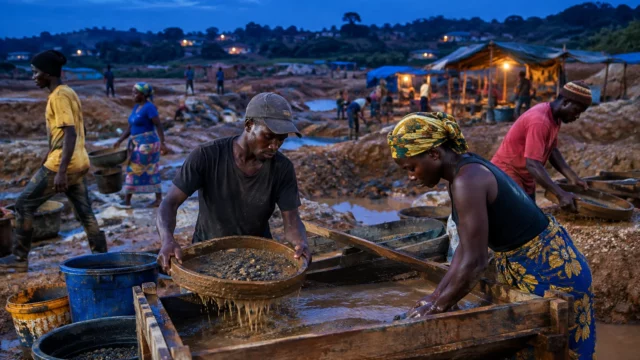
In Guinea, gold remains a prominent export, but local processing is still underdeveloped. On one hand, the country’s mineral deposits continue to attract exploration capital. On the other, most of the value still leaves the country before it can be captured locally. The Kada project sits at this intersection, north-east of Conakry in the Siguiri gold basin, one of West Africa’s most closely watched mining belts.
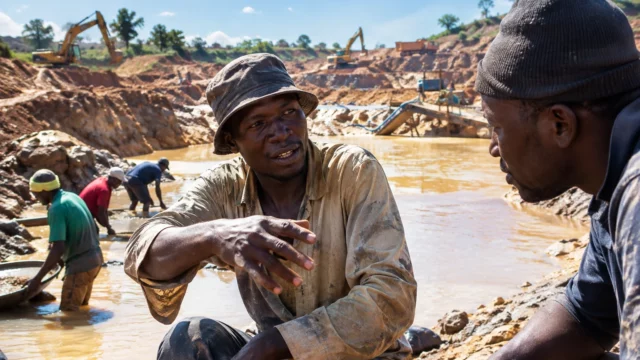
This context matters. Official Guinean statistics for the first quarter of 2025 show that artisanal gold exports reached 367,162 ounces, compared with 183,976 ounces of industrial gold. In other words, the artisanal segment remains larger than industrial mining, even though the latter grew over the period. The government is now pushing for refining and processing on home soil, with an increasingly clear position on ending exports of unrefined gold.
Kada clears a technical milestone, but development is still some way off
The latest development is specific. The Kada gold project now has mineral resources of 2.08 million ounces, up from 923,000 ounces in the estimate published in 2023. The increase is based on a further 81,361 metres of drilling and a rise in the share of resources classified as “indicated”, now standing at 1.27 million ounces. This category is more robust than “inferred” resources because it is based on a higher level of geological confidence.
This milestone matters, but is not enough on its own to call the project a mine under construction. A definitive feasibility study, or DFS, still needs to determine ore recovery, costs, environmental impact, infrastructure requirements and the future project’s profitability. The site operator is targeting completion in the second quarter of 2027. In the meantime, the company plans to continue drilling to upgrade some of the resources still in less advanced categories.
Funding is supporting this strategy. In May 2026, the company announced a A$60 million fundraise, equivalent to about US$43 million, to accelerate work at Kada. The funds are to be used for resource expansion, infill drilling, geotechnical studies and early development work. The logic is standard in mineral exploration: the better the geology is understood, the more credible the asset becomes to partners, banks or a future industrial investor.
What this means for Guinea, and why the timing matters
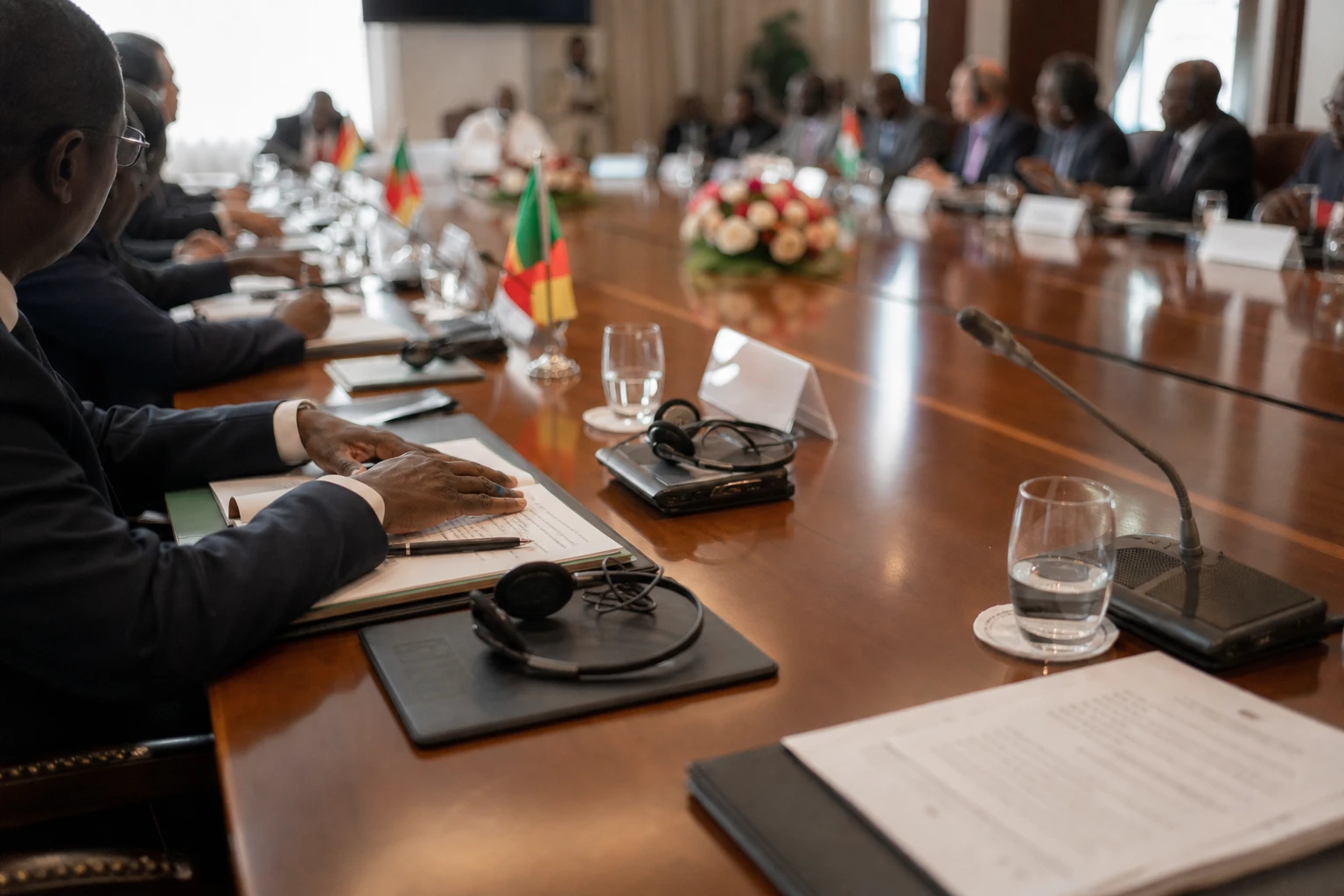
For Guinea, the stakes extend beyond the Kada site. The country is seeking to move away from a model in which gold often leaves unrefined, while the added value is created elsewhere. The policy has now been endorsed at the highest level of the state. In June 2026, the presidency set a course for local gold refining, drawing on the Nimba Gold Refinery in Gbessia, Conakry. At the same time, the government approved a transition towards the gradual end of unrefined gold exports.
On the ground, this could have very different effects. For the state, a more mature industrial mine promises more traceable revenues, royalties and visibility over flows. For nearby communities, the concerns are more tangible: jobs, local subcontracting, site security, and pressure on water, land and roads. For artisanal operators, however, the growth of industrial projects and a stricter refining system could disrupt marketing channels, especially if formalisation moves ahead faster than support for the sector.
The regional comparison is instructive. In West Africa, the gold belt stretches far beyond Guinea. From Mali to Côte d’Ivoire, and from Burkina Faso to Ghana, mining projects are multiplying in a region where governments are seeking to capture more of the rents and better regulate artisanal mining. Guinea is therefore part of a broader race: to attract capital, secure revenues, and ensure that gold does not remain merely a product for export. ECOWAS does not impose a single mining policy, but trade, traceability and the movement of mineral flows remain strategic issues for the bloc.
In this landscape, Kada is not yet a new industrial mine. It is an asset that has reached an important stage of technical maturity. What comes next will show whether it becomes a bankable project and then a real construction site. The project will be closely watched until the feasibility study announced for 2027, as it will also show whether Guinea can process more of its gold wealth on its own territory instead of simply exporting the raw material.