Algeria
 Egypt
 Libya
 Morocco
 Sudan
 Tunisia
 Benin
 Burkina Faso
 Cabo Verde
 Côte d'Ivoire
 Ghana
 Guinea
 Guinea-Bissau
 Liberia
 Mali
 Mauritania
 Niger
 Nigeria
 Senegal
 Sierra Leone
 The Gambia
 Togo
 Cameroon
 Central African Republic
 Chad
 Equatorial Guinea
 Gabon
 Republic of the Congo
 São Tomé and Príncipe
 Burundi
 Comoros
 Djibouti
 Eritrea
 Ethiopia
 Kenya
 Madagascar
 Malawi
 Mauritius
 Mozambique
 Rwanda
 Seychelles
 Somalia
 South Sudan
 Tanzania
 Uganda
 Angola
 Botswana
 Eswatini
 Lesotho
 Namibia
 South Africa
 Zambia
 Zimbabwe
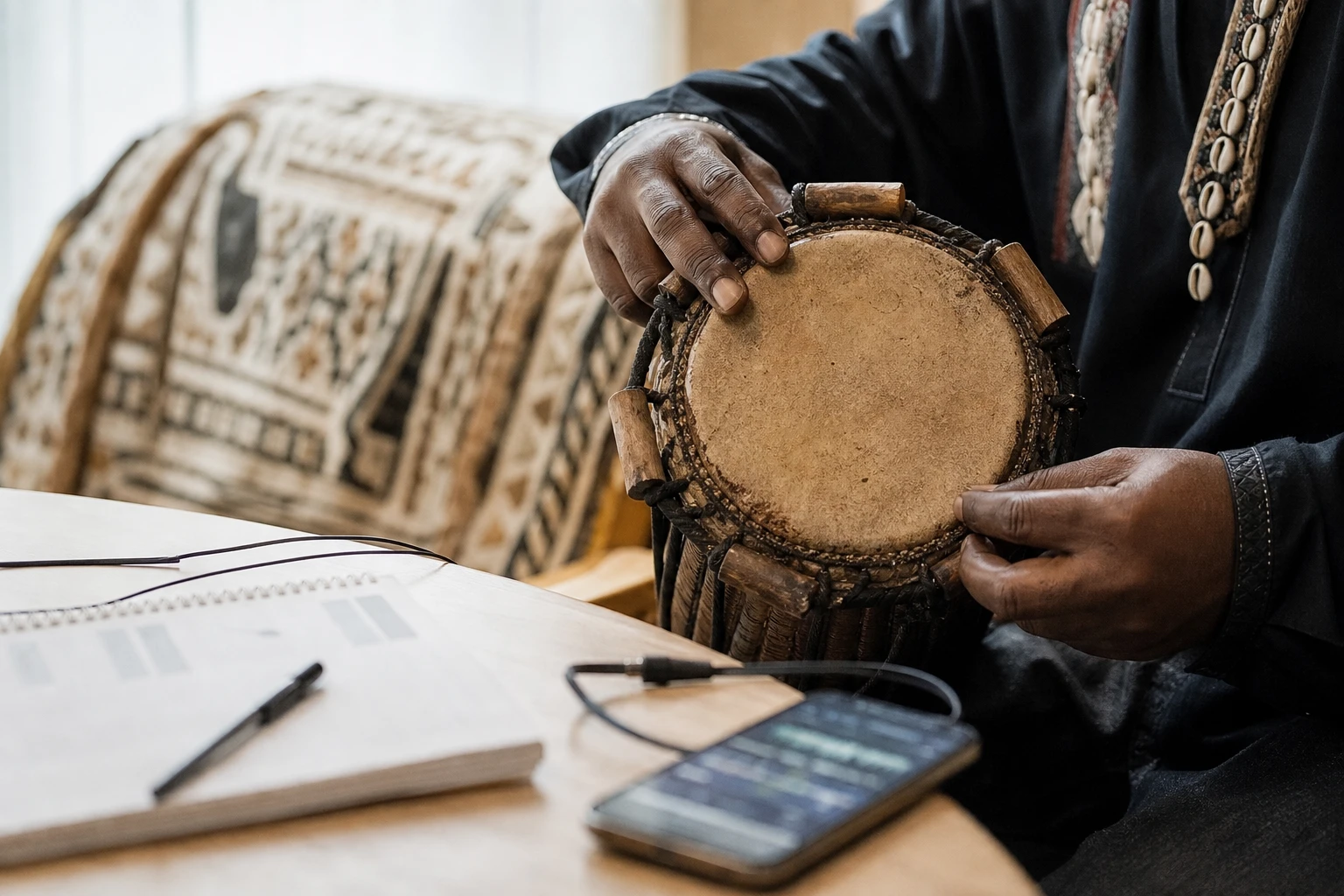
When the diaspora turns music into a tool for care
In Malmö, in southern Sweden, a musician from the Democratic Republic of the Congo has chosen to bring together two professions that rarely intersect with such precision: performing and therapeutic support. José Pereelanga, who has lived in Sweden for 18 years, now works with autistic people, using music as a support in their everyday lives. His journey points to something broader: the Congolese diaspora does not just spread sounds; it also exports practices, methods and a way of inhabiting the world.
This path takes on particular significance in a city like Malmö, Sweden’s third-largest municipality and one of the country’s most diverse. The municipality notes that it faces high residential mobility and has a very international population. In this context, artists from elsewhere often find a space where cultural plurality is not a backdrop, but a social reality.
From Kinshasa to Malmö, a movement that goes beyond migration
José Pereelanga is described as being from the DRC and having lived in Malmö for nearly two decades. Other profiles published over the years describe him as a singer, guitarist and songwriter who has performed on several European stages and is attentive to intersections between languages and musical traditions. In an earlier interview, he said he wanted to bring different cultures together around a single musical project. This artistic approach is no mere footnote. It is part of a Congolese history in which music also serves as a cultural passport.
The DRC carries a rich and recognised musical heritage. Congolese rumba, which emerged in the urban area of the two Congos, has been on UNESCO’s Representative List of the Intangible Cultural Heritage of Humanity since 2021. This inscription strengthened the idea that Congolese music is not just a popular style, but a cultural language shared across the region and continent. For an artist in the diaspora, this context matters: it gives depth to journeys often viewed solely through the lens of exile or emigration.
Along the way, the artist has also established a professional presence in Europe. A source specialising in world music lists him on contemporary arts stages and in international collaborations. Another media reference mentions his participation in audiovisual projects connected with Malmö. These details point to the same conclusion: far from the fixed image of a migrant adapting alone, what we see here is a cultural worker building a career over time, through artistic networks, transmission and local adaptation.
Music therapy, between art, support and social frameworks
At the heart of this story is the move from music to care. José Pereelanga says he helps autistic people through music in their everyday lives. In Sweden, this practice operates within a relatively structured support system. The Swedish National Board of Health and Welfare, Socialstyrelsen, publishes recommendations on ADHD and autism to guide decisions by health and social care authorities. The principle is clear: support for those concerned relies on practical, tailored and often multidisciplinary responses.
Precision is important, however. Music therapy does not replace medical care or recognised support services. It can complement them. This is where Pereelanga’s profile becomes interesting: he sits at the intersection of artistic expression, listening and the regulation of everyday life. In a society such as Sweden, where disability rights are governed by law and longstanding public policies, this approach has room to be put into practice, particularly when local organisations are seeking tools for participation and wellbeing.
For families, the issue is a practical one. This is not an abstract argument about artistic sensibility. It is about routines, points of reference, social connection and breathing space in contexts that can sometimes be difficult for autistic people to navigate. For professionals, this practice requires recognising that effectiveness can also come through rhythm, attention, sound and repetition. In other words, a non-verbal language can offer support without claiming to solve everything.
A new album, and a message about African cultural exchange
His new album, Big Bang, follows the same logic of blending. The artist describes it as an intersection of cultures and an artistic collision. This language is not merely aesthetic. It speaks to how African musicians based in Europe reinvent their repertoires without renouncing their roots. The title itself suggests a birth, a beginning, an explosion of forms rather than a simple collection of tracks.
In the Congolese case, this movement also carries symbolic weight. Music from the DRC already travels through rumba, gospel, soukous, urban music scenes and diasporas. Every artist based abroad contributes to this continuity, sometimes quietly, sometimes through more visible acts. In a country where cultural institutions seek to promote national creativity, journeys such as Pereelanga’s extend a broader story: that of a mobile, inventive Congolese culture able to move into new settings without losing its depth.
The continental significance is clear. It can be seen in artists’ movement between Kinshasa, European capitals and diaspora scenes, but also in the way African cultural practices enter fields such as special education, mental health and inclusion. For Central Africa, this kind of journey is a reminder that an artist can be a creator, a cultural intermediary and a social actor at once. And for the DRC, it confirms that, beyond its current difficulties, cultural production remains one of its most visible sources of influence.