
 Algeria
 Egypt
 Libya
 Morocco
 Sudan
 Tunisia
 Benin
 Burkina Faso
 Cabo Verde
 Côte d'Ivoire
 Ghana
 Guinea
 Guinea-Bissau
 Liberia
 Mali
 Mauritania
 Niger
 Nigeria
 Senegal
 Sierra Leone
 The Gambia
 Togo
 Cameroon
 Central African Republic
 Chad
 Equatorial Guinea
 Gabon
 Republic of the Congo
 São Tomé and Príncipe
 Burundi
 Comoros
 Djibouti
 Eritrea
 Ethiopia
 Kenya
 Madagascar
 Malawi
 Mauritius
 Mozambique
 Rwanda
 Seychelles
 Somalia
 South Sudan
 Tanzania
 Uganda
 Angola
 Botswana
 Eswatini
 Lesotho
 Namibia
 South Africa
 Zambia
 Zimbabwe
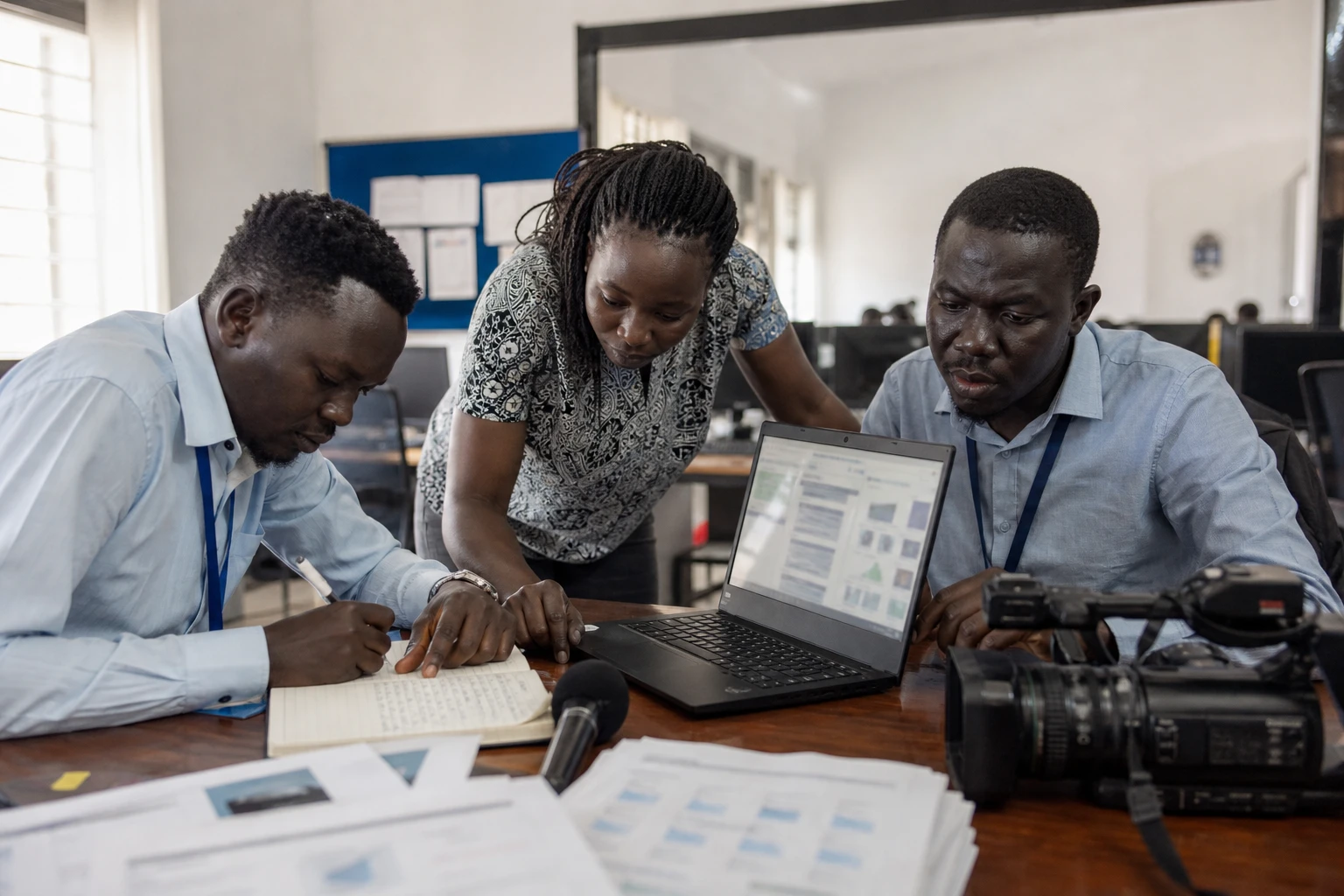
In Ezo, health vigilance follows the rhythms of border tracks
At South Sudan’s border, the threat comes not only from official roads. It also travels along informal crossings, transit markets and the back-and-forth journeys of families divided by the border. For South Sudan’s health authorities, the goal is simple: detect cases quickly, before an imported case turns into a chain of transmission.
This preventive approach is part of a broader regional context. The Ebola outbreak caused by the Bundibugyo virus, a strain of the Ebola virus, continues to affect eastern Democratic Republic of the Congo, while the World Health Organization has kept South Sudan among the priority countries for preparedness, alongside neighbouring states exposed through cross-border exchanges.
A response on the ground, on the South Sudan–DR Congo border
In the town of Ezo, in Western Equatoria State, teams supported by the WHO and the United Nations Mission in South Sudan screen travellers and explain warning signs to the public. On the ground, surveillance focuses on the busiest entry points, as well as communities that rely on local trade and daily journeys between villages, markets and health services.
In its recommendations of 24 August 2026, the WHO said South Sudan was among the states that should strengthen surveillance, case detection, rapid isolation and cross-border coordination. The organisation has also called for national health emergency mechanisms to be activated and risk communication to be reinforced, to prevent a suspected case from going undetected.
This approach is not improvised. As the regional risk rose, South Sudan’s health ministry had already said that no Ebola cases had been confirmed in the country, while reactivating response measures in border areas. In June 2026, the WHO also cited South Sudan’s preparedness as a priority, in a country where distances, infrastructure and care capacity remain limited.
Why the risk is being taken seriously
The danger is not simply a matter of geographic proximity. According to the WHO, the outbreak in the DR Congo accelerated sharply in 2026 and reached unprecedented levels of severity for the country, prompting neighbouring states to act sooner. The agency has also highlighted the risk of spread through population movements and trade corridors in the east of the Congo.
As of 24 August 2026, the WHO said the response remained focused on contact tracing, infection prevention and control, community engagement and clinical preparedness. At the same time, Congolese public health data, reported by several corroborating sources, showed an outbreak that remained active and widespread, with a high death toll.
South Sudan is particularly exposed because its health system remains fragile, with limited capacity for laboratory testing, safe burials, patient isolation and contact tracing. Field teams therefore have to make up for this through speed and clear communication, two essential tools in a country where trust in health messages varies by area and access to information.
Preparing communities, not just border posts
In Ezo, prevention also involves very practical explanations. Health workers remind people that Ebola is transmitted through contact with the bodily fluids of a sick or deceased person, making hygiene, early reporting and safe burial practices crucial. This awareness-raising work is vital in areas where health information circulates poorly and rumours spread faster than official guidance.
The presence of the United Nations Mission in South Sudan also gives the response a security and logistical dimension. UNMISS supports health partners in assessing screening centres and backing community-based activities. In a country where population movements are sometimes disrupted by local insecurity, this cooperation helps provide access to crossing points and neighbouring villages.
This vigilance comes at a cost, but prevents a heavier one. For residents of border areas, it can slow some journeys and lead to tighter checks. For the authorities, it requires staff, screening kits, protective equipment and constant coordination with regional partners. For health facilities, it means continuous surveillance, even as they face many other daily emergencies.
A test for East Africa and regional mechanisms
The issue extends beyond South Sudan alone. The WHO has recently classified the region by priority level, placing countries including South Sudan, Rwanda and Burundi, alongside the DR Congo and Uganda, in the group that must step up preparedness. This is a tangible illustration of the role of health corridors in East Africa: when an outbreak escalates, the most vulnerable border becomes a critical point of passage.
On 14 August 2026, a coordination meeting in Bangui brought together several countries in the region, including South Sudan and Uganda, to harmonise the response to risks linked to the Bundibugyo virus. This regional effort shows that the response depends not only on national measures, but also on the swift exchange of information, alerts and public health practices between neighbouring states.
What happens next will depend on countries’ ability to sustain their efforts. As long as the outbreak remains active in the DR Congo, pressure will remain high at South Sudanese, Ugandan and Central African border posts. For Juba, the challenge is therefore not to announce a distant threat, but to maintain routine, methodical and visible vigilance until regional spread is durably contained.



